As a segue from quantum mechanics to more practical applications (be patient for the practical part), I want to continue this thought about probabilities. In the quantum world, it is impossible to locate or measure the speed of some particles because the act of observation will influence that speed and location. So, in quantum mechanics complex mathematical equations are used to predict locations based on probability not direct observation. But that probability is highly accurate, to the twelth decimal point and therefore could be considered as a defacto certainty.
If you have seen Oppenheimer, you will remember that some particle physicists were concerned that a nuclear detonation could “ignite” the atmosphere (a chain reaction from the blast where the atoms of the atmosphere would then divide) and end the world. They did the computations and came up with the conclusion that the probability of that happening was “near zero,” which was not reassuring to the laypeople (the military and the president) who were not use to working with probabilities.
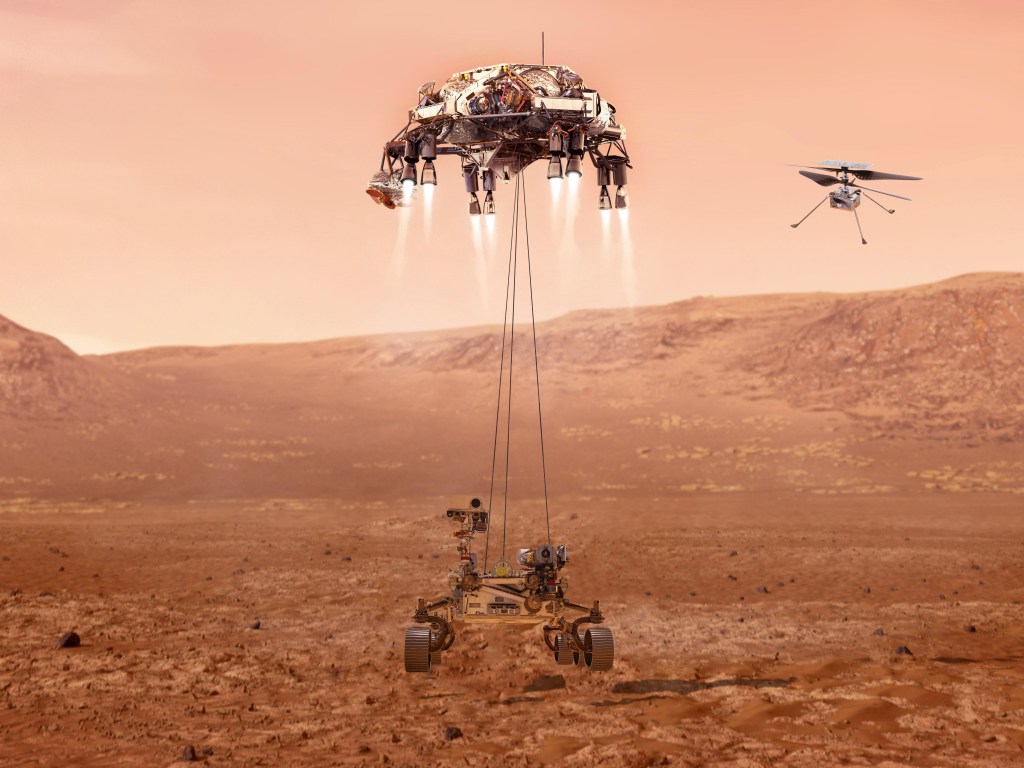
As I alluded to before, on a philosophical level, some people see the loss of certainty on a subatomic level as the loss of general truth and the “gateway drug” to either hopeless nihilism or irrational mysticism. In the large realm of Newtonian physics, we claim to know the whereabouts of an object with certainty because we know all the absolute forces applied to that object. We landed the Mars rover, Perseverance, with pinpoint precision 34 million miles away in 2021, based on rational computations and math of Newtonian physics. But we could accomplish the same precise tasks using the probabilities of quantum mechanics, treating high probabilities as certainty.
It wasn’t planned, but in this recent writing/thinking journey I’ve contrasted magical thinking (a baseless but comforting belief) Vs thinking magically (seeing the cosmos in all of its glory). I’ve also contrasted mysticism (an irrational approach to meaning based on emotional responses) Vs mystery (the fact that much of the cosmos is unknown, and so complex that it may be unknowable by mere mortals). Now, I want to make one more contrast, that between certainty and probability.
Certainty
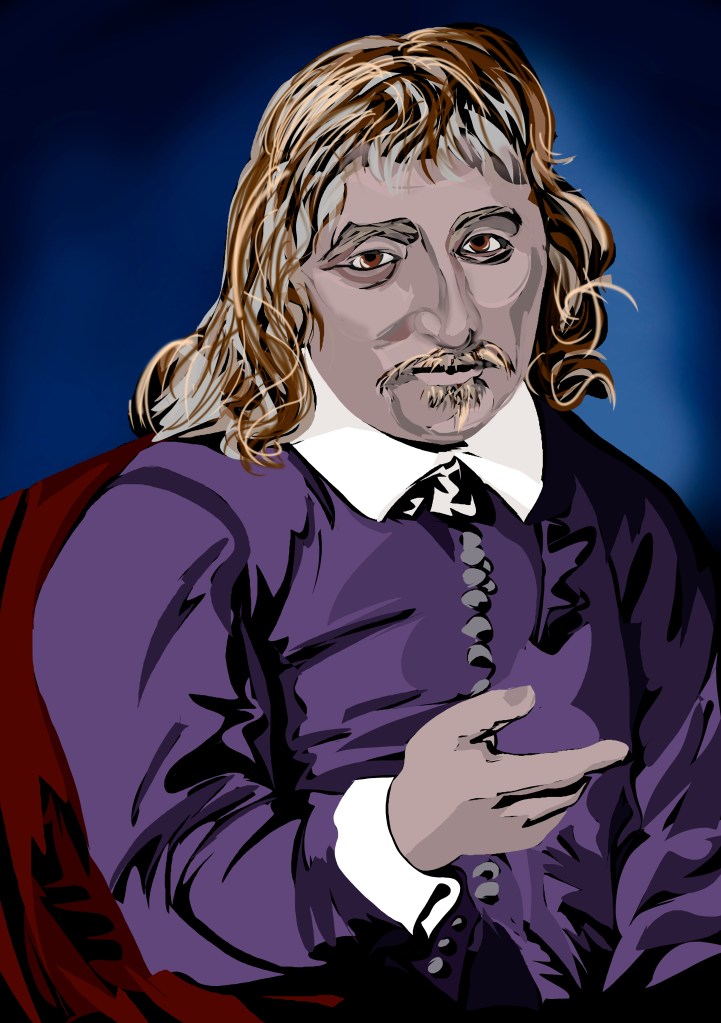
Certainty has been part of the human lexicon for millennia. While it is self explanatory, if you want to read more about certainty from a philosophical perspective, look here. I will say it is that bit of knowledge which is beyond doubt or subject to skepticism. René Descartes attempted to illustrate the boundaries of such certainty when he wrote in his papers, Meditations, “cogito, ergo sum,” or “I think, therefore I am.” His point was, we try to find most truth via collecting data from the outside world (meaning outside our brains), then make deductions via our reason, to sort out that data. However, because our senses are imperfect, they cannot deliver perfect data. Therefore, truth deducted from those imperfect sets of data, cannot be held with certainty, only with probability. Descartes tried to find that truth which could be held with absolute certainty. He used intrinsic data–independent of our senses–alone. The only kind of truth that is not subject to our fallible, external senses, is consciousness (“I think,” in other words).
While this serious consideration of certainty only takes place among the higher echelon of society–thinkers, philosophers, and writers–the more common people uses the term with little thought. If these common people are cornered, I think they would admit what they mean by certainty is knowledge that has a very high level of probability, not absolute. I will illustrate this with an imaginary conversation between Descartes and his dairy farmer neighbor, Eymbert. I have to take care here (tongue-in-cheek) as I married a dairy farmer.
Eymbert: “Hey, my cow, Betsie calved last night.”
Descartes: “Humm. Are you sure?”
Eymbert: “Uh . . . yeah. Certainly! Why do you ask?”
Descartes: “Well, I thought I had seen her in my barn this morning, having jumped our fence yet once again. She still looked pregnant”
Eymbert: “Hmm, well, I thought it was Betsie. However, the moonlight was dim and some of the other cows have been known to go into Betsie’s stall. Maybe it was Brownie, she is about due to have her calve, so, maybe I’m not certain after all.”

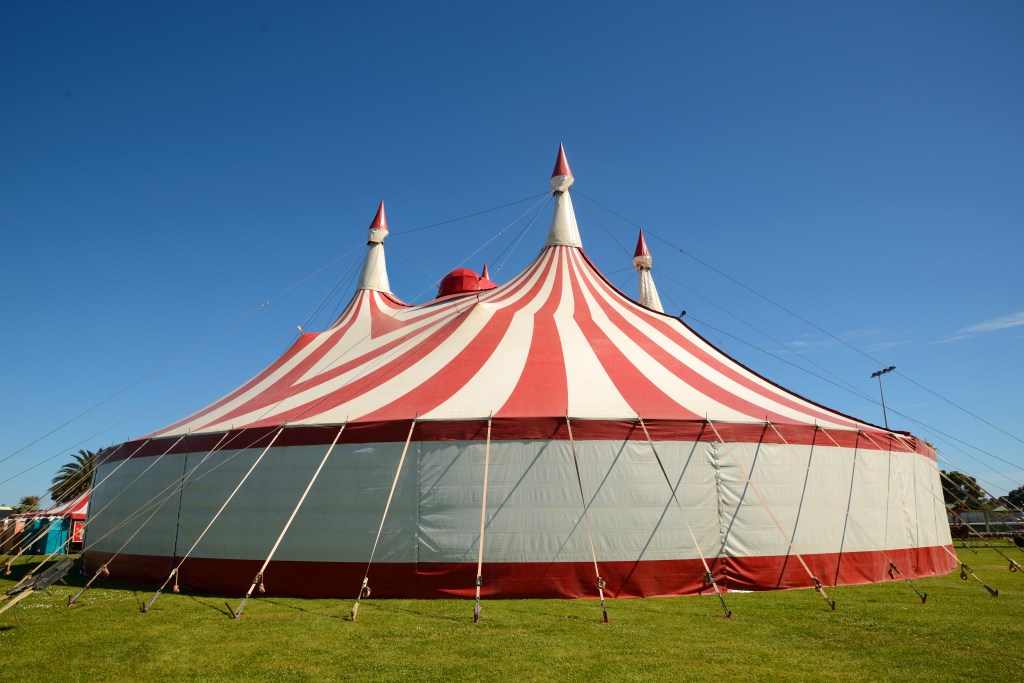
One of the best ways to define dynamics of a society is by looking at the extreme positions of that society. The extremes are like the stakes of a circus tent, holding it out and defining its widest margins. When it comes to discovering knowledge (epistemology), there are five parts of society that I think are some of the most extreme. I’m sure there are others. My five are the areas of romantic love, marketing, war, politics, and religion. Each approaches truth or knowledge in their own enigmatic way. Four of them rely heavily on magical thinking ( in the order I listed them) and science being most comfortable with probabilities because math and statistics are at the core of science’s search for truth. Of course you will find the occasional scientist who uses magical thinking, in the same way you will find a rare lover who is comfortable with probabilities. The scientist who says, “Science proves there is no god,” is such an example. Science can give plausible alternatives to the existence of a god, but is powerless to prove there is no god. The lover who says, “There is an 80% chance I’m falling in love with you,” is an example of a romantic who is comfortable with probabilities (hoping that their partner is too). But, in my typical fashioned, I want to discuss the role of “certainty” within religion.
I know for sure that classical Christian and Islamic cultures hold very high the assertion that you must be certain that their tenets are true. I know less about other religions but I assume they hold the same views, at least the classical versions of those belief systems. This is in contrast to the postmodern view, that there is no truth and all religions and opinions are the same. But all religions cannot be the same within classical logic because they say opposite things at several junctures. But I’ve talked about this before. I want to spend my remaining keystrokes on the most practical application of this lofty discussion and limit it to Christianity, although you could apply it to the other fields and religions.
Growing up deeply immersed within the most conservative branches of American Christian culture, I can speak with great confidence that it is highly esteemed to not only believe in God, in the resurrection of Jesus Christ, but also in dozens if not hundreds of other tenets and social mores, and to believe them with absolute certainty. I’ve heard many testimonies where people say, “Then I met God x number of years ago and I’ve never doubted him for one second.”
Now I’m going to pause at this point to make a plea. If you disagree with what I’m saying (or going to say), and I assume that most will, that is fine with me. The irony is not lost in that I’m talking about the lack of certainty, and that applies to me as well. No, I am not certain with what I’m saying, but I have a hunch it is true. But I am not writing these things to challenge the faith of anyone. I am not trying to entice someone to doubt their religion, but to help those who doubt already, even if it is in their secret places. I suspect the stoic faith, the never doubting, is a psychological illusion in response to a severe social coercion, to earn the respect of others within your realm of influence.
To a Christian, unfaltering faith sounds so honorable. But, if that person wasn’t a Christian–born in Mecca for example–they would say the same about Islam . . . or hinduism if born in Delhi. I will add that I, and my evangelical contemporaries, raised this belief to the level of certainty, not based on the evidence (sometimes we would flirt with evidence that is found in Christian apologetics as our “proof”), but on an intrinsic evidence. But this intrinsic evidence is not the rigorous intrinsic evidence that Descartes ascribed to. Our internal evidence–in the case of religion–wasn’t that we think and therefore are, but based completely on the internal emotional function of the brain. I will explain.
I had a philosophy class in college (and I was an evangelical at the time) where the professor was challenging foundational Christian beliefs. While on the inside I understood his arguments, but because I was in an evangelical subculture with intense conformity pressures, I pretended, along with my evangelical contemporaries, that this professor was stupid at best, and working for the devil at worst. But when he asked for the proof that the God we say we believe is is real, one of my evangelical friends said, “I am absolutely certain God is there because I have a God-shaped void in my heart and he is the only thing that fills it exactly.” She may not have realized it, but she was quoting from a Billy Graham movie, A Time to Run, which we had just seen together.
Religious talk is always pretty and gives an illusion of meaning, but what she said I knew and I was sure the professor knew, was nonsense. It was saying that I am certain that God exist because I can feel him. As I’ve said many times, I am convinced that our emotions is a gift to allow us to respond to the truths of this world, but were never meant to be used to find truth because they are so untrustworthy. Even the Bible says the emotions (psyche or “heart”) is the most deceitful thing in the universe and no one can understand it. To cover up this inadequacy we re-label the emotional as “spiritual.” “God’s spirit is in me because my spirit gives testimony to that certainty.” That might sound cool, but all religions, even those with opposite tenets will say the same thing along with a plethora of cult leaders. I lost count of how many times I did things that I now regret, because on of our “spiritual leaders” convinced us that was what the voice of God telling him that we should do it.
A Crisis of Faith
Once I had a candid conversation with a seasoned pastor. He had upheld the water-tight faith of his own, never doubting God for a second. But then he told me in private, he knew that there were plausible arguments against the existence of God, however, he would not allow himself to entertain those thoughts, not even in the privacy of his own head, in his own bed in the middle of the night, because he knew if he ever doubted God’s existence, or the other 100 essential tenets of his denomination’s faith, the personal cost to him would be severe. Not only would he lose his job at the pulpit of a large church but his entire career. He would lose his retirement, health insurance, be alienated to all his friends, every single one, and his and his wife’s entire families. Social coercion is severe by nature, but nowhere as severe as it is within religion.
Probabilities
So, what’s my point? My point is simply this. Due to our own fragility of mind, it is impossible to reach certainty in our approach to truth. When we thought that truth was defined as that which had absolute certainty, we were delusional. So when postmodernism confirmed that absolute certainty is not possible (except in the case of Descartes, yet there are those who now who would even challenge Descartes conclusion, that our thinking proves that we really exist) our aspiration for truth died. Now, everyone makes up their own reality. Donald Trump is the embodiment of such a wholesale loss of truth.
But truth is real. Again, when I say truth I mean that which consistent with reality. It can be known in the same way we can predict exactly where a subatomic particle is located, although due to quantum laws, it can’t be directly observed.

Understanding this point was a major breakthrough for me after I had left Christianity and was seriously considering atheism again. I found the atheistic view of certainty without a god, was just as flawed as the religious dependency on certainty. Plausible explanations of origins free from a creator isn’t certainty. When I realized that truth can be known as a function of probabilities, it was profoundly liberating. If I were to say within a Christian group (or a Muslim group for that matter) “I think there is a high probability that God exist,” I would be scolded or considered someone of a weak faith. But let me ask you, which is the greater faith? Is it the person who was raised in a Christian home and severely scolded to even think that God may not exist. And then they had to quench those ungodly thoughts, so they never, ever consider the alternatives to God’s existence? Is the person of greatest faith who builds a imprentable womb of “faith” around them?
Or, could the greater faith be the person who looks at all the options head on. Who studies even those most hostile to theism and Christianity and who is not afraid of a challenge, even willing to change their minds at times when the evidence demands it?
The present postmodern world scares me at times. Now people create their own reality, and since all opinions are now believed to be the same, and they make their opinions the new certainty, never looking at the contrasting evidence. This is especially true in the religious and political worlds. By choice, I watched every rally speech that Donald Trump made but two, hoping that I had him wrong. I wanted my views to be challenged, but unfortunately were only reinforced.
In closing, if you are interested in reading more about the problem of certainty within Christianity, I recommend Peter Enns book, The Sin of Certainty. In my book, The Stones of Yemen, I tried to challenge the black and white notions of certainty, without the loss of truth.
I am sorry that this piece grew to be so long and once again, I am so busy right now that I only had moments to work on this now and then and without proof reading. I want to write in the future about less lofty topics and if I have enough self-discipline, maybe I will do so.
Mike
 J. Michael Jones
Leave a comment