Prolog
Soon, I will make a major shift in this blog’s direction back to its original charter: to speak to those disillusioned with or who have left Christianity or theism, asking the tough questions that are not allowed in church meetings.
But, before I move to that new format, I wanted to nail my thesis on this virtual wall about the state of American culture in 2025. This will take two or three parts. Then I hope to rest my case and watch how this plays out, only speaking for justice and truth when necessary.
I will write with confidence about some of my opinions. The aspiration for truth is available to all of us, by following the evidence and removing your personal bias. But we can never know something with absolute certainty, because we are imperfect. However, different from the present cultural assertions, not all opinions are the same. You can have near certainty with due diligence. Writing with that confidence is not an exercise in arrogance.
Introduction
At least seventy million Americans see America as on the cusp of something great. MAGA has been normalized. They expect the MAGA movement to live up to its name and create an America that is the best in generations. My entire boyhood family feels that way as well as all my old evangelical friends. I will start with one of those optimistic perspectives.
Cusp of Greatness
The Hoover Institute (a conservative think tank) in their series Uncommon Knowledge has produced some excellent interviews with deep thinkers and scientists about abiogenesis and intelligent design. That’s how I knew them. I have great respect for the highly talented interviewer Peter Robinson. But his latest interview, titled Morning Again in America, with Marc Andreessen, (see here) a Silicon Valley entrepreneur was different from my previously viewed programs. From the title, I knew it was about America’s political situation and from the Republican perspective. Out of my respect for Peter, I watched it enthusiastically. If anyone could change my perspective on MAGA, it would be Peter.

I often watch things from a different perspective of my own. It is part of the pursuit of truth. In 2016, I watched 12 unfiltered Trump political rallies on C Span. I had an unfavorable view of Donald Trump for decades, but out of respect for my MAGA friends and family, I wanted to give him the benefit of the doubt. I ended up with a far worse impression of the man. I love watching the best atheists give their best presentation for their position. It has only increased my theistic perspective.
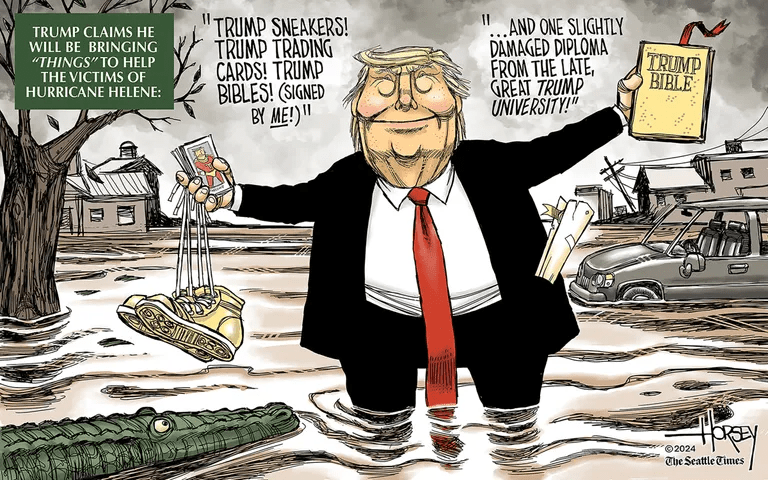
Robinson and Andreessen’s video didn’t surprise me, being quite pro-Trump. What did surprise me was that it was totally devoid of Trump’s dark side, his rapes, business failures, pathological lying, defrauding people, attempted coup, and you know the rest. They do see a great America coming with his election. I watched part of it twice, trying to understand the basis for their optimism. If I understood them clearly, America has been hamstrung (kept from greatness) by diversity, equity, and inclusion, overregulation, “censorship” and a bloated government. The way they use censorship is not preventing speech that disagrees with yours, but preventing speech that is fact-checked for lies. Trump is going to fix that and then America will thrive. Right?
All the years I voted for Republicans, I did so for two reasons. When I was an evangelical, we were brainwashed into thinking the Republican party was “God’s party.” A more personal reason is that I believed in a balanced federal budget and still do. If Trump balances the budget this time (he made it worse last time) without damaging people (Medicare, etc.) or the environment, I will give him credit for that.
I researched DEI, and surprisingly, I learned it has not harmed businesses but helped them. Some regulations make business more difficult, but others protect the consumer and the environment benefiting American society. McDonalds is not ending their DEI program because it harmed their business, but our culture is going through a grand MAGA shift, and they fear MAGA will demonize them if they keep the DEI in place. This idea is suddenly sweeping the country. For the same reason, META is giving up fact-checking.
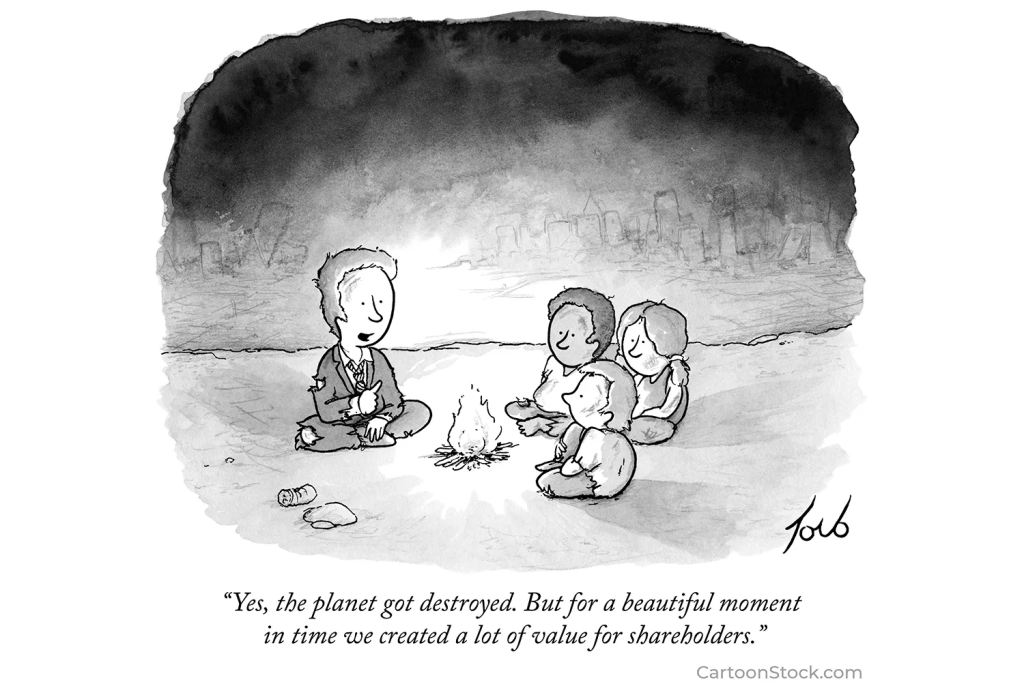
This left me puzzled. Sometimes, I like to put on the Freudian hat to figure out motivations. I read several articles about the Bromance that has developed between Silicon Valley, once a hotbed for liberal thinking, and MAGA. All the articles I read point to just one thing, MAGA is in power and the Silicon brothers (and I do mean brothers, with few women part of this) want to get on the government’s good side for financial rewards. Federal contracts are one thing. Lowering costs to comply with regulations is another. Lastly, and the biggest are tax breaks for those billionaires.
I will add, with less certainty, that the reason DEI is hated by this group is that most of them are white males, and I suspect that they want to return to an age when the white male was the archetype for America, superior to the rest.
So, while I still respect Peter and Marc for their talents, they left me unconvinced. The proof will be in the pudding.
Now I will move on to some experts who think the next four years will be a disaster.
The Historical-Political Perspective
Heather Cox Richardson is a professor of American History at Boston College, author, and brilliant lecturer, who lives a simple life with her Maine lobsterman husband. Many of you know her much better than me and could write a thesis on her understanding of the present state of America. I will mention a couple of important points.

The discontent of America’s middle and lower classes, which Donald Trump was able to tap into with brilliance, stems from fifty trillion dollars of wealth that has been transferred from the bottom 90% of our society to the top 1% in the past forty years.1 The reason for this is complicated, but one issue, Dr. Richardson says, is the favorable stance of our government toward the very rich, as exemplified by our tax structure, since the days of Reagan. But this transfer has been insidious, hidden by the change in the value of money.
My father earned only twenty thousand dollars a year in the 1960s as a supply company manager and was the sole provider for my mom and their four children. We lived modestly, but never in want. Dad bought a new, Oldsmobile, every two years and gave me a brand-new car twice as Christmas presents. While managers of supply companies today may earn one hundred thousand dollars a year, they would have to earn over two hundred thousand dollars to have the same purchasing power as my dad.

My Mom and Dad
There is honest frustration and social discontent in the middle class. Not only do they have to live far below the means of the people they see on TV, but their buying power is also diminishing year after year. It is almost universal that it takes two full-time earners to survive in the middle class now. Two hard-working parents juggling child care have done more to disrupt “family values” than anything else. The financial burdens of the lowest class have been one of the biggest drivers of abortion, yet those who champion “pro-life” vote against financial justice for this group.
The middle and lower classes’ discontentment has made them ripe for harvest by more extreme ideologies and more gullible to simplistic but dishonest solutions.
If you look at the post-election exit interviews of Trump supporters, ten percent were those with a cult-like following of Trump, never questioning his words and being angered by any negative statements about him. However, ninety percent were pragmatists, blaming the Biden administration for their financial woes and hoping that Trump would honor his promise to fix it. It was about the price of eggs and milk.
This brings me to the second issue Dr. Richardson has made. In the past eight years, since Donald Trump came onto the political scene, he has demonstrated the uncanny ability not just to lie, but to weave false realities from scratch, and those realities without any moral guardrails. His approach has been rewarded with power. In response, those within his party have hooked their wagons to these bold lies for the sake of power. It is incredible how quickly those politicians have given up their moral compass for truth, in exchange for power.
Because culture happens slowly, people haven’t noticed the Titanic shift within politics within the past eight years. Before that, politicians sometimes lied or embellished information to get elected. Unfortunately, that is what the voters expected, the perfect candidate. I could tell numerous stories about political lies within both parties. John Edwards may have won the presidency but it was leaked that he not only had an affair but had fathered a child. That was a bridge too far in those days for a potential president. Bill Clinton lied. There is evidence that Nixon, Reagan, and the Bushes lied. When caught in those lies, it did have political consequences. Those men eventually had to apologize for their lies, and in the case of Edwards, ask for forgiveness. Nixon resigning. But that was a different world, with a universal sense of truth and lying seen as immoral.
As Dr. Richardson explains, this is a totally different world now. Donald Trump doesn’t just tell lies, almost every word he speaks is a lie and he has no remorse. He lies about little things, such as crowd sizes, but also weaves complex false narratives about the cause and effect of big issues. In this last election, he was able to create a narrative that dark-skinned immigrants are the cause of middle and lower-class struggles. The Biden administration gave him that opportunity. He was able to cast gender dysphoria and transsexual surgery as rampant, the reason there is disruption of the American family, and the reason that evangelicals should support him. Of course, the biggest lie is that the 2020 election was stolen.
Because society has rewarded Trump with power for his lies, almost his entire political party is now supporters, promoters, and pretend believers of those lies. If anyone dares to confront the lies, their political careers are over. To speak the truth now is considered “political.”
The Economic Perspective
Richard Wolf is an American economist. I have not exhaustively researched his writings. He says he speaks for most economists, that like it or not, America is past its prime as an empire. There is no turning back. The BRICS (Brazil, Russia, India, China, and South Africa) are catching up to the G7 (Canada, France, Germany, Italy, Japan, the UK, and the USA). Five years ago China was far behind the USA in AI, robots, and drone implementation but by next year, they will surpass us. There is no turning back and for the US to compete, there will be tremendous pressure to stagnate the incomes of the middle and lower classes. The skilled Chinese factory worker earns $6 per hour. The same worker in the US earns three times that much. We can choose to increase productivity or live with that new reality. AI is the best hope for increasing productivity and China will soon have the edge.
A much simpler (but completely false) narrative, which Donald Trump promotes, is that it is the brown-skinned immigrants’ fault. Get rid of them, tariff the BRICS and neighbors, and there will be a boom. Wolf says with those actions, there will be a bigger bust, leading to more political unrest and a possible failed state. Often when empires fail, there is a civil war in its wake.
David Brooks is a right-leaning political commentator and observer of American culture. Building on the ideas of Richardson and Wolf, he wrote in the New York Times about the two Americas. Not only are the college-educated suburbanites living in one economy and the uneducated workers in another, but their cultures have diverged. They eat different foods, watch different TV shows, and have hobbies and interests. The uneducated feel the “elite” progressives have ignored them. Legacy enrollments, he states, at higher institutions have been one of the causes of this class division.

David Frum a Republican commentator and writer has much to say about the next four years, ending in a constitutional crisis.
There are many other perspectives I wish I could share, many of them well-informed historians, economists, and experts on culture, although they may differ on some issues, most of them with a pessimistic view of the next four years.
In Part II, I want to look closer at the issue of truth. We have lost the handle on truth over the past forty years. The closer we live in reality, the better we live. When we live within a false reality, doom will come. But I will end with a nonpolitical recipe for cultural success.
With Respect, Mike
 J. Michael Jones
#/media/File:David-Brooks-2022_(cropped).jpg)
Leave a comment