A good question was raised in comments, which I think deserves an elevation to the main content of this blog. The question was from a thoughtful Catholic friend, who wondered if my low esteem of the Dark Ages reflects the typical anti-Catholic bias of evangelicalism. It is true that even the term “Dark Ages” has fallen out of style among some historians, so are my views prejudiced? His question is legitimate because the Catholic Church along with the king, were the presiding powers that directed the shape of culture during that time.
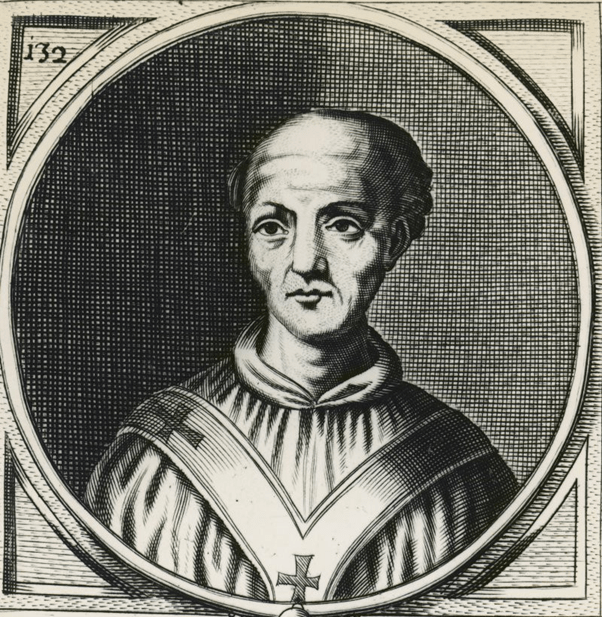
This is a hard question to answer on several fronts. I’ve tried to reflect on the first class I taught on Church history, circa 1985. At that point, I had read only two books on church history, both by modern evangelicals. I do recall an anti-Catholic bias to the books, my perspective, and my teaching. In summary, we believed the Christian church went off the rails in the first few millennia under the auspices of the Roman Catholic Church, which was extremely corrupt. The most regrettable example of this debauchery might be during the reign of Pope John XII from December 16, 955, to his death in May 964. According to some historians, it was reported that he turned the Vatican into a brothel and was known to have raped young female pilgrims in the middle of St. Peter’s Basilica. We, evangelicals taught that Martin Luther came on the scene, rebuked the Catholic Church and created a new Protestant Church, that was the new, pure church and the rest is history. I can confess now, that clearly I approached history at that time with a strong anti-Catholic, evangelical bias. I regret that.
But something happened to me in 1990. While I’m not convinced it was beyond normal human psychological phenomenon, to me it was equivalent to the Apostol Paul’s experience on the road to Damascus. After a series of difficult events while living in Egypt, one night I felt the scales falling from my eyes and I got a profound “behind the stage” view of the evangelical world I was living in. It was profoundly marked with self-deceit, factual, and emotional dishonesty. I can only claim it for myself, but I am quite sure that this level of dishonesty penetrated the entire culture. That night, or it was the early morning of the next day, I prayed to God I would seek truth and honesty at all cost. Then, if I discovered that there was not a God in the world of truth, that would be better than believing in a God we just made up.
This has been a long and fascinating journey. It has also been challenging, once I became convinced again that there was an intelligent designer of the cosmos and that Jesus was his Messiah, and I tried to re-enter the evangelical church. The baseless lies were overwhelming (E.g., Bill and Hillary Clinton were kidnapping Christians and beheading them by the thousands, vaccines were created by Bill Gates to kill children), and when I tried to combat them, I suffered a lot of hate directed at me. All social groups have unwritten rules that you do not question the status quo. In religious cultures, it is harsher. If you question anything, you are the devil. In the eyes of at least 2-3 people at my church, I am the devil.
Now, my heart is totally devoted to the disenfranchised from Christianity, not trying to debate, correct, or “help” the status quo. I have no argument with the religious world; I respect and love them. They are not my enemy, nor am I theirs. But I must speak for the sake of others.
This brings me back to my perspective on history. Evangelicals and possibly Catholics believe that each church is created by God’s providence, according to His will. Even though the Catholic church split with the Orthodox in the eleventh century, and the evangelical churches have splintered into at least 120 distinct forms, they each hold that their church is the only true church and is pure to God’s intent. That is totally irrational. There must be corruption within their forms to accommodate so many opposing forms.
In the middle 1990s, I spent three years studying the history of western civilization and the church. This was subsistence study, to make sense of my world. With my new, unbiased eyes, the evil within all churches was overwhelming apparent. No more sugar-coating. I could give a thousand examples, but it is estimated that two hundred million people have been slaughtered by the Catholic and protestant churches, and many more abused and tortured. Even today, taking the example of sexual abuse of children in the Catholic church, then the church hiding the perpetrators, the same is true in the evangelical church. The church I grew up in had an active pedophile and I know that with certainty because he molested my brother, and my mother knew of many boys so abused. But the church also hid it.
I’ve spoken to many people who have left Christianity after being abused in their churches. They walk away with a horrible view of Christianity. But here’s the problem and why it is so hard to look at my own biases when I study history. Like all human-derived institutions, churches reflect human nature. Human nature is like a checkerboard of the glorious and the hideous. The Hitlers and the Mother Teresas.
Even during what I still call The Dark Ages, you can find many saintly, pure, people, Catholic people, for whom there is not enough positive superlatives. People far beyond my feeble attempts of service. Yes, you can also find brilliant writings and pieces of art. My greatest hero is a “Dark Ages” Catholic, Thomas Aquinas. It is therefore difficult to paint the period with a broad brush.
But I did come away from my studies in the 1990s with the notion that the church, due to its many errors cannot be as God intended. There is no hope of that. From this observation, I recognize that all churches are human derived, fallible institutions and that’s okay. They can still serve magnificent purposes. I’ve said many times that the church I now associate with is the best I’ve ever known, full of wonderful people. People that are far better than me. But like all churches, it is not a welcoming church to people like my group who want to ask hard questions or rationally confront stereotypical concepts of faith.
So, I honestly regret if I carry an unfounded bias in my historical views. But I also believe that all cultural groups, and most of all churches, practice revisionist history. I only point this out not to be cruel, nor with the hope that it can change, but because the disenfranchised already observe this.
Mike
 J. Michael Jones
Leave a comment