I will start with another example of how the Christian right has lost its freakin mind: This is a recent worship service at Mar-a-Lago. The artist is good; the rest is beyond belief. No critical thinking of how this is now a cult. Donald Trump is being worshiped, not just honored. Shameful.
With so much happening in the world, it is easy for me to fall down rabbit holes. However, I said I was going to write about HOW America got to this inflection point that we are witnessing, especially the role that the Christian culture has played. History answers so much. If you follow this to the end, many things will make more sense.
Historian Heather Cox Richardson describes three pillars/agendas to the present dismantling of America. One of those pillars is the Christian right, the writers of Project 2025, whose ambitions are to completely destroy the government and replace it with a king who rules a new “Biblically-based culture.” A Christian Fascism. Their partners in this dismantling are the billionaire tech-bros who want the dismantling to remove all limits to their ability to make more money, and the white supremacists, who want to return to a mythical America when the white male was supreme. A toxic mixture. What would the historical Jesus of Galilee say?
I will demonstrate in future posts that the world the Christian wants to create has nothing to do with the Bible but comes from their culture and their inherent problem in epistemology (how we gather knowledge or truth). Today, evangelicals are the group that is most likely to believe baseless conspiracy theories and the least likely to practice critical thinking. But one would think, if one group had a corner on a relationship with the creator of the cosmos and a special book of instructions that the creator wrote, they should be masters at finding truth, the best at critical thinking, not the most easily duped.

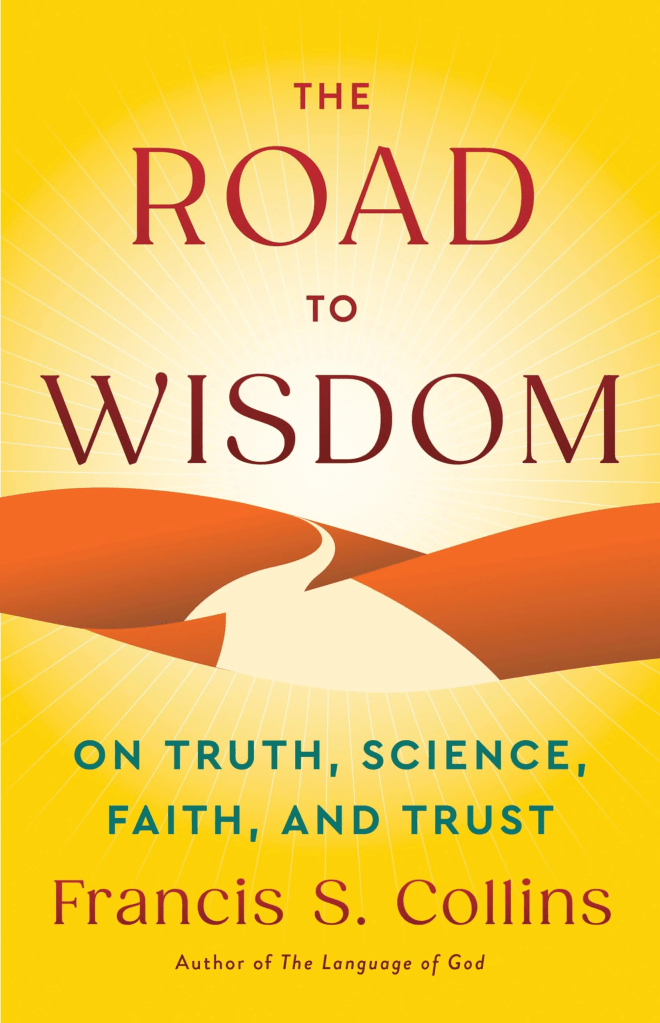
I want to begin this post with a positive note. I just received my copy of The Road to Wisdom by Francis Collins. I have a lot of respect for Collins, as the director of the Human Genome Project and the director of the NIH. He is a brilliant thinker and a conservative Christian. From the reviews and the introduction, I think he is going to address this issue of epistemology of the American culture, especially the fallacies in Christian thinking. I’m sure he will do a better job than I in pointing the way out of the mess we are in. I’m just finishing up Return of the God Hypothesis and can’t wait to start Collins’ book.
I’m going to re-start this story one more time. Part of the reason is that I digressed and another part is some of my views have changed in the past few weeks, due to additional reading of more historical material.
The Inception of Christianity
For the first two hundred and fifty years after Jesus of Galilee was crucified by the Romans and Religious establishment, there was a wide spectrum of Christian philosophies and practice. There were the higher orthodox thinkers (the early Fathers, which I’ve mentioned before) and on the other end of the spectrum, there were the Gnostics. The Gnostics, in general, borrowed from some pre-Christian traditions such as the Jewish Essenes, the Persian Zoroastrians, and Plato’s Theory of Forms.
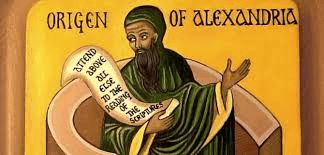
Philosophical views have often followed these two divisions of brain function, rationality and emotions. To over simplify these ends of the early Christian spectrum, the early Church scholars and fathers, such as Paul of Tarsus and Origen of Alexandria, favored the cognitive function of the brain, believing in a monistic approach (the material and spiritual were both part of God’s glorious creation, like I think). The Gnostics favored a dualistic view of metaphysics, specifically that there are two realms, the material and the spiritual. The spiritual (including the emotions) being good and the material (including the cognitive) inferior or evil, created by a lesser, even evil god, Demiurge.
While influenced by Platonic Dualism, the Gnostics departed from Plato in two major areas: the view of reason and the value of the material world. The Gnostics (the name means “knowledge”) believed in a knowledge that comes straight from God into the soul without the need for reason; a modern word might be “intuition” or “ESP.” Conversely, Plato believed human reason was the sole method of finding truth and knowledge. Rational contemplation was the apogee of the good realm in Plato’s Theory of Forms. Additionally, Plato believed the material world was created by a master craftsman-god, Demiurge. The material world was good, but inferior to a more perfect immaterial realm. The Gnostics considered the material as not just inferior but evil, having been created by Demiurge, a god they saw as evil, possibly Satan himself.
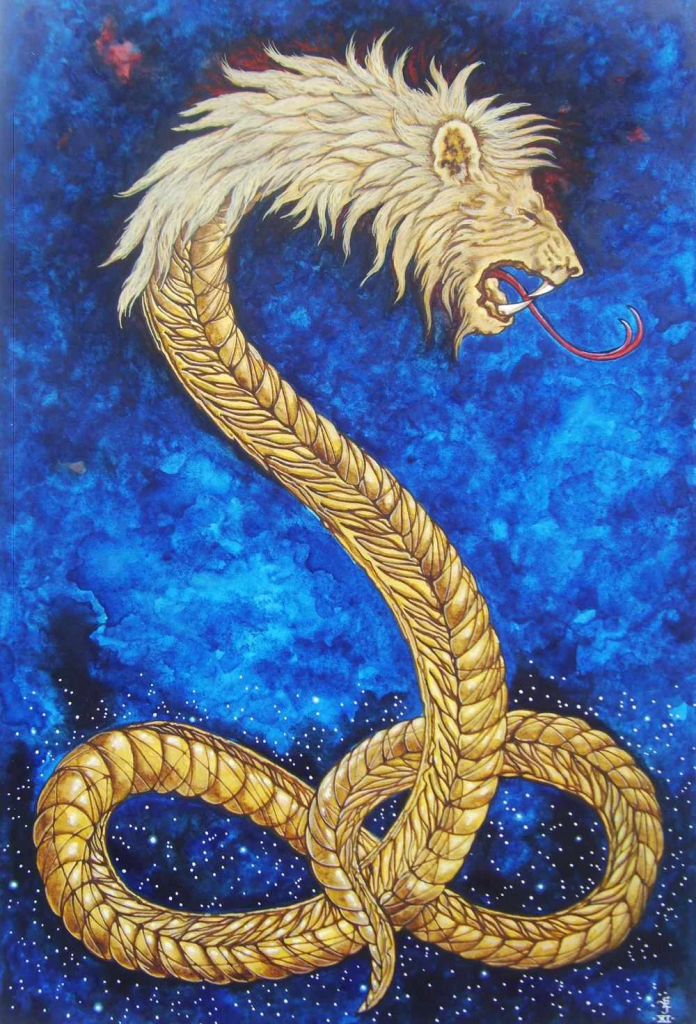
One of the biggest challenge that the Gnostics brought to the early church was in the area of Christology, the nature of Christ. If the material world was created by the evil god Demiurge, then Jesus could not have been both a material man and eternal good God. Jesus would have to be a mere evil-natured man, like the rest of us, or he was the “Son of God” who could never have entered a nasty human body. In the latter case, he was a spirit or ghost, never crucified or resurrected.
A Word About My View of The Church
Most Christians believe that their church, be it Catholic, Orthodox, or one of the 120 Protestant denominations, is the only pure church created by God and that purity was protected by God over the centuries. That makes no sense. As I seriously studied church history in the 1990s, I discovered how cruel and evil all churches were at times, along with their great good. This mixed bag is typical of human endeavors. As I studied the New Testament, the word for “church” was never used to describe an institution, but simply the people from all walks of life who came out to follow Jesus. Now, I am not saying that the organized church is bad. Like all human institutions, they can be good or bad. I relate to a good organized church. There are advantages to organized churches in some respects. But we must also respect those people who choose not to relate to an organized church, and we must have the freedom to critique the church like we do other institutions. If you disagree, then that’s fine with me. I understand that most people disagree.
Constantine the Great
I wish I could tell the whole story about Constantine, it is quite intriguing and would explain a lot on how the organized church was shaped. But I will be brief.
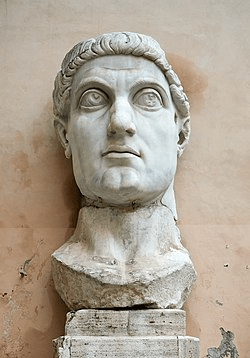
Constantine’s father, Flavius Constantius, was a military leader in Britannia (present day England). Constantine was a successful Roman military leader on the eastern front (Persia) and was moved to support his father in Britannia in 305 CE. I suspect he was called to Britannia because his father’s glory was fading, as he died the following year. On this death bed, Flavius Constantius, declared his son Constantine to be the new northern Roman army general (leader). The army submitted to Constantine and at York (UK) declared him not only their general, but the new Emperor of the entire Roman Empire.
As typical in the Roman Empire, this created a civil war as three other men also claimed to be emperor over parts of the Roman Empire. This is a complicated story that is irrelevant to my point, except that during the process of war and negotiations Constantine slowly (from 306 to 324) took over as the sole emperor of the Roman Empire.
The Conversion of Constantine
There is a popular story about Constantine’s supernatural conversion from polytheism to Christianity during his campaign against one of his “fellow-emperors,” Maxentius. The claim is that he had a vision of a cross (Chi Rho) in the sky before the Battle of the Milvian Bridge in 312 AD and heard the voice of God. This is the traditional belief of both the Catholic and protestant churches, however, this story did not appear for several years after Constantine was emperor, raising some doubt about the authenticity of the experience. I think it was likely fictional to enhance his standing among Christians.
There is also debate among secular scholars about whether Constantine had a genuine conversion. I, personally, have grown to doubt his conversion, at least at that time, because for one, he continued to worship the sun God Sol Invictus, his favorite god, until his deathbed. Christians’ “worship” on Sunday today because Constantine wanted to honor Sol Invictus by making his day, Sunday, the most holy Christian day of the week. Christians today celebrate Jesus’ birth on December 25th (in the West) because Constantine wanted to honor his favorite God, Sol Invictus, by making the most holy Christian holiday on the same day as the “birth” of Sol Invictus (just after winter solstice, when the sun is reborn).
A more likely story about Constantine’s tolerance toward the Christian minority, is the influence of his mother Helena. She was from Asia Minor, where Christianity had more of a presence, and she seemed to have more of a personal passion for the faith. At least she was obsessed with Christian relics from “The Holy Land.” She was canonized by the church.
Constantine legalized Christianity. Realize that the percentage of the Roman Empire that was followers of Christianity at that time was as little as 10%. Many historians see him in the same light as Donald Trump or other politicians who see an alliance with a religious subgroup as a marriage of political convenience and the lust for power, without a personal loyalty to the faith. Transactional. Constantine, while maintaining an altar to his favorite god, Sol Invictus, in his palace and worshiped there–per most historians–was baptized into the Christian faith on his deathbed by Eusebius of Nicomedia, although the Catholic and Orthodox Churches’ tradition says it was by Pope Sylvester (likely revisionist history). It is important to note that Eusebius was an Arian, who shared the dualism of the Gnostics, including that Jesus was not the eternal God because he was part of the inferior material world.
Constantine’s Church
The Christian church prior to Constantine was organic, and diverse. As mentioned already, it had a spectrum of beliefs from the orthodox to the bizarre and cultish. To strengthen his political power, which was essential for his survival, Constantine wanted a new start, away from the political threats in Rome (where some people had allegiances to Constantine’s rivals). He created Constantinople (“the city of Constantine”). He also wanted to unify the Christian religion under a new national church. One of the most important acts of Constantine toward this goal was he called the meeting of the Nicene council in 325 with a primary purpose of unifying the more orthodox and the dualists (Arians, who saw the material world and Christ as inferior). What emerged was a new unified Roman Church, the establishment that Jesus was co-equal with the Eternal God, yet, the flavor of the dualists, Arians and Gnostics, continued to shape the philosophy of the church.
The Philosophy of the Dark Ages
Whether or not the Dark Ages (the thousand years after Constantine created the new unified church) were really that dark is open for debate. But one thing is clear, as compared to the Islamic world, which arose after the seventh century, and Asia, the European world’s progress was blunted. There were two issues that were responsible for this. The first is the devaluing of human reason and the other was the focus of attention of culture.
I have modified my view of the devaluing of human reason over the last three weeks, as I studied once more this period of time. As a matter of fact, I believe the devaluing of human reason is greater today in twenty-first-century American Christianity than it was during the Dark Ages.
It appears that many of the Church leaders of the Medieval Period (some prefer that term to “Dark Ages”) saw human reason as a gift from God, as I do, but they insisted it should only be used to know God and to study Christian things. So, the more influential philosophical change was in the focus. The only thing important was “Christian Spiritual” things.
The late Christian philosopher (of the twentieth century) Francis Schaeffer describes this period as the dualism of Grace (upper story) and Nature (lower story) and that Grace ate up Nature. You see it in the art, in the writing, and in the lack of scientific curiosity about nature.
Thomas Aquinas, 1225 to 1274
As I’ve said before, Aquinas is one of the people in history whom I admire the most. I believe he was one of those people, of such brilliance, who come along only once in a millennium. He was a prolific writer (and I am still working my way through his 6000 page Summa Theologica). I see him as single-handedly ushering in the end of the Dark Ages (two hundred years after his death) and preparing the way for the Renaissance and Enlightenment.
Aquinas believed in two things that profoundly changed the course of the world. First, like me, he believed that human reason is one of God’s greatest gifts. He was so enthralled with reason that he said that people could find God and have a good relationship with God on reason alone. To quieten those critics who claim he went too far and made reason perfect, Aquinas went on to say that it takes a divine inspiration outside of reason to know God completely, such as the concept of the Trinity.
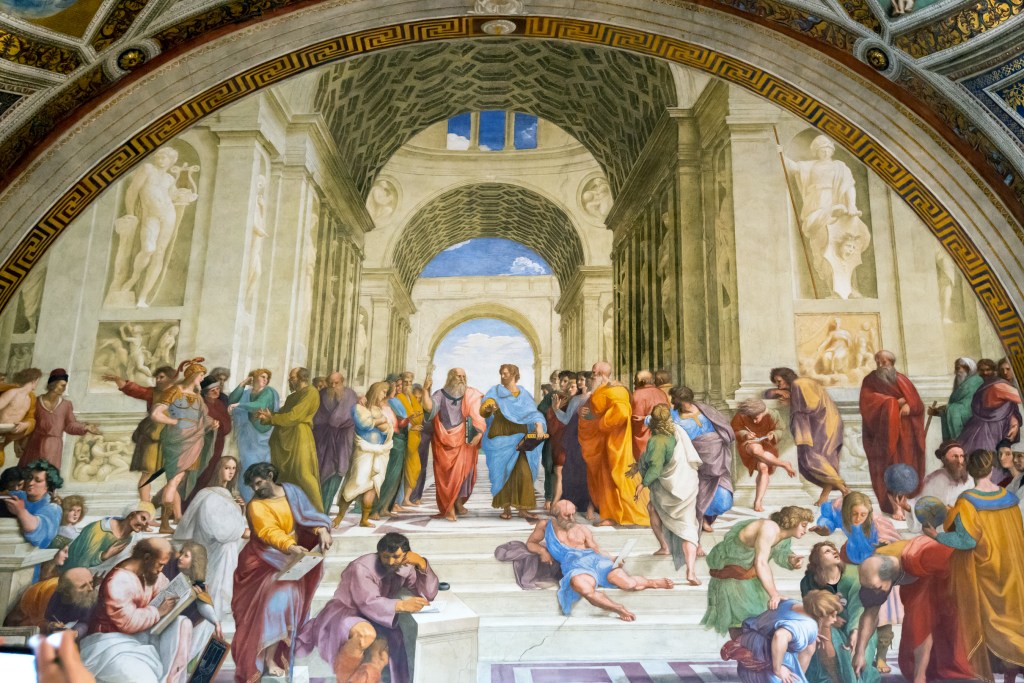
Aquinas also saw nature as God’s stuff, not the inferior product of a lesser god as the Arians. Not evil. He elevated nature (from where the Dark Ages had put it) to being equal to scripture. He said that God spoke in two volumes, the written scripture and nature. He also said that nature and scripture could not contradict one another, so if they appear to, then the human interpretation of one of those has to be in error. That alone would have profoundly helped the Church during the Enlightenment, which I will explain later. This view of Aquinas is profound, and if it had been followed by later philosophers and theologians, we would not be in the mess we are in today, where the Christians, with their scriptures raised above their heads, wage war against the lessons of nature, which they think contradict their Bibles.
As I said before, Aquinas had a big role in finding a new philosophical basis for culture, which led to the Renaissance. South of the Alps, culture continued to be based on the ideas of Plato’s Theory of Forms, but they fixed the Arian problem, with Aquinas’ influence, to seeing nature as God’s glorious gift and human reason as the instrument in finding truth in nature. There was an explosion of art and science.
North of the Alps, Aristotle was rediscovered by the Catholic Scholastics. Aristotle focused on reason without the dualism of Plato’s Theory of Forms. This led to the Scientific Revolution (1500-1700), where huge developments were made after understanding the basic principles of logic and critical thinking. The scientific method was a seven-step process, but the key ingredient was starting by removing one’s own emotional biases. Then there is observation, collecting evidence. Understanding that the more exceptional the claim, the greater the evidence required. These things are all missing today and is the fundamental problem not only in the Christian culture, but in the American culture at large.
I will finish this next time, I promise, where I show how the tremendous successes of the Scientific Revolution and the Enlightenment ran into a problem that gave us this irrational world we live in today.
Mike
 J. Michael Jones
Leave a comment