The Why There is a Different Opinion

Christian and Evolutionary Biologist Looking Under a Rock to See What’s There
Before I look at the evidence, let’s take a giant step back. Something is going on here on a psychological level that would allow two individuals, both decent people and rational, looking at the same earth, to have the same evidence, but walk away with totally different conclusions. The Christian sees that humans appeared fully formed just six thousand years ago, and the evolutionary biologist sees an ancient, deep time, gradual process where humans gradually became humans, sharing a common ancestor with other animals. What is going on here?
Within science, there is often debate between two opposing opinions. I’ll give one example. Homo naledi is a group of ancient pre-humans that were found in a cave in South Africa in 2013. On the walls of the deep cave where they were found, there are marks (see below). Lee Berger, the anthropologist who discovered them (or at least brought them to light), is convinced that these are marks, symbols, or cave art created by Homo naledi. Other anthropologists look at the same marks and believe that these are natural rock features. The latter group reached this conclusion because Homo naledi has such a small brain; it doesn’t seem logical that they would be using such symbols, and sometimes dolomite rock (the rock of the cave wall) can form hashtag-looking features naturally.
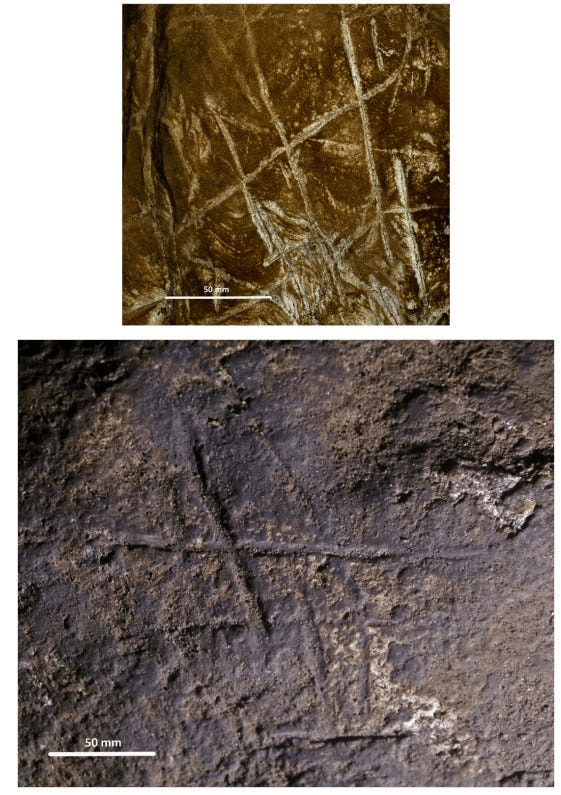
Cave Wall Marks in the Homo Naledi Cave
However, when we look at the positions of the anti-evolution Christian and the evolutionary biologist or anthropologists, there is something much more profound than simply the interpretation of evidence, as in the Homo naledi story.
When I returned to Christianity, I committed to God and myself that I would pursue the truth above all else. So, the things I’m about to write will be disturbing to some Christians. Yet, I am compelled by my candor. My mantra is, if there is a God, then that God dwells within a framework of factual truth, not in a shady world of deceit and sleight of hand.
How Do Religion and Science Find Truth Differently?
Before I get into the evidential arguments, I must talk about epistemology, the way we find truth.
It is inherent in humans (and animals) that the way we find out truthful information about the world around us is to examine the evidence with our senses and then use deductive or inductive reasoning to reach a factual conclusion. This is how we live the vast majority of our lives.
Imagine the anti-evolution Christian and the evolutionary biologist, pictured looking under the rock above, are married. They make a beautiful lasagna and set it on the table to cool, while they take a short walk together to look at the roses in their yard. When they return, the empty lasagna dish is on the floor. Was it a home invasion? They walk into the living room, and their dog, Henry, is lying on his bed, looking guilty. There is also tomato sauce on the floor in front of him. The two of them, the anti-evolutionist Christian and the evolutionary biologist, both, looking at the same evidence, make the same deduction that Henry has helped himself to the lasagna.

So, why do the two of them have radically different conclusions about the Earth and human origins? It is not that one is logical and the other isn’t.
In the last post, I shared what I was taught as an evangelical. The evidence is clear that the earth is just six thousand years old and was created in just six literal days, and humans appeared fully formed after plants and other animals, but before the first death on earth occurred. It is human sin, Eve eating the forbidden fruit, that ushered in death to the world. According to that belief system, it is the evolutionary biologist whom evil people have brainwashed with an agenda to make up stories about pre-human creatures, that are transitional between humans and apes. In other words, a baseless conspiracy theory.
The Nature of Religious Epistemology
To understand what is going on here, I must look at how the religious person typically finds truth. In the mundane areas of their lives, they find truth the same way the evolutionary biologist does, as mentioned above, via examining the evidence and using reason to reach conclusions.
Here is where I will say my bold statement again. After spending much of my life around religion and science, I’ve reached a firm conclusion. But before I share that conclusion, I will be clear. I’ve tried hard on this blog to separate religion from the simple teachings of Jesus of Galilee. I follow the teachings of Jesus, but I hate religion. This statement cost me my best friend at my church two years ago. Rather than listing to my definition (which I will share again, below), he concluded that this meant that I was a “God hater” and a very bad person.
Most wars are about religion. I’ve watched religion turn friendly people into monsters, while I’ve seen mediocre people turned into saints by following the simple teachings of Jesus. I worked with a “Mother Theresa” type nun in the slum of Egypt, a true saint. But more common than that, there are saints in my church. People who put others first. Who love unconditionally.
However, my definition of religion, which I’ve shared before, is a human-derived institution with the sole purpose of increasing one’s feeling of piety. The fastest way to improve your feeling of piety is by comparing yourself to others. Therefore, religious people are deeply concerned about a plethora of doctrines that you must believe and behaviors you must exhibit. Certain words you cannot say, like shit (and if you do, it proves they are better than you). They hate the people who are different from them (gays) because this hatred buttresses their self-righteousness. I look better when I make you look worse. I lived this way for 38 years.
Some of the dogmas that they say are essential include the earth being created six thousand years ago (a date that is not mentioned in the Bible but from conjecture by a Scottish Archbishop named Ussher who lived in the seventeenth century), that the Genesis story of creation must be taken literally, especially the idea that human sin brought all death to the earth, and that the only way humans can have the uniqueness that they do is to be separate from all other lifeforms. They, therefore, cannot share a common ancestor.
Part of religion’s playbook is to put God into a tiny box, with very thick walls. They, alone, know how God thinks, what he wants, who he hates, and of course… how much he loves them because they are so good and have the correct dogmas. They believe they create this box by reading what the Bible teaches them. But let’s be honest, the Bible is a hard book to read and interpret. First of all, much of it was written in the late Bronze Age by people in a very different culture and language from modern America. Additionally, there is significant deviation in the writings of preserved texts, the earliest of which are hundreds of years after the dates of the authorships. So, while I agree that the Bible self-reports that it was inspired by God (not written by God) and is profitable (not mandated) for godliness, I also know honestly that people project onto the Bible what they want it to say. That’s why we have Protestants, Orthodox, and Catholics, and why we have at least 120 divisions of Protestantism, each claiming to have the only true interpretation of the Bible.
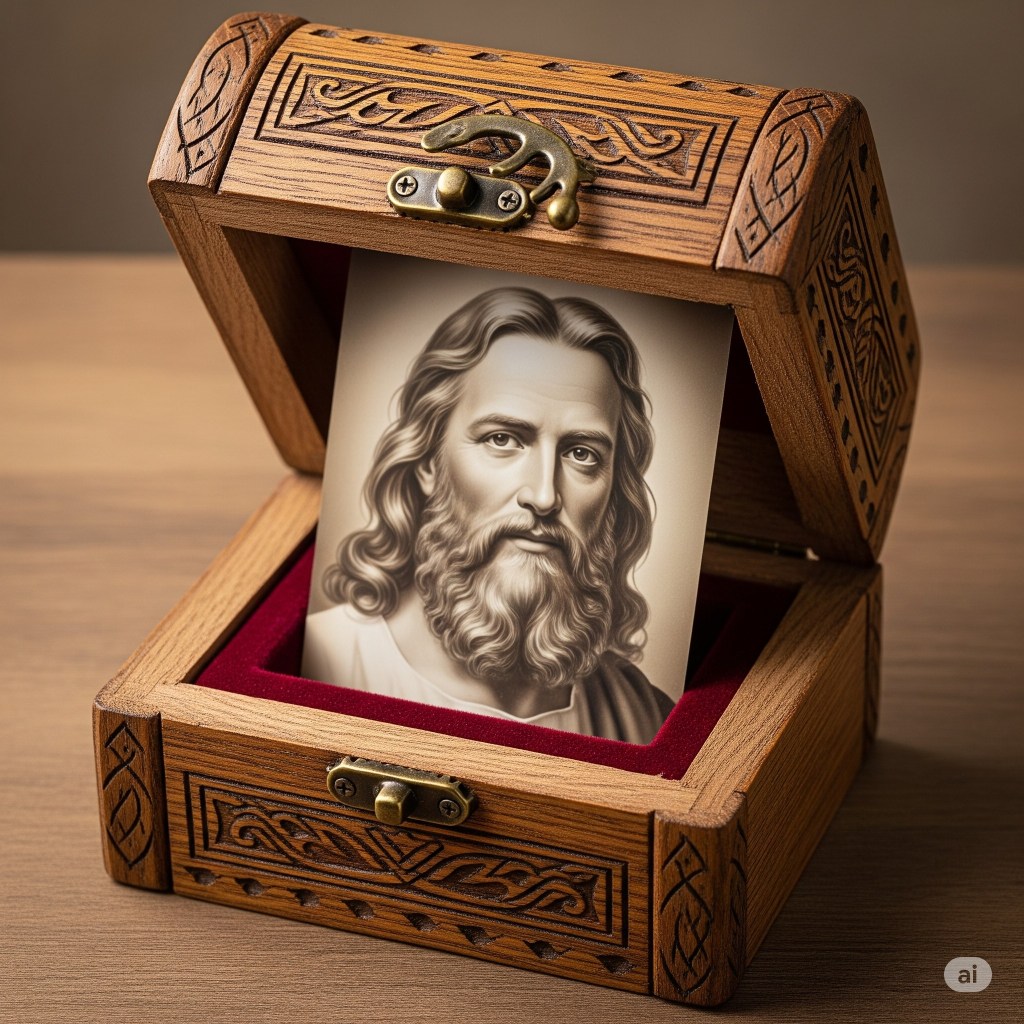
Our Little God-in-a-Box
So, with this background, it is clear to me that science has a sincere interest in finding truth, while religion’s purpose isn’t finding truth, but conformity. “If everyone believes the same dogmas as I do, then it substantiates my views as the right ones, and therefore, God should love me better.”
In this process of creating traditional beliefs and dogmas, certain things have become deeply ingrained in the souls of religious people, foundational truths that are worth dying for. It is profoundly emotional for the religious person. Yeah, some scientists get wound up in their views. In the example above about the cave art, I’ve heard some heated debates between pro-art and pro-natural rock anthropologists. But usually, scientists don’t make it a moral issue, such as, “You believe it is art because you are a moral degenerate and stupid,” which you will hear in Christian circles.
The glory of the Enlightenment was figuring out the very best way to find truth. It starts by identifying and removing your own biases. Then, collect the evidence objectively and make rational conclusions. Religion begins with a conclusion, one of the traditional beliefs they have created, and forces the evidence to support their pre-drawn conclusion. The “scientists” who work for the “Answer in Genesis” organization (a young-earth anti-evolution Christian group) must sign a contract that they will only believe in a six-thousand-year-old earth and refute all components of evolution. This is conformity, not science.
Next time, I will examine the scientific claims of anti-evolution Christians and then review the evidence supporting human evolution.
Respectfully, Mike
 J. Michael Jones
Leave a comment