I was going to write about the incredible world of biology. While I have a graduate degree in biological sciences, I only know the thin margins of all the mind-blowing processes that enable life to exist, reproduce, adapt, and thrive. But I’m afraid that if I get bogged down in that discussion, I will lose my audience. So this one will be my last on the topic of what nature can teach us about God.
Deep-Time: An Ancient Cosmos
Forty percent of Christians in general and most conservative Christians believe in a God who created the cosmos only six thousand years ago. Again, this idea comes from church tradition, not from scriptures. You can read the Biblical tea leaves and come up with such absurd ages, but following Aquinas’ exhortation, we need to compare it to what nature says. The evidence for an ancient Earth (4.5 billion years old) and a much older cosmos (13.7 billion years old) is overwhelming.
The young Earth creationists, who make videos and visit churches, are… well, lying. They claim the dating methods are wrong. They attack and create conspiracy theories about the honest scientists who are following the real evidence. They make it a moral issue, as I heard a young earth creationist “scholar” say in her lecture, my paraphrase, “If you allow your children to accept an old Earth, you are allowing them to turn their backs on God. Next, they will be using drugs, becoming homosexuals, and having abortions.”
These people are lying because they, sadly, consider a six-thousand-year-old Earth as essential to their faith. You can call it motivated reasoning or confirmation bias. As I’ve shared before, I was forced out of my previous church after ten years of impeccable service, when I was declared, in front of the whole church, “Mike, your’re not to be a real Christian.” Why? Because I voiced my opinion that it would be a mistake to require our teens to believe in a six-thousand-year-old earth to be Christians.
One evangelical friend said to me once, “Mike, your god is small because you don’t think he is big enough to create all there is, in an instant. And that he was big enough to create a worldwide flood.”
Who would have a bigger god, one that created the entire universe six thousand years ago out of nothing using a magic wand, or a god that meticulously created a cosmos of mind-blowing order and complexity, using real, unimaginable engineering and physics, over a period of billions of years?

We live in the stream of time, but surely a big god is not a slave to time as we are. In our world, sometimes we give greater merit to a craftsman who can turn out a house in days, rather than one that takes a decade, but most of the time we don’t. We must know that speed does not equal quality, skill, or complexity, but the opposite. But greater than that argument is the one about the second book, reality. Reality screams of an ancient cosmos. The only way a young Earth can be considered valid is by deceit. Is God tricking us by layering, uplifting, turning, flipping, baking, freezing, compressing, melting, and eroding rocks to give them the appearance that they happened over billions of years, to fool us? Why would God do that? I heard an evangelical pastor say once, “Satan put the Neanderthal fossils in the ground to test your faith.” Why do the young-earth creationists lie about the geology and fossil record? A god that requires lying and deceit is a tiny god, at best. A Bronze Age god.
For me, when I was able to get out of the shadow of my evangelical thinking, and when I came back to God, that God was much, much bigger than the creator of a 6-thousand-year-old world. Much bigger.
Deep Space
I discussed how the cosmos of the late Bronze and the Greco-Roman ages was measured in hundreds of miles. While that is no longer the case, even among conservative Christians, they hear the numbers of size, but sense that the universe is much smaller. I remember one evangelical friend complaining that our government is wasting billions of dollars to build a spaceship that will travel to other galaxies to find life (must have watched Star Trek as a child). What we know about our present Cosmos is that it is 90 billion light-years across. If my calculations are correct, that is 109.5 x what the small Greco-Roman cosmos was. Which is the bigger God? I will end this entire series on what God’s other Book (nature or reality) teaches us about God. I could write many more articles, but my hope is not to bore people. I want to leave you with the notion that science is not the enemy of God but gives us a window into a better understanding of who God is by teaching us God’s second book.
I will leave with this video on the size of the cosmos. Then, below that, I have a personal footnote about my next series. If you don’t watch the video, skip over it to the footnote.
A Personal Footnote:
I am a candid guy and write in a vulnerable way. After thirty years of being the punching bag of the religious, I feel beaten up, traumatized, and oversensitive to criticism. That is one of my countless flaws.
I was criticized a couple of days ago; “attack” is too strong a word, although my oversensitivity makes it feel like an attack. I lost sleep over this criticism because it came from someone at my church, who for at least three years had been my best friend in the world.
This ex-friend’s words would not have such a bite if he were not a good man, a selfless servant, and had been a great friend. However, when I wrote in this blog a couple of years ago that I love philosophy and hate (man-made, as I defined it) religion, it made him angry at me. I tried to put up boundaries for two years, to stop his attacks or criticism, but it just didn’t work, and I had to end the relationship for my own sanity—a painful loss. From my perspective, he now thinks I’m a horrible human being, or at least a terrible Christian. I sense that he feels like God has sent him to straighten me out. He would have to get in line with the many others who have felt that way.
I wrote a post on Facebook this week, rejoicing in the peace in Gaza, feeling the joy of the Israelis who were welcoming the hostages back, and the Gazans for the bombing and destruction to end, and food to return. But I also shared that I personally, at this point, cannot forgive Hamas or Netanyahu for the suffering and murder they have caused to the innocent.
This old friend, although he is not a Facebook friend, saw my post and jumped on me because the Bible teaches we should forgive, and I don’t reflect Christian values (implied). “Yes, I know that,” I said, “and there are countless other things that Jesus taught that I don’t do, and I regret that.” My words did not help deflect his criticism.
Yes, I am sure this old friend is a better Christian than I am, and I’m not debating that. But, since I left a very pretentious form of Evangelicalism in 1990, my highest personal calling is honesty. I could write countless articles on how I fail the Christian ideal. As I’ve said here, I measure people by how they live out Jesus’s command to love one another, especially the “least of these,” and not how they think. With that measurement, I am sure this old friend is better than I, as are many people at my church. I regret I’m not a better person. My point with this private revelation is that in my next series of writing, I want to look at the psychological foundations of religion, candidly.
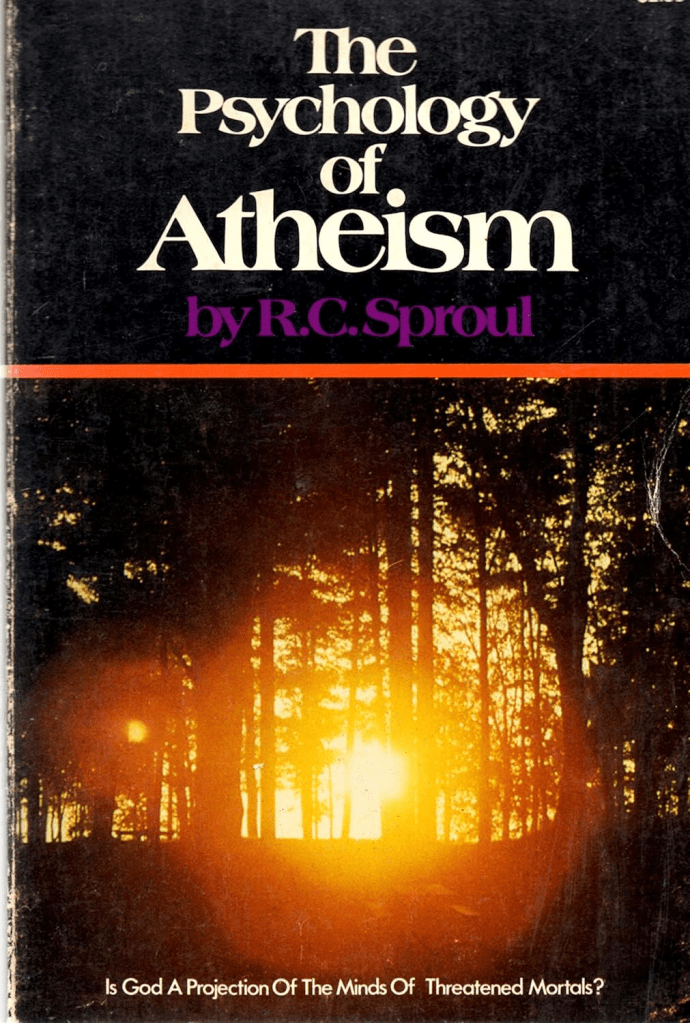
I read a book once, titled The Psychology of Atheism. But here, I want to write about the psychology of religion. I think this is an important topic, not to deconstruct those who attack me or my own introspection, but because the number one reason that people leave Christianity, in almost all polls, is hypocrisy. I try to avoid hypocrisy in my own life, not by living perfectly (only in my dreams) but by being honest about my failures. No, I cannot forgive Netanyahu or Hamas… yet.
On a second note, I am still thinking about how to turn this blog into a vlog or podcast. If I do it right, it would be easier for me and (I may be delusional) think I could come across with some humor and kindness that would blunt some of the hate-mail that my writing can provoke.
Respectfully, Mike
 J. Michael Jones
Leave a comment