Tabula Rasa
If we were to come to Earth as an alien from a radically different culture, with no prior exposure to Earthling religion, including Christianity, I think we would observe some peculiar things. For one, in respect to Christianity, the belief that God him/herself has created all the cosmos, from the weird quantum world through the profoundly complex workings of living cells to the meta-world of galaxies, supermassive black holes, and supernovas. Yet, we “feel” that these created things are mundane, not important to God, maybe even nasty. That our religion requires something else, above the material, to have meaning or spiritual significance. That’s what I glean from the verse I ended the last post with, which describes it as a wicked generation that seeks “signs.” Something beyond the mundane created material world… also called nature.
This mindset is so ingrained within the Christian culture that I suspect that even if I make a very clear case of thinking differently, most reading this wouldn’t have a clue what I am talking about.
The Miracle of Albert Einstein
One of my greatest historical heroes is Albert Einstein. One of the things he said was, “There are only two ways to live your life. One is as though nothing is a miracle. The other is as though everything is a miracle.”
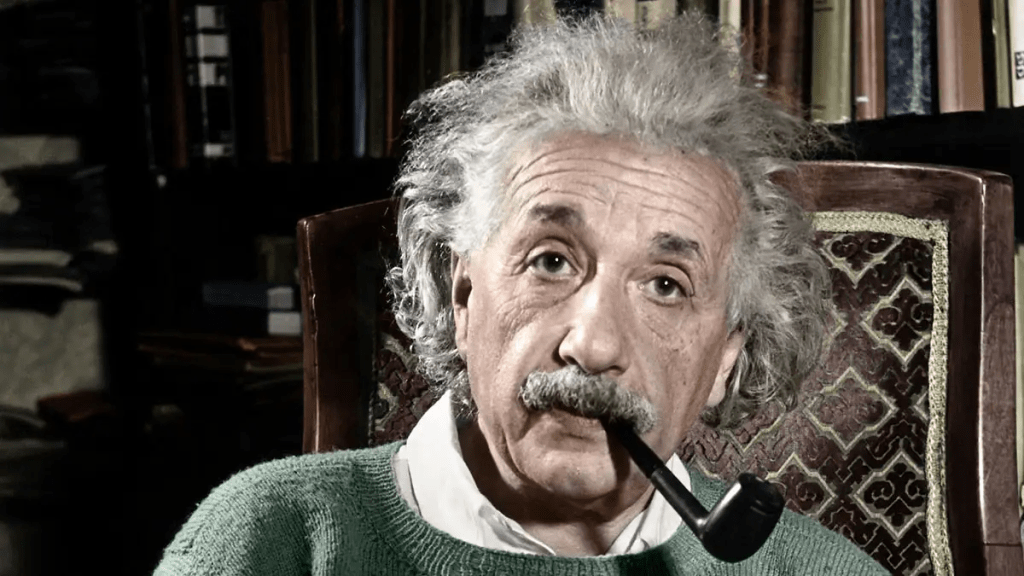
It is hard to pin down Einstein, a Jew nonetheless, regarding his own theological beliefs. He rejected being called an atheist, was more comfortable with the label agnostic, but described himself as “lacking the faith of a religious believer but feeling the unbounded admiration for the structure of the world” (my paraphrase). Some ascribe to Einstein the scientific pantheism of Baruch Spinoza, and he agreed to a point.
This quote about everything being a miracle is misunderstood by most because of the cultural connotation that a miracle must be “supra-natural.” But this is not what Einstein is saying. He, as someone who knew the profound mysteries of the universe, that the measure of energy conversion from matter is exactly squared the speed of light (a profoundly mysterious connection), knew better than most that this created world is magical. Not “magical” as a poet might describe the moonglow in a dark forest, but literally magical, like pulling a real rabbit from an honestly empty hat, not one with a trap door, or using sleight of hand.
In other words, if we did not take nature for granted, which we all do, we would open our eyes and see that we live in a world of the magical. This is why people like Louis Pasteur say that a little science distances you from God, but a lot of science brings God closer. Why? Because when you really start to understand science, it doesn’t explain everything without the need for a God, as the superficial science observer thinks; it blows your mind with the reality that we are living in a profoundly magical world.
The Example of Gravity
I could write hundreds, if not thousands, of examples of what I am trying to say, but I will pick a simple one: gravity. Those who do not know science think that Sir Issac Newton discovered how gravity works, thus taking it from the mysterious to the mundane, like someone thinking a clock is magic until they take it apart and see the springs and gears. That is absolutely not true. Newton discovered the mathematics that describes the nature or laws of gravity. As brilliant as he was, Newton made no attempts to explain what caused gravity, trusting it was a mystery of God.
Einstein tried to explain the cause of gravity, postulating that gravity is what we feel when mass distorts space-time. I, personally, suspect that gravity is a simple function of time and not space-time. We know, from Einstein’s calculations of relativity and experimental evidence, that time moves more slowly the closer it is to a large mass (to any mass, but a small mass is undetectable). If the bottom of our feet, nearest to Earth, is moving in time at a slower rate than our heads, then it creates a vector of force toward the slower time, which we perceive as gravity.
However, to truely explain gravity in a way that takes it out of the magical, it would mean, for exampe, looking through a mircoscope and seeing these mircoscopic people with bows and arrows, their arrows with strings attached, and as we get close, they shoot the arrows into us and pull down on the strings to pul us closer, thus gravity. But of course, this is not true. However, particle physicists suspect that there is a particle called a graviton that “gives” gravity to other particles.
A Return to the Practical
So, here is the problem, as I see it. Due to the influence of the early Gnostics, we see nature as the mundane, at least, if not evil. Therefore, human emotions are not of God, unless we pull a sleight of hand, and call them “spiritual.” For example, “I cried all through the service, as I felt the hand of God on me.” The material world is not magical but “natural,” meaning, in this case, without God. So, to be of God, it must be “Supra-natural.” When I was an evangelical, we used the term “God thing” to point out something, like running into Joe at the hardware store, was supra-natural, a miracle by God, to separate it from the natural, which we assumed was not of God.
Not only that, we pretended that many other supra-natural things were happening all around us, cars running without gas, people being healed, not from scientific treatments, but the direct hand of God, speaking in strange tongues, seeing images of Jesus in the tree canopy, all because we saw no value, no wonder within the natural.
So What?
Why does this matter? I will begin to answer this here, but I will need one more article to complete the thought.
First of all, because we have absorbed the Gnostic idea that the reality around us is inferior, we make it difficult for people who don’t share that view to participate in our churches. Maybe we will let someone get by with, “I felt really close to God yesterday on my hike in the beautiful North Cascades.” But when they say, “Science is so helpful for me to see what God has done, the beauty and magic of the real world, creation,” we tell them that’s not acceptable, as I was told recently, “Science is the enemy of God.” This forces many people to leave our churches. This is not about me. I’m okay. If every church in the world burned down tonight or dissolved, it would have no effect on my incredible relationship with God. But I worry about those we are forcing out.
When we think that nature is mundane or evil, and that it requires a supra-natural event to be from God, it creates serious problems in our epistemology and concept of the nature of God. I will discuss those two as my last installment, next time.
In Peace, Mike
 J. Michael Jones
Leave a comment