In some ways, our lives are like a cornucopia. Most of us start fully intact, a family unified, many relatives still part of our lives, no real aches or pains, a quiver full of dreams and hopes like the fruits of an abundant harvest. Life is magical in many ways when we are kids. But as time progresses, we witness the slow constriction of the horn. You find out Santa isn’t real. Grandpa dies . . . then grandma. Before that, death was alien to your world. Then your siblings disappoint you as do your parents. For half of children, they feel the devastation of their parent’s divorce. Nothing will ever be safe again. The cornucopia continues to unwind and narrow. More disappointments. The certainties of life, now uncertain. The wonder years fading as a lost dream, an active imagination tamed by a brutal reality.
Before long you are in your middle age, a lot of angst as we see our bodies succumb to nature and our growing disappointments in ourselves. Unrealized dreams. By then, too many of us have witnessed the devastating loss of someone close, by death . . . or rejection. Then the older years, further decay of our mortal bodies and more losses of friends and family members as we age-out of meaningful relationships and senior isolation ensues. A sudden onset of illnesses, especially when it comes prematurely, further constricts the funnel, more lost dreams. I know.
If this sounds bleak, I will offset this story with the fact that we are all heroes for having survived this arduous journey with a bright spirit and optimism intact. I’ve shared about my aunt Helen before, who lost her parents and sisters while a teenager, but developed a profound sense of humor and a joy that I’ve never seen in anyone else. So, gloom is not inevitable. Of course, along that journey there are new fruits, children born, new marriages, successes by yourself and your family and friends, new adventures, new friends, but the state of mortal life is a sum loss by the end.

Recently a poll of the happiness of countries of the world made headlines, because, for the first time, America fell out of the top 20 countries, coming in at number 23. There are now 50,000 suicides in America each year, an increase of over 35% since 2000. No one should be surprised as the right-wing and left-wing medias have made a butt-load of cash teaching us to hate each other by lying about the other side and preaching doom and gloom, “We are on the precipice of the end of the world, if you know who is elected,” they cry.
What I found surprising about this survey, was that Americans under age 30 are much less happy than those over 60. Sadness when the cornucopia is still brimming, how can that be? Suicide is the second leading cause of death in the 10 to 34 year old age group. This is a historical aberration. Maturing out of the wonder years has always been a challenge, but something else seems to be at play here.
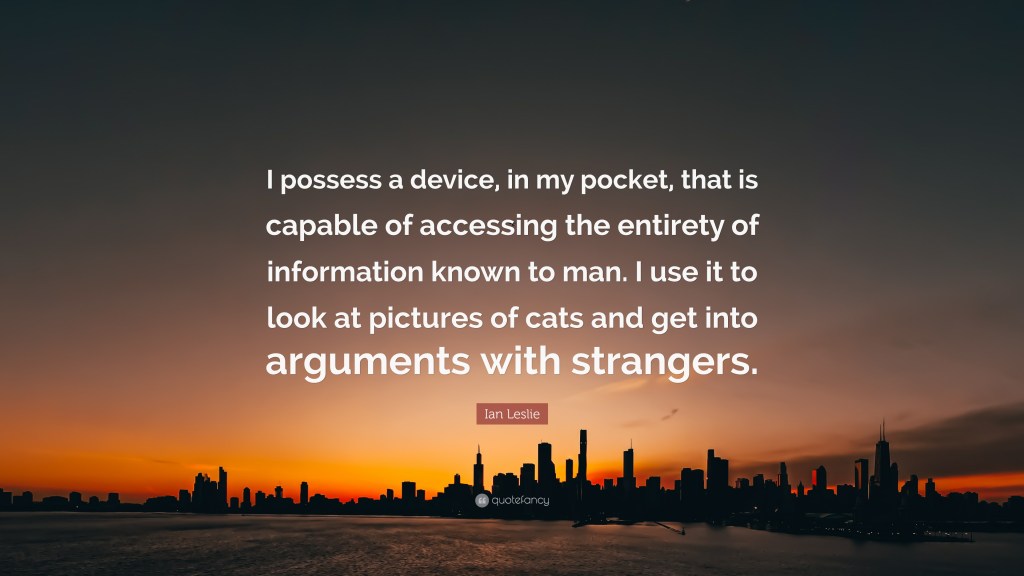
Experts have shared several reasons for this epidemic of depression and suicidal ideation of our youth. Social media is one player. A study showed that when middle schoolers are introduced to social media (and given their own smart phones) it gave them a temporary euphoria, lasting several weeks. However, after that, there was a gradual decline in happiness, primarily provoked by relentless online bullying.
I want to pause to say, science and technology is not the devil. With each new development, people make a moral choice in how to use that technology, for good or for evil. Unfortunately, it is businesses who see a profit, and politicians who lust for the businessman/woman’s money, who allow those poor choices to continue.
Another claim I’ve heard, and I don’t know if it is founded in evidence, is that the deterioration of the core family is the cause. Yes, we are a long way from the Leave to Beaver days.
I suspect that the real culprit is the loss of cultural certainties. This is not based on a study, but from conversations I’ve had with many Gen Xs. A very small sampling I must admit. But this data, combined with a lot of thought, has led me to this conclusion.
Throughout history, culture has changed at a snail’s pace. Starting with the Neanderthals, their culture barely changed over 300,000 years. Can you imagine a teenager who sees the world almost exactly like their relative who lived 300,000 years before them? There is DNA evidence that the same Neanderthal family lived in the same cave (at Gibraltar) for over 30,000 years. Can you imagine the same family residing in the same house for that long? Social stability at its highest. Then with homo erectus, their cultures incrementally changed over spans of 10,000 years, but the same stone tools and way of life as hunter-gathers. When modern humans came along, changes in dress, food, language, beliefs, and behavior had petite and insidious changes over hundreds of years. They did go from hunter-gathers to an agrarian society, and then to an urban lifestyle. Yes, there could be catastrophic events, your village being attacked (e.g. as by Vikings) and you are taken as a slave to another civilization, where the change in culture was instantaneous, but those were the exception.
Starting with twentieth century, with the taming of electromagnetic waves, these changes in cultures began to accelerate. I can remember growing up in the 60s and 70s, and there was a significant difference in my generation’s music, dress, and way of thinking than that of my parents. Bell bottoms, long hair, and Creedence Clearwater Revival were markers of our lives. However, such a gap did not exist between my parents and their parents in the pre-radio and TV days.
With the invention of the internet, profound changes in culture, including its fundamental beliefs, happens within a handful of years. I’ve spoken many times about the swing of the pendulum of thinking fads over the centuries. Now those fads are happening within one generation.
As you know, modernity’s decline crossfaded with the rise of postmodernism in the 1960s, postmodernism reaching a peak within the past ten years. The initial definition of postmodernism was “the loss of a meta narrative for culture,” no one correct religion, no one cultural or philosophical idea is absolute, and applicable to all. By by these latter days of postmodernism, all aspirations of truth were lost. The manifestation of this conclusion has been seen most notable in the political world over the past 8 years, where disagreements in policies have evolved into alternative realities.

I am confident that one of the main driving forces in this disenchantment in life of the young, is the loss of the bedrock for meaning and morals, philosophical or religious certainties.
Now imagine a child who grows up, not just believing in Santa, but believing that life has a meaning. Perhaps that meaning was tied up in the Christian narrative, a good and personal God who created the cosmos for our enjoyment and has a moral framework for how we should live, all written with the language of absolutism. To be fair, Christianity, like all religions also has a plethora of “certainties,” that are more cultural bullshit than factual truths.
In the 1960s, such a religious orientation could be challenged with the reasonable argument that there is no God. That alone could be difficult transition while maintaining a sense of meaning. I’ve been an atheist at points in my life, but I never arrived at a place of finding meaning and morals within that orientation, but I have friends who claim they have.
But worse than the transition from an absolute notion of a loving and personal creator to atheism, is the transition from theism, or even atheism, to nihilism. There are no answers, the postmodernist claims. You must give up your aspiration for finding any truth or meaning.
One of the most disturbing things I’ve ever heard from the mouth of a preacher was from one at the Center for Action and Contemplation, a postmodern Christian group. This pastor claimed that there are no answers, questions still okay, that even Jesus wasn’t interested in answers. How absurd and historically inaccurate! This pastor had given up on the aspiration for truth for the sake of harmony (if there is no truth, then all philosophical and political viewpoints are the same, right?). His harmony will be short-lived I’m afraid and their notion of there being no answers will only add to the epidemic of nihilism. The historical Jesus said that harmony is the fruit of love, not agreement and that there are absolute, discoverable truths and real answers for the hard questions of life.
I saw a poster on a GenX’s apartment wall that read, “Life Sucks, and then you Die.” This defines Gen X or Gen Z’s nihilism.

I am bringing up only one facet of a complex problem, neglecting other relevant psychological and sociological issues. But a solution for this one facet starts with a simple notion, to seek honesty with this age group. Reintroduce the aspiration of truth that has been lost in this late-postmodernist generation. Encourage this age group that it is okay to challenge their religious beliefs (especially the bullshit “certainties”) as well as the atheistic views, seeking real answers about meaning and morals.
It was either the French writer Marquis de Sade or one of his comrades, as I forget, who said any act of free will gives meaning to life. That action could be feeding the poor . . . or strangling the poor to death. It doesn’t matter. Doing something to leave your mark in history supplies the meaning we all require, now that there is no meaning tied to truth. I suspect that such warped thinking is the MO of the school shooters and other perpetrators of destruction. “Leave your mark, be famous for a day,” a false assumption for meaning in a society that says there is no meaning, no certainties.
We must encourage the young not to give up, but to embark on that incredible journey, the proverbial search for the meaning of life, with real hope that it can be found. Ask questions knowing that real answers are discoverable.
I only wish that I had been further along in my own journey while my kids were still young. I hope it isn’t too late for me to influence them now. There is truth, there is meaning, there is a moral framework for living. From that foundation, real joy of living in this glorious cosmos can still be realized.
Mike
(Please be gracious as I typed one-handed while confined to a hospital’s infusion bed)


 J. Michael Jones
Leave a reply to Bryan Cancel reply