A little over a year ago, I decided to stop posting things here that could be misconstrued by religious people to personally attack me. Religion can be highly competitive, and I have no interest in that sport. As I’ve stated, I am writing for those who have left Christianity or are contemplating doing so. I have no quarrel with those who are happy in the present Christian cultures. However, trying to stay quiet gave me no respite. So, as I alluded to a few weeks ago, I would start blogging again under my title of “Ramblings.”
I have two major themes to my thoughts and writing. The first is the fact that our American culture is presently burrowing into a new epoch, what I am calling the Dim Ages. Not quite as bad as the Dark Ages, but similar, with a different cause. It is a time of the loss of reason and truth, which will not end well. The second theme is the fact that America has recently crossed over into being “post-Christian.” I have now resolved that is a good thing. What is being rejected is two thousand years of the evolution of Christian culture, not necessarily the teachings of Jesus of Galilee.
Going forward, I want to do at least one or two posts on this burrowing (is the best present participle to describe this movement) of America. It could be worldwide, but I haven’t seen it in other countries as I have in America. The election of Donald Trump was the confirmation I needed that this was truly happening.
Then after that, I want to do several Ramblings about living in the post-Christian reality, even getting into the very practical aspects of that living. My focus will be on those who have left or are leaving Christianity, not those who want to do whatever they can to preserve the Christian culture as it is. I have great respect for those people, but that’s not where my heart is.
What I Bring to the Table, Turning Weakness into a Strength
I am a habitually self-doubter and often ask myself, with a plethora of bloggers, podcasters etc.—most far more talented than me—is there a need for me to continue? I have not found anyone who is in my exact niche. Besides my unique perspective on culture and Christianity, I also bring some personal things to the table.
There is something about my persona that I don’t like, and it started at an early age. My mother said, about this disposition, “You aren’t like other children, you feel things much too deeply.” She meant both sad and happy things. But as I have spent a lot of time thinking about this, I don’t think it was the feeling that was dysfunctional, but the expression of those feelings, like I’m doing right now.
My mother was the same way, so that’s why it isn’t clear if she taught me to be this way, or I inherited the composition of her own brain. But my own persona became like a goofball, tag-a-long friend that always embarrasses me. My most recent episode of The Healing Hut was a good example. I shared some deeply personal things, in tears, for which I am now embarrassed. I’m sure I will wake up in the middle of the night tonight, embarrassed about what I am writing here.

I have tried to use this weakness as a gift or strength. By writing candidly and with great vulnerability. While I understand that this is a big turn off, for many people, it is helpful for others. It also makes me an easy target of some religious folks.
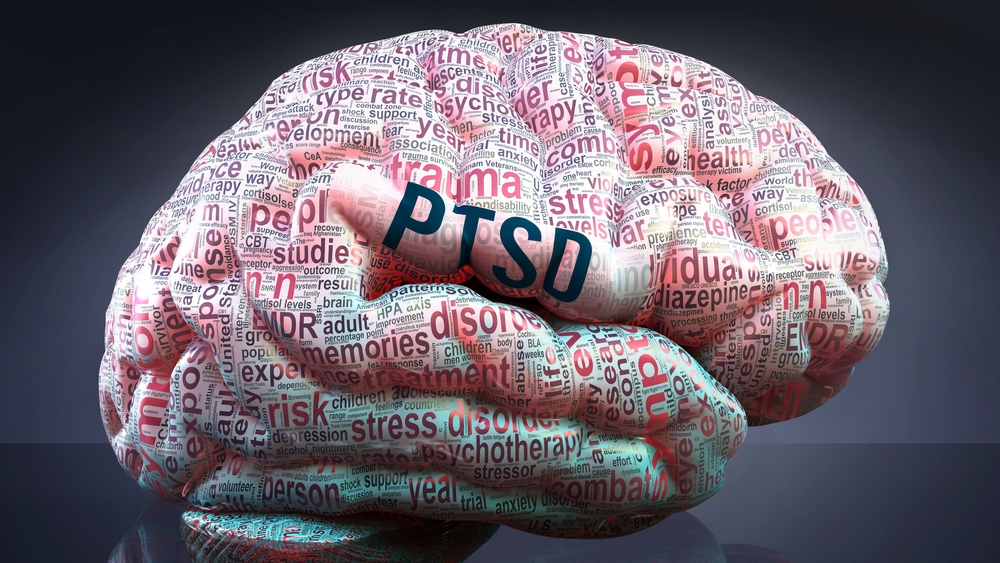
PTSD. PTSD is an over-used term. PTSD does not happen when Starbucks is out of your favorite, oak milk. Yes, we have all had many great disappointments or stressful events in our lives, and many of you have experienced true PTSD. For women, rape or molestation as a child happens far too often (once is too often) and for many has caused PTSD. For men, war or parental abuse or abandonment are the most common causes. But true PTSD is brought on by a single, unexpected traumatic event, or a series of highly traumatic events. The definition of it, is that in the wake of that or those events, you have the following symptoms:
- Being easily startled.
- Feeling tense, on guard, or on edge.
- Having difficulty concentrating.
- Having difficulty falling asleep or staying asleep.
- Feeling irritable and having angry or aggressive outbursts.
- Engaging in risky, reckless, or destructive behavior.
- Having vivid, intrusive thoughts or images of the events.
- Having repetitive nightmares about the events.
Mental health professionals feel welcome to correct this if I am wrong.
About twenty-five years ago, I experienced PTSD and had all those symptoms in its wake. I didn’t recognize it until a psychologist later told me that it was clearly that. It was a single event that came totally unexpectedly and was so severe for me, that I literally felt my brain breaking. There was a pre-PTSD Mike and a post-PTSD Mike. I have never slept well since and for almost ten years I had panic attacks after the event. I cried every day, in private, for at least a year. I don’t want to discuss my experience anymore, but I will describe my dad’s experience as he too had PTSD (in those days it was called “shellshock”)
My dad landed on Normandy’s beach on June 6th, 1944. While there were plenty of events to account for PTSD on that day (if you ever saw Saving Private Ryan, you will get it) the most horrible event, and I think I’m the only person he ever told, was when he and his best friend were hiding behind a Czech hedgehog, for over thirty minutes, taking turns looking toward the cliff to see if they could make a run for it. They were talking about death and sharing photos of their families. When it was dad’s buddy’s turn to look, as soon as he raised his head above the metal, his whole head exploded, his eye and brains spreading across dad’s face and chest and in his mouth. Dad, in a panic and a suicide march, stood up and ran through all the gunfire to the cliff and scaled it. He survived that, otherwise I would not be here. But the mark it left on him was him becoming somewhat emotionally catatonic, almost the opposite of me, never talking about feelings. He became an alcoholic in his later years, I am sure as him self-medicating his trauma.
I did go through counseling for my personal experience, and we came to a place where I was about as good as I could ever be. Coming from that experience, and in combination with my previous disposition, which I just mentioned, the good that I was able to make from that experience was a deep sense of empathy. This made me a better PA. I cared about my patients and listened to their stories with a profound interest, feeling what they felt. I often cried with patients, as they told me that their boyfriend or husband had left them due to their migraines, or when they learned of a new diagnosis of cancer. If I didn’t cry in the room with them, I would return to my private office and cry.
It made me a better fiction writer. I shed a lot of tears when my characters suffer. I cried a lot when I wrote about the tragic death of a character in The Stones of Yemen.
My cancer experience, the diagnosis and two years of unbelievable suffering in the process of dying, was like a second PTSD, but not as severe as the first. It only reinforced some of my symptoms, not so much fear this time, but pulled my tears just to the edge of my eyes, feeling even deeper for the pain of the world. I cry for the children in Gaza and Ukraine, as well as the October 2023 massacre in Israel by Hamas. While I can never heal completely, God, I think, is using my deficits.
Speaking of healing, I think both the Christian and the eastern (Buddhism, Hinduism) get this wrong. They both assume that our persona is only software. The Christian assumes we are only spiritual. The eastern religions believe that this material world is just an illusion. But imagine we are like a computer with both software and hardware, the hardware is the physical brain. While we can change the software by our thinking and behaving patterns, we cannot change the hardware. Trauma causes permanent damage and people who believe it is only a software problem—and that they are responsible for fixing it—often enter a denial of the real damage.
I brought this up because of a recent conversation I had. It was one of those situations where someone from my local church was critical of my faith because of what I have written in this blog. I reacted strongly as I often do. He was saying I was overreacting, and likely I was. Then I made a mistake of bringing up my PTSD, as one of the reasons I have such a strong emotional response when people criticize my faith. I have never shared this with anyone before. He then criticized me for not getting this fixed.
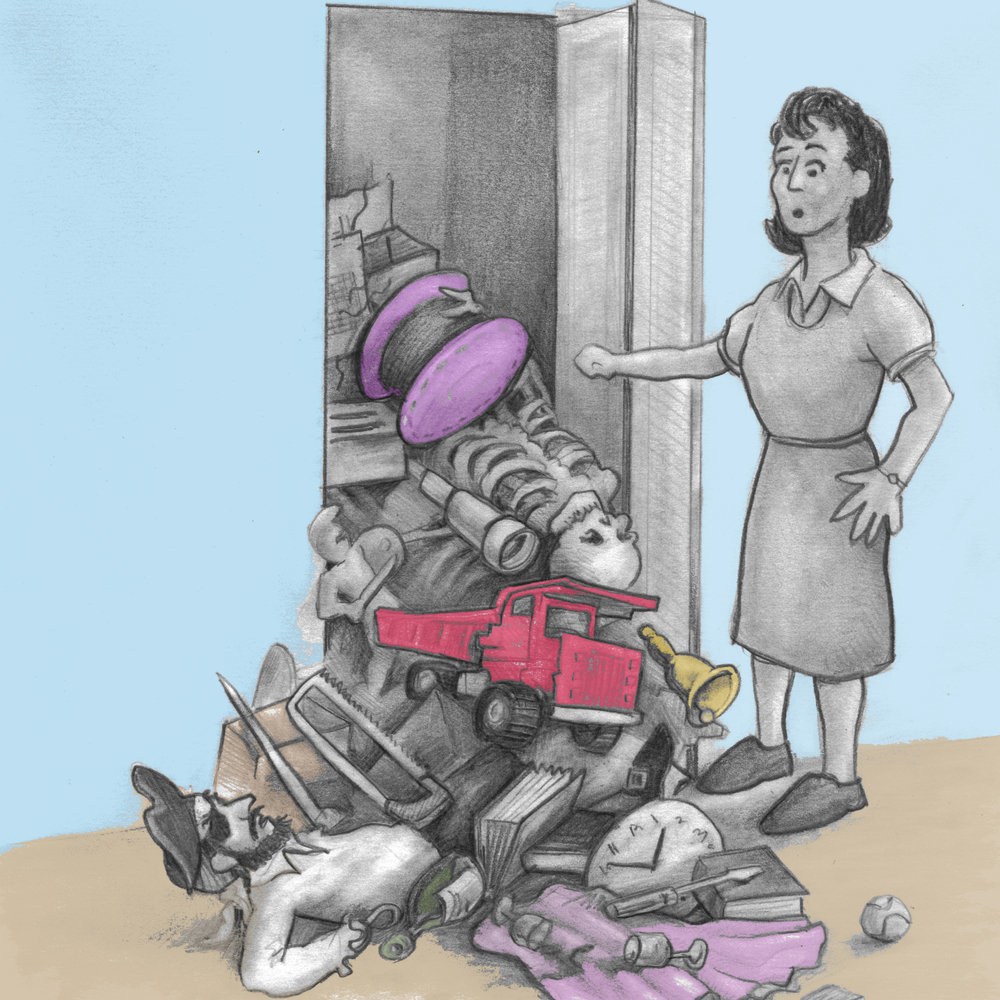
My point is, we all have baggage that we bring to our relationships and life. Some of you have PTSD, even worse than me. Some of you have skeletons in your closet, that you have never talked about, nor should you. I think you know most of mine. But even if you don’t, I know that all of you have hurt and pain, because we live in a shitty world. My challenge to you is to consider yourself healed, restored, loved, but also knowing that there is permanent damage to your hardware, and you must adjust to that. It is not your fault. That is why I avoid situations where someone wants to argue with me, to prove that they are more spiritual than me. I hate those arguments and avoid them like the plague. I love thoughtful discussions with people who disagree with me but are respectful to me as I am of them. That’s the world I find in science.
I will not talk of PTSD ever again because, as they say, what you say can and will be used against you. I am not seeking pity, but only that this evil has given me a super-power of empathy and compassion, that the pre-PTSD Mike would never have had. I suspect that your hurt has given you s super-power as well, while acknowledging your vulnerabilities. So, it is for all these things mentioned above that I will continue to write.
Mike


Leave a Reply