Introduction
In 1966, American psychologist Abraham Maslow said, “I suppose it is tempting, if the only tool you have is a hammer, to treat everything as if it were a nail.” My nail is the thirty-thousand-foot view of the grand flow of philosophical viewpoints that determine how each culture thinks. If the perspectives I mentioned last time, (economic, political, and religious) are logjams, then the philosophical perspective is the river in which those logjams form. When a culture has lost its way in how it thinks, it can never recover until it starts thinking in a way that is healthier and consistent with reality.
It is difficult for most people to realize how their way of thinking has been dictated by their culture. It was for me. Religious people are the most hesitant to consider this fact. They feel like it is from their religion or holy books. However, for example with Christianity, there are many Christian subcultures around the world and even within America that think very differently from one another, yet have the same scripture. There is a profound difference in how Christians thought two hundred years ago or almost two thousand years ago than today. So yes, some of the culture is related to things in the Bible, but the meta-narrative (the overarching guide on how to think) is from our culture, which controls how one interprets their holy books. The Apostle Paul warned the early church not to be taken captive by secular philosophies, but it has been from day one. It is healthy to recognize this fact.
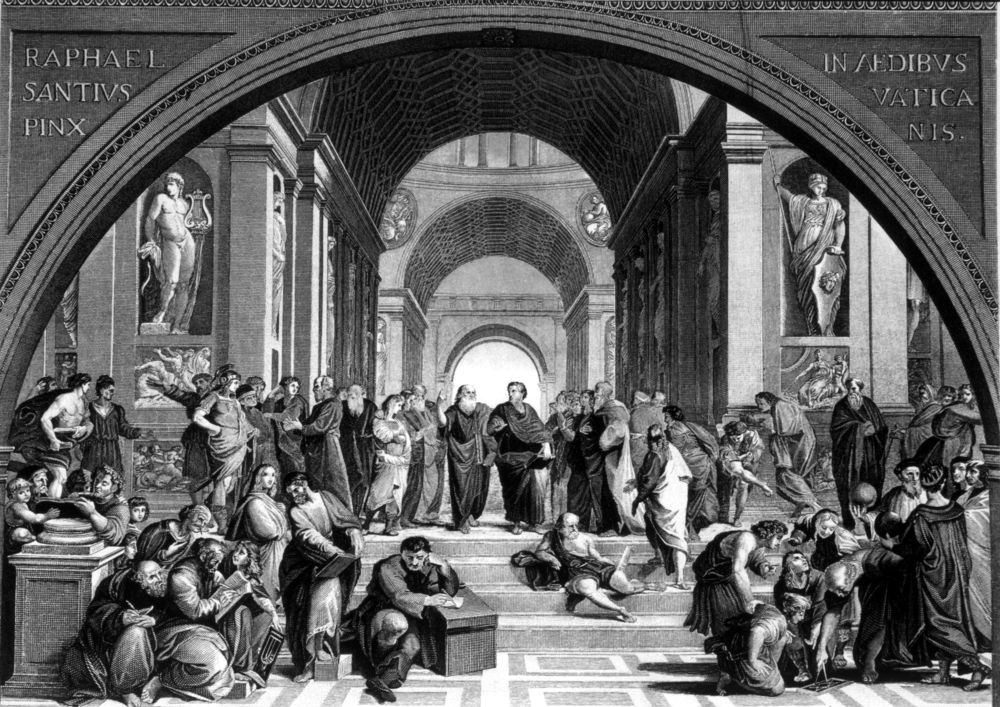
I am not a historian or philosopher, however, in 1990 by understanding the history of philosophy and how it played a key role in the shaping of Western Civilization, I was able to make sense of my own world, which had become absurd. I have spent thirty years studying and contemplating this perspective, so I am quite confident in my views, though without certainty. I suspect a scholar in these fields would agree with me except that I, as an amateur, oversimplify it. Yet, even with the simplest approach, those who have not studied philosophy or the history of Western Civilization can easily get lost.
My Modus Operandi
Let’s be clear. I consider Donald Trump to be one of the most morally depraved persons to ever come out of America. He has a serious mental health problem of having a narcissistic personality disorder and being a pathological liar. What separates him from the plethora of other people with these disorders, is that we have empowered him and made him “normal,” and know have given him the keys to our country and society. This makes him extremely dangerous and history will not treat him or us well.
I regret allowing people to define me as political or unchristian because of my view. This is not a political perspective, but an honest perspective looking at the evidence. A political perspective is when you demonize someone because they are not of your political party or you do not like their policies. I agree with some of Trump’s policies, such as reducing the federal deficit and spending, if he can do it without hurting the people or the planet.
As I’ve said before, I spent most of my life as a Republican. But this is not about politics. I have never had the view of any president, Democrat or Republican as I do Donald Trump. Richard Nixon had some narcissistic tendencies and did lie on occasion, but he could not hold a candle to Trump’s pathology.
I’ve been disappointed in some aspects of Joe Biden and Harris. The Democratic party is partially responsible for the predicament we are in. I am an independent now. My disdain for Trump comes from my love of factual truth, real justice, kindness, and the respect of all people and creation. That’s my only MO.
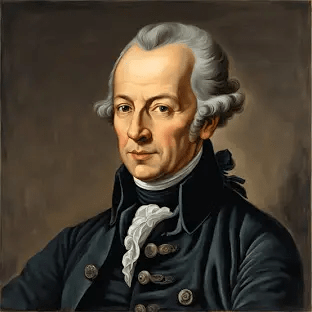
Before I move into the philosophical perspective, as a teaser (for those who don’t like philosophy) I will say, with some confidence, if there had never been an Immanuel Kant (1724 – 1804), Georg Wilhelm Friedrich Hegel (1770-1831) would not have developed his way of thinking. If Hegel had not developed his way of thinking, we would not have Soren Kierkegaard’s (1813-1855) way of thinking. If we did not have Kierkegaard’s way of thinking, we would not be living in postmodernist culture today. Postmodernism did not create Donald Trump. There have always been con men and liars in our society, but they would have never been taken seriously before. Without the river of postmodernism, Trump would still be just a Manhattan real estate hustler and fraudster, a laughing stock to most.
How We Got Here
How a culture thinks evolves just like our taste in clothing, music, food, and other trappings. I was the coolest person in my class (in my eyes only) for wearing bell-bottom jeans in 1970, but I would be embarrassed to wear them today. In the same way, the way we thought in 1970 was very different than how we think today or how Americans thought in the 1800s.

In the 1960s, I could stand up in front of any conservative church in America and share how I value human reason as a gift from God, and I would have been applauded. Now, when I dare mention “reason” within the walls or small group of a church, without exception, someone will call me out to tell me that my Christianity is no good, my relationship with God is inferior to their own, or I’m not a real Christian at all. I have grown weary of that.
There is a notion by many that thinking fads are progressing, getting better, or as Rob Bell (popular Christian speaker) says, are “evolving.” That is only magical thinking in my opinion. Thinking fads are a pendulum, swinging in one direction until it goes to the dangerous extreme, and then swinging back to the other direction to the other extreme. Postmodernists say there are no binary choices, good Vs evil, or, when it comes to philosophical ideas, none that are healthy or extreme. More magical thinking. We live in one of those extremes now. All extremes are problematic.
The philosophical swings mirror the architecture of the human brain. In the area of epistemology (how we find truth or information), our brains have three major components for dealing with the external world, 1) our senses, for finding data about the external world, 2) our thinking, a mathematical system for refining that information and finding the truth via deduction, and 3) our feelings, the way we react to that truth once found. You can also label #2 as objective and # 3 as subjective (some prefer “spiritual”) ways of processing truth. Late postmodernism is the extreme of the feelings or subjectivity of this swing.
We as a Western culture have tried the subjective way before, and it was highly destructive to our culture (The Dark Ages). Listening to some of the thought leaders in philosophy recently, they believe that the pendulum has now shifted, thank God (literally), and is moving back to a more objective/rational way of finding truth. However, this shift may be too late to save us from this cultural disaster.
We cannot talk about Western Civilization without talking about the Christian Church, in the same way, you cannot talk about the history of the Middle East for the past 1500 years without talking about Islam.
From the beginning, many sects of the Christian church adopted a Platonic dualistic view. By the fourth century, when the church first got in bed with the king, they removed reason from being the supreme human trait, to making it of the devil. In this way, the king and church could control the masses (if they are not allow to think). This resulted in the Dark Ages.
Thomas Aquinas was a theologian and philosopher in the 13th century. He put reason back into its rightful place, as beautiful and God-given. This set the groundwork for the Renaissance, a wonderful time of human creativity and thinking. This evolved into the Enlightenment. The foundation of the Enlightenment was the simple notion that truth is objective, found when you collect evidence, remove your personal bias, and via logic, reach a conclusion. However, the late Enlightenment (as all movements do) abandoned the idea of things that were likely true but not observable and went too far by concluding that if something was not observable then it was not true. This threatened theologians.
Through a progressive shaping of ideas, from Kant to Hegel, and finally, Kierkegaard, a conclusion was formed (starting in theology but then moving to all philosophy by the twentieth century) that all truth is subjective and is found via feelings and personal experience. But our feelings were not designed to find truth, only reacting to the truth once found (joy or fear). This was the genealogy of postmodernism.
Postmodernism progressed over the past thirty years, by eroding all confidence in objective truth. With the truth now defined by the individual, Trump capitalized on this notion by manufacturing (from scratch and without evidence) completely false realities. Anyone who opposes him or doesn’t believe him are “low “IQ” monsters because he says so. It is the dark-skinned immigrant who is responsible for all our societal ills. Racism is re-dressed as economic or patriotic issues.
I’ve decided to end this article here. I will do two more, the next one looking directly at the issue of truth and lies in our present culture as well as the role of social media in spreading those lies. Then, the last post, is what we can do individually to redeem this American culture before it is too late. I do want to leave on a positive note.
Respectfully, Mike


 J. Michael Jones
Leave a reply to NICHOLAS PARROTT Cancel reply