Post Christian Part 4
I must be a lousy communicator, even though I consider myself a writer. Against my intentions, I often portray my views as dark and negative, a pointless critic of the church. Nothing could be further from the truth. Despite the state of things, the possible collapse of not only the Christian church but our democracy, I am very optimistic about the future.
In 1650, Thomas Fuller wrote in his history of Palestine, A Pisgah-Sight of Palestine and the Confines Thereof , “It is always darkest just before the Day dawneth.” I believe we are living in such times of darkness before the dawn.

Human culture has consistently followed a pattern where it swings in one direction to a dangerous extreme and then retreats, only to swing to the opposite, yet equally perilous, extreme. In our technological age, these swings are much faster than before. We are at one such apogee as I write this, the death of truth. One great example of this is the death of truth within Trumpism, and Senator Murphy says it best in this speech to the Senate. I’m afraid the worst is yet to come, and it may be bloodshed. But with that said, I already see the glorious flicker of light beyond the dark horizon. The cutting-edge philosophers are starting to say that postmodernism has failed and is already in retreat. Thank God!
In the Christian world, that flicker of light is a new brand of Christianity that is rising, that is thoughtful, rational, loving, and devoted to the simple teachings of Christ, not the status quo of the religious cultures or having the lust for political power. I see it within my own church. As I’ve mentioned, in the face of the collapse of organized Christianity in Western Civilization, the conservative churches have sacrificed truth for the sake of power, and the progressive churches have sacrificed truth for the sake of harmony.
I think, and this will surprise my religious friends, that Christianity will be redeemed through the scientific community, as they are the last vestige of factual truth in our society. There is movement in the science fields as research is showing more and more bottle necks with a simply materialistic cosmos. A good example is explained in Stephen Meyer’s new book, Return of the God Hypothesis. My only hope is that this time, our philosophical basis of thought can find a healthy balance in the middle.

But I see others, besides myself, that promote a simple return to the glorious reason that God has given, and the commission of being positive salt and light of love, compassion, and grace to a dark world. Not fighting some imaginary or real war of cultures.
My way of thinking seems so outrageous to people, so much so, some of them want to punch me in the face. I had a handwritten letter from an evangelical five years ago celebrating my diagnosis of cancer and warning me that if I did not “repent” and come back into their church, God told them he was going to kill me. Religion has a way of making people mean. All subcultures have unwritten rules about not questioning the status quo. However, religious subcultures take it to a much higher level because they consider questioning their status quo as questioning God.
I simply believe in factual truth and that lies, including lies I like, are destructive. Even the Bible says, human reason is the way to find that truth. I would have been welcomed in Thomas Aquinas’s church in the thirteenth century. I would have been welcomed in both the Catholic (especially the Scholastics of Paris) and the protestant churches up until about 1960. I could have stood up in a pulpit then and claimed, “Finding factual truth, shunning lies, and using the human reason that God has given us is central to my relationship with God,” and no one would have blinked an eye. But now, I can guarantee 100% of the time, if I say that at least one person will come after me with a personal attack. That’s true in the conservative and progressive churches. What changed?
I’ve been writing about the history of philosophical thought in Western Civilization for years. How the pendulum swings back and forth. It is hard for us to accept that the way (not what) we think comes in cultural fads. The two ends of this pendulum represent the two primary natures of the human mind.
My career was in neurology, so this analogy works for me, and I hope it makes sense to you. The human brain is complex and integrated. It has an organized sensory system for collecting data about the outside world. It has a motor system for actuating the body. It has areas of language and memory. However, the two highest levels of brain function are the mathematical-cognitive part, centered in the pre-frontal cortex, and the emotions, centered somewhat in the limbic system. The religious prefer a magical thinking model, that the brain is just a spacer between the ends of the skull and the true self is an immaterial soul. I will discuss that in another posting.
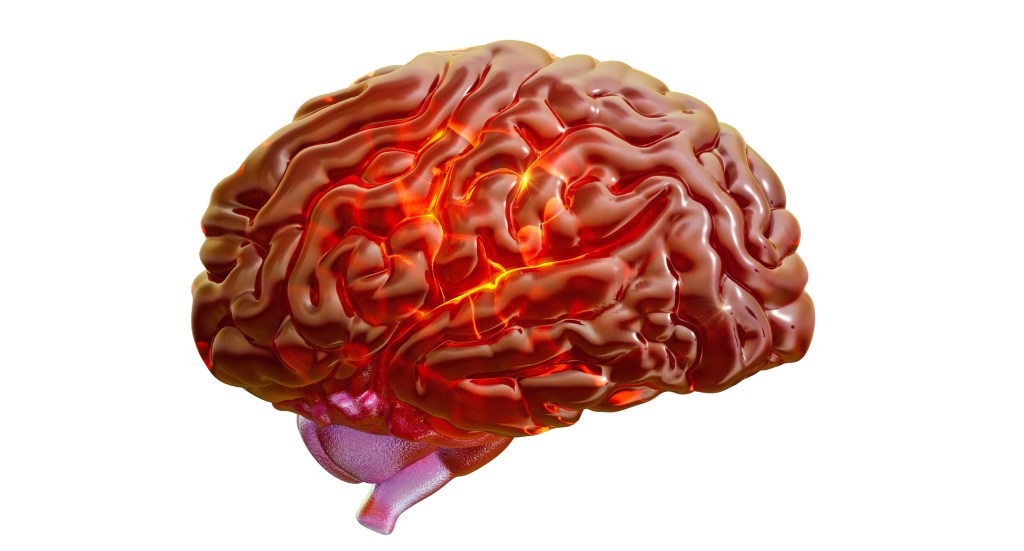
The word “cognitive” is from the Latin cognitus and is closely related to our philosophical class of study, epistemology. They both mean the process of acquiring knowledge. It is clear, and I will go into details in a future post, that our cognition, or reason, is the sole tool we are given for collecting data from our senses and finding truth. Our emotions are our sole tool for reacting to that truth once found.
I’ve used this illustration before, but imagine this is thousands of years ago, and you live in a primitive tribe in a jungle. A bright red snake bites a tribe member, and they dies that night. A few weeks later, another bright red snake bites another tribal member, and they, too, die. Through the simple logic of your cognition, your mind deducts that it is the snake that caused the death. The next time you see the same kind of snake on the trail, you panic. That is your limbic system reacting to the factual truth.
Emotional reasoning is very dangerous to an individual and society. It is where we use our beautiful emotional part of our brains to find truth, which it was never intended to do. We dress up the emotions by calling it “spiritual” or “intuition.” We are living at the end of a two-hundred-year-old swing of the pendulum that started with Soren Kierkegaard, who declared truth as always subjective and therefore discoverable with our emotions, not objective data. I will explain the reason he wrote that in the next post. This idea has led to the mess we are in now, with a failing country and a failing church. Regarding its influence within the church, I could give thousands of examples, but I will give a few. Please understand, these are not criticisms of the people involved, nor is it about me getting my feelings hurt. These things no longer bother me. My point is to demonstrate on a granular level what these philosophical trends look like. I don’t blame the individuals, but the culture.
I was attending a small group associated with a church a few years ago. We had a suicide of a teenager in our community. The group guessed, without any evidence, that the kid was playing Dungeons and Dragons, and since that game opens the door to Satanism (no evidence of that whatsoever), that’s why the kid killed himself. They were sure that was the answer because it made sense . . . spiritually to them. I said we have no idea why that teenager boy committed suicide as we have no information about him. But, based on statistics, we know that it is most likely, history of depression, substance abuse, family discord, a girlfriend or boyfriend breaking up with him, endogenous depression, being bullied, etc. But the most important thing was working to prevent the next suicide based on the evidence and comforting a horribly distraught family. I was rebuked for using reason and not having the “mind of God.”
A few years later, while attending another church’s small group, the postmodernist video speaker ( whom I strongly disagree with ) said that God’s truth does not come through study (collecting data) or reason but directly into our hearts and is often irrational. I objected, citing a person I knew who was 100% sure that God had spoken to him, telling him that God approved of his sexually molesting his daughter, because “that’s the way God made him.” Rationally, I could give a hundred reasons why molesting his daughter was not good or from God. Then, I was told by one individual that because I use reason, my relationship with God was not legitimate.
This is the irrational state we are living in. This kind of thinking dominates the American Christian church, where conspiracy theories and lies find their best home. This is unsustainable and not the natural way God has created us to think and find truth.
Next time I will finally get into the heart of what has happened between Thomas Aquinas in the thirteenth century and now. I will give many more examples of how Christians have now lost their minds and how we go forward.
I am sorry that I’m posting so much, but I am laid up from over-use injuries in building my cottage and have time to write. I will slow down soon.
In Peace, Mike


 J. Michael Jones
Leave a reply to gloriousf21f765cc8 Cancel reply