On Writing
I have completed four queries for my new novel, The Agony of a Woman, and sent them to agents. I am working hard to complete the stonework on the cottage before winter’s cold rains arrive. But it is time to pause, catch my breath, and write. I want to write a conclusion to my series about evolution and science and move on to looking at the wonderful world of a relationship with God built on objective truths.
Summary: How We Got Here
I often restate my purpose here for two reasons. One, is that I have a dozen or so “drive-by readers” with each post, who have never been here before. Secondly, I hear from regulars with statements that convince me that I have not been clear in my purpose.
I’ve had this blog in one form or another for over fifteen years. It has about 340 followers, which is very small for a media platform, but I hope it is because I’m speaking to a small niche, not that my writing is poor. I also know that I’m not a very good self-promoter.
My number one purpose is to have an honest conversation with those who are considering leaving Christianity for good, and for good reason. However, my second purpose is to beg the organized church for grace on behalf of my group. Both the conservative and liberal churches frown on Christians who have a nature of being curious and use their minds to explore the world. We who value reason and science as gifts of God are relegated to the most inferior people in the church, and in the conservative churches, not Christians at all. That must change because it has forced out millions of thinking people and caused millions more never to consider Christianity.
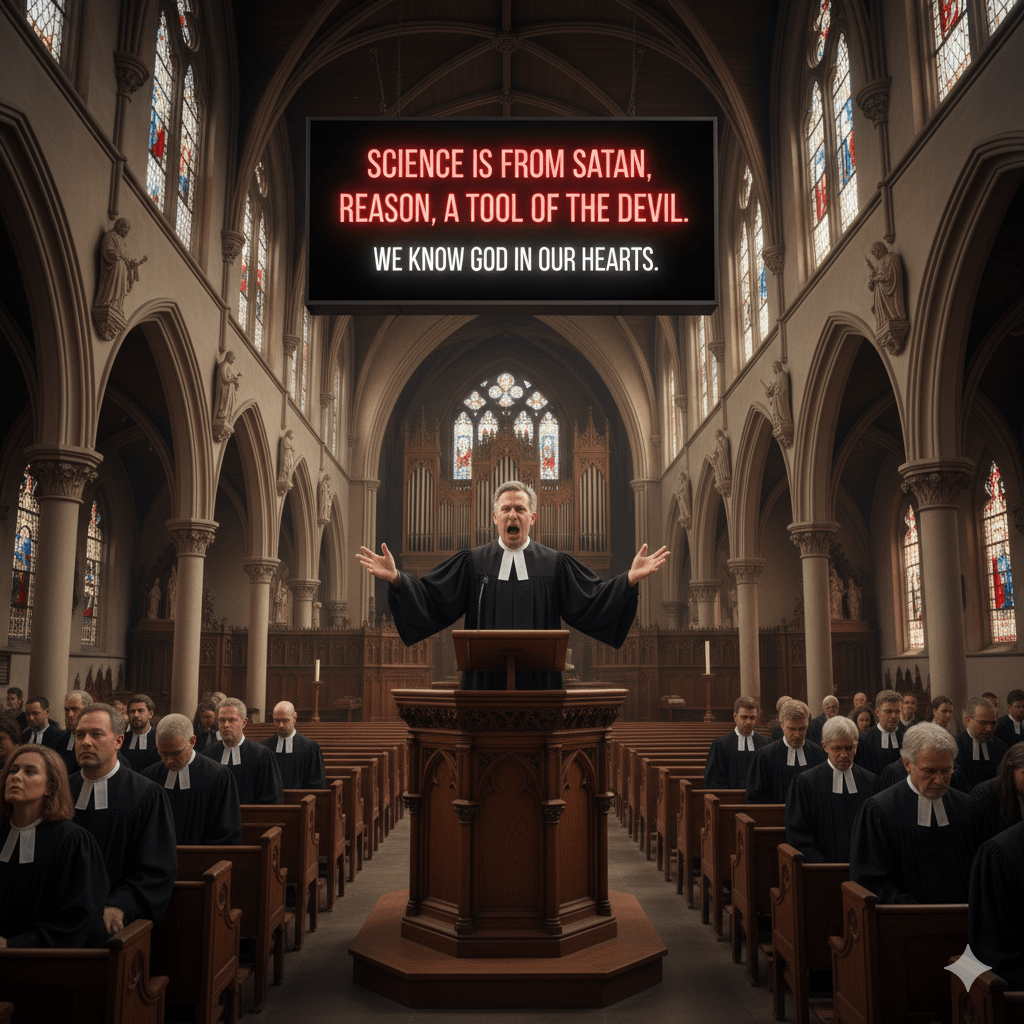
Today, we live in a world of subjective truth, in both the religious and secular realms. This is an aberration. This is not how humans thought for most of their existence, at least since the Greeks. In an oversimplified account of the history of Western civilization, the early Christian period (up to the Middle Ages) was dominated by a Neoplatonic view, characterized by a dualism in which things of this world were considered inferior to the “heavenly things.” Thomas Aquinas saved Western civilization in the thirteenth century when he pointed out that nature, not just heaven, was God’s creation, and human reason, along with God’s direct inspiration, was the tool that enabled us to find truth.
Aquinas’ ideas laid the groundwork for the Scientific Revolution and the Enlightenment. These movements were profoundly successful, with human life expectancy rising from approximately 29 years to 60 years during that time, and a significantly improved quality of life. However, those movements also challenged some long-held Church traditions. These were just traditions, and not essential teachings of the Bible as portrayed. The four “Horsemen” I had described were: 1) a heliocentric solar system, 2) a deep time Earth (billions of years), and 3) biological evolution. I added a future one, 4) extraterrestrial life. But I skipped an old one, Inerrancy of Scripture. I will discuss this later, but to say that in the nineteenth century, the scientific method produced a higher criticism of scriptural texts, examining them objectively in terms of text comparisons and consistency with recorded history. In response to that, which I will discuss in a future post, the Church went from seeing scriptures as “inspired by God,” as it claims, But “Written, each word by God perfectly, and must be taken literally and if you don’t you are a very bad person.” And the scriptures are magical. You can rub a Bible on your arthritic knee and the pain will go away. But I digress.
Thomas Aquinas taught that when there is a conflict between what we think the Bible says and reality or nature, then we must reconcile those differences. But the church failed to do that. Instead, it started a war on science and human reason. Soren Kierkegaard created a philosophical “relief valve” for this conflict by asserting that religious truth was not empirical, but subjective, formed inside our brains without the need for evidence. It was assumed to be God-inspired, rather than based on human reason. That religious faith was not just beyond reason, but anti-reason. Like most philosophical movements, Kierkegaardian ideas initially influenced theology and then spread into secular life as well.
The Enlightenment failed when it was unable to eradicate human cruelty. My undergraduate degree was in psychology. My school was dominated by the views of B.F. Skinner. Skinner, in the 1960s asserted that his behavior modification devices could cure man’s cruelty. He predicted he could end all wars and empty all prisons. But his ideas failed. It was the last hurrah for scientific optimism.
In response to the failure of scientific optimism (modernity), postmodernism appeared first to deconstruct societal ideas. It helped by looking honestly at racism and sexism, and many other faulty ideas of our culture. But it metastasized into a total loss of truth, in both the secular and religious realms. Drawing on Kierkegaardian writings, Christianity became increasingly subjective. “I know God exists because there is a God-shaped void in my soul.” “God spoke truth to me.” At that juncture, anyone who used their God-given brains, reason, or looked at nature for inspiration was of the devil. We are outcasts.

This is the world in which many of us find ourselves. I lived subjectively for almost 40 years in a highly spiritual Christian world. But it was my own personal dark ages. Many terrible things happened in that Christian world under the auspices of “God told me to do this.” The worst I saw was a “godly man” who molested his own daughter because “God told him it was okay.” Subjective truth.
That way of thinking has now taken root in the decline of American culture. Can America be saved? I’m not sure. We are awash in lies and conspiracy theories; stolen elections, climate change is not real, vaccines are dangerous, all of these against the objective evidence. The Christian is now the most likely to spread lies. Subjective truth, their bread and butter. But worse than that, at least half of the Christian church now gets its guidance, not from scripture as they claim, but from what Donald Trump feels in his gut as truth. Objectively, he has a long reputation for being a pathological liar and con man. We have a total loss of resect for the expert, those who have sincerely studied a topic for decades, in exchange for the fool’s gut.

One conservative pastor friend of mine said a few years ago, when I said, “I follow the science,” that I had avoided getting COVID: “Science is from Satan.” He added later in the conversation, “Donald Trump is the greatest Christian man America has ever produced.”
So I beg my own church and churches across the country to give us who appreciate science and God-given reason a space. I’m not telling you to change (only in my best dreams). But by not giving us space and insisting that we follow only subjective truth and we are inferior if we don’t, it will eventually be the death of the church, too.
But I want to turn from this defensive theme going forward, to looking at the great renaissance that reason and science can bring to one’s relationship with God. It has mine and I would not go back to my subjective mystical life ever again. My relationship with my wife is not built on irrational subjectivism, but on rational, objective understanding of each other. That doesn’t make it devoid of emotions. Objective understanding is the bedrock of the greatest emotional feelings.
But in closing, I want to turn in my chair to face those like me who appreciate an objective conversation about things of God. I stumbled upon another astrophysicist who has observed the fine-tuning of our cosmos to suggest an intelligent designer. I found him to be refreshing, unlike some of the well-polished Christian apologists. I will note that I think his interviewer is a Muslim who also has a stake in this notion of there being a divinity behind creation and opposing the atheists who do not.


 J. Michael Jones
Leave a reply to J. Michael Jones Cancel reply