The Parable of the Absent Father and the Two Books
Imagine that you are a small child and your father must leave you in the hands of guardians for a long time, say, twenty years. Perhaps it is a prolonged war on the other side of the globe, or a mission to establish a settlement on Mars. But it wasn’t because he didn’t love you.
Because of his absence, he writes a big leather book for you to tell you about himself and how he wants you to live your life. Along with the book, he records many hours of video to complement it, providing more details about himself, his nature, and how to live a long and happy life.

After he is gone, the heavy-brained guardians, whose necks could barely hold up their big hairless heads, read and interpreted the book for you. However, when they screened the videos, they believed they saw contradictions with the book. For example, your father wrote poetically about his short career as a major league pitcher, saying, “And when the Yankees called, they treated me like I was a champion south paw.” They assumed you were left handed. But when they watched the video, your father used his right hand for everything. Therefore, they concluded, the videos—even though your father had given them directly to your guardians—were pure evil.
They imagined that someone else had made the videos, a bad person who wanted the videos to be a distraction from your father, to contradict the big leather book, rather than help you know him better. They didn’t use one source of information to interpret the other as your father had intended. They emphasized that only the big leather book was from your father, and it was literal, perfect, and magical. If they caught you watching the videos, they would punish you because it meant you were bad and relegate you to the lowest position in the household. You might catch the disease of rational curiosity if you watched them… incurable… and perhaps, deadly.

When your father returns, and you are all grown up now, there is a profound emotional reunion; however, your father notices that you don’t know him nearly as well as he had hoped, and you are not as healthy and happy as he had wanted. After all, he had taken great pains to write the big leather book and equal effort to record the many hours of videos. You had read the big leather book often, and the heavy-brained guardians had explained to you what the book of magic meant. Yet, they didn’t understand without the videos to guide them. They cherry-picked what they taught you.
For example, your father had written in the book that he wanted to cultivate the land south of the village. In another place, he had written that he intended to develop the land to harvest food for the poor squatters who live there. But the heavy-brained guardians ignored the latter part in favor of the former. They took the land south of the town, drove the poor squatters away, harvested the bounty of food, sold it to the rich, and filled your father’s coffers to the brim (taking a “tip” for themselves, to buy new felt hats for their big hairless, cold heads), thinking that your father would be proud of their frugal management.
Back to Thomas Aquinas
Saint Aquinas did not coin the idea that God has revealed himself in two books, nature / creation, and the written canonical, but he magnified and expounded on the concept. Saint Augustine may have been the first writer about the two books, and even earlier church fathers may have used those terms. Regarding the perceived contradictions, Thomas said, “The truth of our faith becomes a matter of ridicule among the infidels if any Catholic, not gifted with the necessary scientific learning, presents as dogma what scientific scrutiny shows to be false…”
Yet, because of the perceived contradictions between what the explorers of nature (scientists) found during the Scientific Revolution and the Enlightenment, which contradicted church tradition, part of the church responded with an outright rejection of nature and rational curiosity, elevating scripture and making it more magical.
This has practical relevance, as I’ve written about before. The conservative church has declared all-out war on science, creating conspiracy theories about the scientists, making them out to be evil or corrupt. They don’t trust any science expert, including their own doctors. One brand of conservative Christian, embodied by such people as Christian nationalist Russell Vought, as I type, is leading an army of ignorant (heavy-brained, but neckless) people to recreate our government, slashing and burning science and education.
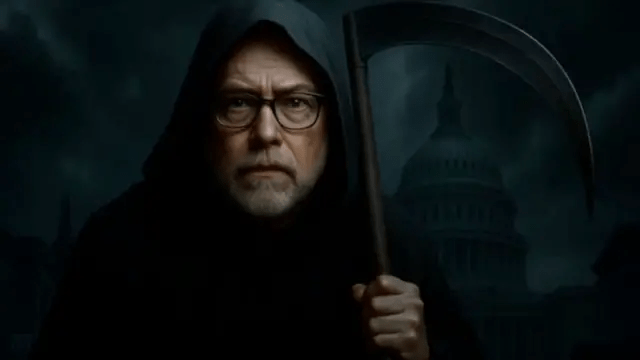
The progressive church, while being more open to the study of nature, devalues rational consideration in favor of mystical, irrational, ambiguous New Age spirituality. The words “science,” “curiosity,” “evidence,” and “reason” are now considered filthier than “fuck,” “shit,” or “damn” in most churches. It’s a damn shame.
There are Christians in both progressive and conservative churches who are exceptions. And even those with whom I disagree, who dislike curiosity and rational thinking, are most often good people whom I otherwise respect and consider a privilege to have as friends. It is not an issue of intelligence, but of perceptions.
But I’m trying to pivot to the positive and no longer talk about the countless people whose unaddressed doubts and curiosity have caused them to leave Christianity for good. I want to write about the great misconceptions about explorers of nature, lovers of truth, and holders of curiosity, that thinking equals arrogance. Aren’t the rationalists the ones with the heavy brains and tiny necks? And, doesn’t rational study of the intricacies of nature rob it of its mystery and magic? I say a profound NO! to both of those charges. Study humbles you and the more you understand nature, the more it is mysterious. So, I want to take you on a journey into the other book. After spending almost forty years where my Christian world demonized this second book, finding it was a gift and revolutionized my relationship with God. I am not here as an evangelist, to persuade you to think like us, but to give us grace and respect… and who knows, maybe inspire you to see God in creation better.
The real cosmos is far more mysterious and strange than even the best worlds created by the great imaginers, such as Tolkien, Rowling, or Le Guin. If you want mystery with God, then hold on to your seats.
Respectfully, Mike

 J. Michael Jones
Leave a reply to Headless Unicorn Guy Cancel reply