Introduction
If you have followed this blog for the past fifteen years, you will know that I repeat the same themes. I do this for two reasons. One, with repetition, you hope there is understanding. Sometimes I talk to people who come to this blog, and they have no clue what I’m writing about. The religious tend to twist my words to make me say things that are almost the opposite of what I believe, to give them fodder to attack me personally. So, reiteration is for clarity.
The second reason is that I am having more new readers stop by than ever before. About two hundred new readers per week right now. I know that I am an enigma, and it takes a while to figure out where I’m coming from. I do not fit neatly into any Christian or philosophical box, and that’s okay. But I do not write to try to persuade the masses to think like me, or to criticize them, but to push the weeds back to create a clearing for those like me, who do not feel welcomed in any organized religion, and to spare them from the alternatives, such as atheism and nihilism.
So, I’m going to do a short review of my pilgrimage and the milestones I’ve reached in the past thirty years. For the summary, I will make some bold statements without explanation to keep it concise. I will put my major conclusions in blue letters.
My History:
I grew up in the Bible belt of East Tennessee as a nominal Baptist. At age eighteen, I was recruited into a very serious evangelical discipleship group, the Navigators, and spent the next 25 years with that organization. Because some evangelicals claim that I didn’t take that brand of Christianity seriously enough, I will assure you I did. This is not to boast (and it would only sound like boasting to them, as to others it would sound like ignorance), I was a profoundly spiritual person. Miracles were a daily occurrence in my eyes, and Bible study consumed me. I practically lived in a church, functioning in every role possible. We were so committed to conservative Christianity that, following Jesus’ example, my wife and I gave away all our material possessions and lived in a van with two little boys for almost two years while we raised financial support to go as missionaries to a slum outside of Cairo, Egypt. Our purpose there was to convert hardened Muslims to Christianity.
Once we were abroad, amid some hardships, my eyes were opened to the fact that the culture within our group was extremely pretentious and abusive toward one another. Lying to ourselves and to others was our MO. To be clear, as some of my old evangelical friends try to define this, I was not abused and thus left evangelicalism because my feelings were hurt. I was a victim as well as a perpetrator of abuse. It was when I began to be honest with myself that I knew that this brand of Christianity was unsustainable.
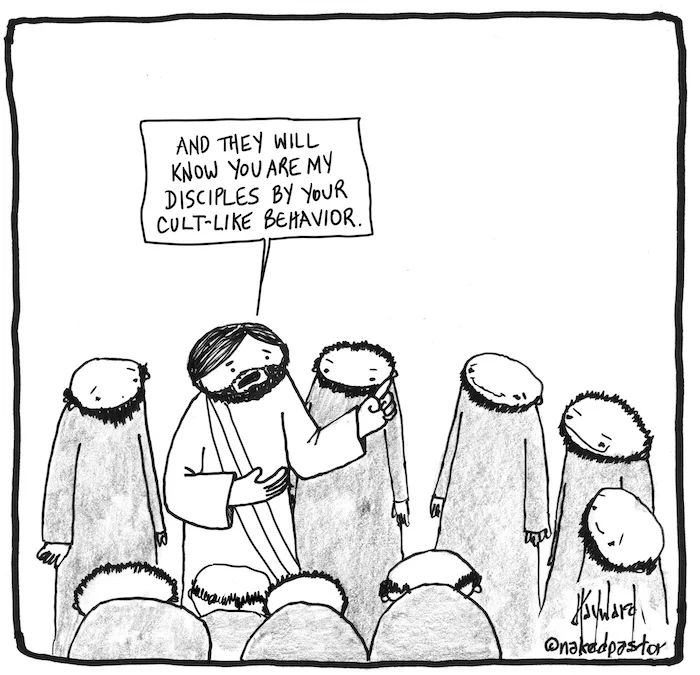
Conclusion #1: The Navigators, like churches and other Christian enterprises, are not all cults. However, they can behave as cults in certain places, with certain leaders, and at times in history.
At that juncture, I had what some call “a crisis of faith.” If there really were a creator, that creator would live in factual truths, not in pretense and lies. So, I offered one last prayer, “God, I want to seek factual truth at all costs. If I find you there, that would be good. But if I find out there is no god, I will accept that.” Then I started on a thirty-year (so far) pilgrimage to find factual truth.
Regarding Truth:
Conclusion #2: When most religious people speak of truth, what they mean is dogma. Dogma is what you must believe to be a moral person. Factual truth is reality, supported by the evidence.
Conclusion #3: The MO of religion is to seek conformity to dogma, while the MO of science is to seek factual truth.
Conclusion #4: We are living at the end of the philosophical movement of Post Modernism, which mistakenly claims that there is no factual truth, only personal, subjective truth. Since Soren Kirkegaard, in the mid-nineteenth century, Christianity has championed subjective truth. I rejected that idea, as did Augustine and many of the early church fathers, and as did Thomas Aquinas.
When I returned to the States, I began to study history and natural sciences; both subjects were taboo within the brand of Christianity I was in. I learned that I had been lied to about history (such as revisionist history that evangelicals created America, and the Catholics were uniquely evil, as in contrast to the protestants). In the natural sciences, I learned that I had been lied to (and helped spread those lies) about the evidence for a deep-time (billions of years) old Earth, and evolution.
My studies first led me away from Christianity, and I considered myself an agnostic. I was trying to accept atheism, yet I kept running into absurdities, as I had seen absurdities within Christianity. Therefore, I could not complete the full conversion to atheism.
Conclusion # 5: The absurdities I found in atheism (not a complete list) were: 1) human consciousness. Without a personal creator and natural evolution by chance, we are only carbon-based robots, no different from machines, without a persona or soul. 2) the overwhelming fine-tuning of the cosmos for its and our existence (see Stephen Meyer’s book, Return of the God Hypothesis). 3) related to #2, the underlying mathematical fabric of the cosmos which surfaces in areas such as physics and music, 4) bottlenecks in evolution such as abiogenesis, 5) without a personal creator, there can be no meaning or morals, and the atheist pretense that there is meaning and morals is equivalent to the religious irrational claims. 6) The problem of evil. While Christianity has its own absurdities when it speaks about suffering and evil, the atheist cannot speak to evil as evil is built upon a moral framework, which isn’t possible in an impersonal, cold universe. The best the atheist can say is that some things are physically uncomfortable without assigning meaning.
As I continued my studies in the natural sciences, I was eventually brought back to God. While there is no proof of God’s existence and no proof that God doesn’t exist, there is only evidence with probabilities. While there is also no proof that Jesus lived and proved his messiahship, there is evidence. My final return (a decade later) to Christianity was looking at all the evidence of all the alternatives and deciding to follow Jesus. But this was not like a leap into the dark this time, but a faith with a moral choice.
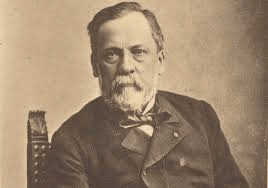
Conclusion #6: I was living proof of what Louis Pasteur wrote, “A little science distances one from God, but much science nears one to Him.”
Conclusion #7: Because Christianity has been dominated by the philosophy of late-Post Modernism for the past two hundred years, they reject reason as an instrument of God and has declared that only “subjective” truth can be the foundation of Christianity. “I know Jesus is real because I feel him in my heart,” or “God spoke to me and told me he is real.” They also conclude (very different than Thomas Aquinas) that if you use reason, it is of the flesh and arrogance. And as I have found many times, you are not welcome to their churches unless you have only subjective truths. Like the non-heterosexuals are condemned and forbidden in many conservative churches, those with analytical minds are forbidden in almost all churches today. However, sociological and psychological research has shown that our feelings are extremely poor guides to truth, even if we believe they are supernatural.
Thank you for coming. There will be at least one more part to this summary.
In Peace, Mike


Leave a Reply