A Definition of Terms
We are all familiar with the term “forensic” thanks to shows like CSI. The term has been borrowed for the fields of forensic psychology (trying to find the motive of someone’s criminal behavior) and even forensic archeology, trying to find out who killed groups of ancient peoples.
The word itself comes from the Latin forensis, which means “from the forum.” In Roman times, the forum was a place to discuss issues and examine evidence from each side, including who was at fault in a criminal case.
Theology, of course, is the study of God. I don’t like the term because, just in my view, I suppose, it reduces the creator of a 90 billion light-year-wide cosmos down to a lab rat, something you can study. I prefer the term philosophy, which means the love of wisdom or knowledge, including knowledge about God. The very same word (sophia) for wisdom in “philosophy” is the one King Solomon wanted, which pleased God so much that God also made him rich.

The late Francis Schaeffer, considered one of the leading Christian theologians and philosophers of the twentieth century, used to say, “There is no difference between philosophy and theology in the questions asked, only in the answers given.” He implied there and elsewhere that if the big questions of life were answered with something about God, then it had to be theology. But I disagree. Many great philosophers have considered the existence of God in their answers.
I’ve said many times, I love philosophy because it is simple and pure, just the pursuit of wisdom of factual truth about reality, nothing else. In the same breath, I’ve said I hate religion, but I carefully defined what I meant by religion, and it is different from what most people mean. The religion I hate is the same religion that Jesus hated, and indeed had him crucified. It is a manmade system of rules, rituals, and habits that has one purpose: to make the individual feel more pious than others. It is very competitive. I’ve been attacked by countless religious people over the past thirty years, trying to prove that I am a morally bad person for what I write or say; they are better, which is the MO of religion… and why I hate it. Philosophy is not about competition. It is never personal. It is never about who is morally superior. I will paraphrase Thomas Aquinas once again, who said that we love all the philosophers, even if we disagree with them, because we are all pursuing wisdom. That is different from the post-modernist, who says we will love those who disagree with us because all answers are the same… they are not.
Speaking of Postmodernism
For almost twenty years, I have been blogging for the post-evangelical, trying to make sense of their evangelical experience and of modern Christianity as a whole, with the hope that they will not give up in despair but will believe in a personal creator. That is my simple MO. It is not about going to hell, but when you give up the notion of a personal creator, you must give up the notion of meaning and morals. Suicide or self-destructive behavior can be a manifestation of the loss of meaning. I must do a lot of deconstructing Christian things, even those Christians hold dear, to reach those harmed by them. My greatest discovery was the simplicity of following the historical Jesus, love God and others, full stop. No other requirements.
But there has been a crisis in Christianity, Western Civilization, and now the whole world in the area of epistemology, how we find wisdom or truth. While this is not a moral problem, per se, it does have real-life consequences, many of which are disastrous. We are witnessing the fruit of this in American politics right now, which is so severe that our democracy is in real danger of collapsing. Politicians have always lied, but now, the one who lies the best… wins. Our world is unsustainable if we live in lies.
After I left evangelicalism in 1990, the first topic I studied was history. The story of history tells us why we think the way we do. Otherwise, you assume that the way you think is the default right way to think. We thought bell-bottom jeans were cool in the early 1970s; now they look foolish. That’s the way culture works, including thinking fads.
I could have stood up in any church in 1960 and said, “I thank God for showing me the evidence and giving me reason to process that evidence, which has been so helpful in finding God’s truth,” and no one would have batted an eye. Now, say that, and you will be condemned. I was thrown out of my last church for saying this. I was forced to leave a small group in my new church when I said that. Reason or evidence are the worst of all swear words within modern Christianity, but it has not always been that way.
So, while I’ve been writing about this many times, I’m going to take a different approach, a forensic approach, trying to find the real smoking guns in our history that have perverted how we think today.
Søren Kierkegaard (1813–1855)
If a true historian were critical of me, an armchair historian, it would be because I oversimplify. History is complex and messy. For the reader’s sake, I must simplify it somewhat to make it more digestible.
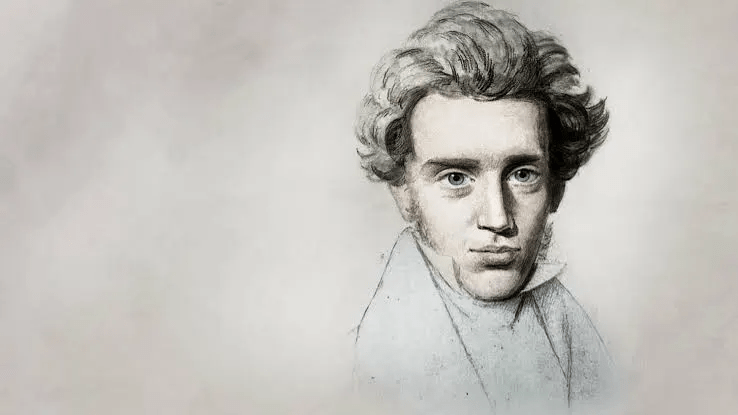
Most historians list Søren Kierkegaard as the “Father of Christian existentialism.” While there are other influences on the way Christians think today, I will start here with one of the greatest. But to set the stage for Kierkegaard, I must mention Aquinas.
Thomas Aquinas (1225 to 1274), a friar in the Dominican Order, philosopher, and theologian, had such a powerful influence on Western civilization that most agree with me that he ushered in the scientific revolution and the Enlightenment. Aquinas was a student of Aristotle and Augustine. He believed one of God’s greatest gifts to humans was reason. Reason is the ability to examine evidence and draw factual conclusions using methods such as deduction. He also believed that the cosmos, or nature (as he called it), was God’s glorious gift and, like Augustine, that it was God’s second book. The canonical scriptures, the first book. He also believed that the two books must be reconciled if they appear to disagree.
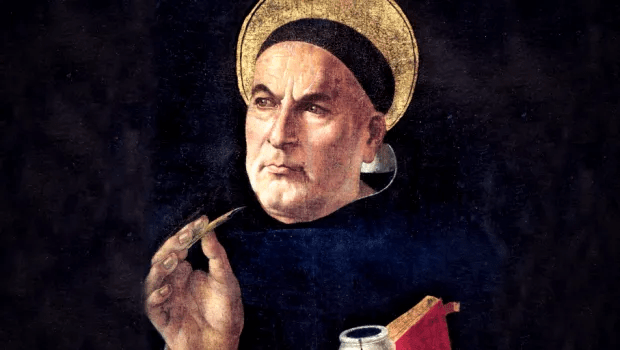
The scientific revolution and Enlightenment, as I mentioned, were the fruit of Aquinas’s writings and were profoundly successful. However, by Kierkegaard’s time, the Enlightenment was challenging aspects of church culture, such as the age of the earth, the evolution of life forms, and certain claims of miracles. It didn’t declare that miracles were impossible, but rather that specific miracles, claimed by the church, were proven fraudulent. In contrast, in the previous century, at the time of Issac Newton (1643-1727), many scientists were motivated by their belief in God, and there was great harmony between reason and faith.
Kierkegaard attempted to defuse this growing tension between the claims of the church and the Enlightenment by formulating a new way of finding truth, subjectively, true to one’s own experience, not in reference to the material world.
I will pause here to say that I am ashamed to admit that I have written about Kierkegaard for years but have never read his books. I have always relied on what others have said about him. But now I am embarking on a reading of all his books. I have just finished his book, Fear and Trembling, and I’m halfway through Philosophical Fragments. Next time, I want to review his Fear and Trembling, in which he begins to formulate his ideas about the irrationality of Christian faith.

If philosophy is of no interest to you, I will make this very practical as I go forward. I will say, spend more than an hour around an evangelical church, and I promise you will hear things that are factually untrue—baseless conspiracy theories about people they don’t like.
In the progressive church, the present state of “spirituality” requires a detachment from evidential reality, to the point that within my own church, I have heard from a few individuals that it does not matter if God exists or Jesus lived on earth, just as long as you have some spiritual experience. Again, this is not everyone, but some people, and I’m not making this a moral problem. These are good people who have said this, people better than me. But I do think it is a way-of-thinking problem that will bear real fruit. These are the fruits of this path.
In Respect, Mike


Leave a Reply