I remember circa 1984, I was teaching a Sunday School class to a group of college students, most from either the University of Michigan or Eastern Michigan University, on the history of Christianity/Christian missions. I was naive at the time, using just one source for my work, The History of Christian Mission, by Anglican scholar Stephen Neil, who was born in Edinburgh in 1900. Stephen had served as a missionary himself in India before becoming a scholar on the church, specifically mission history. Stephen believed that the Edict of Milan, the legalization of Christianity by Roman Emperors Constantine the Great and Licinius, was a positive turning point in the church. However, he saw Constantine as a double-edged sword for Christianity, as I now do too.
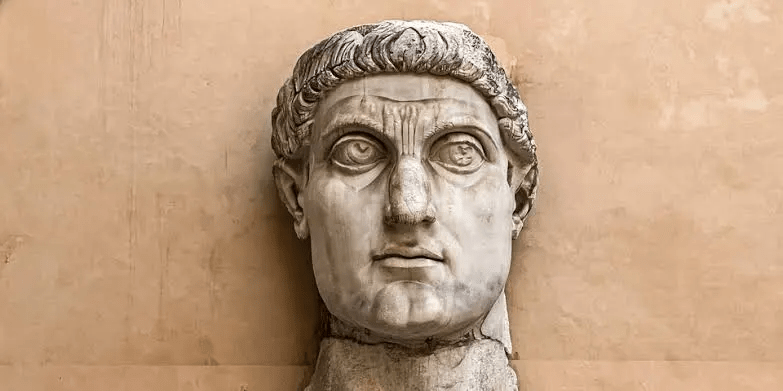
I, as a committed evangelical, in 1984, went further than Neil, like all evangelicals, believing that God had complete control and purpose for all events in life and history. Theological determinism. Therefore, I saw nothing but good in Constantine’s tolerance of Christianity and never questioned the church dogma that it was a miracle that ushered in Constantine as emperor, that he had a true conversion to the faith, and that he helped shape Christianity going forward in a very positive way.
Since then, having studied Constantine much more carefully, I have a very different view of the Emperor, which the Eastern Orthodox Church has elevated to sainthood. The traditional view is that, on the afternoon before Constantine’s decisive victory against his rival Maxentius at the Milvian Bridge, just north of Rome, he had a conversion to Christianity. It was claimed that Constantine had a vision of a Chi-Ro (the first two letters of “Christ”) ☧ in the clouds with the Latin words, Ἐν τούτῳ νίκα, which means, “conquer by this.” The story goes that he had all his soldiers mark their shields with a ☧ and, according to legend, defeated a much more formidable army. In other words, a miracle.
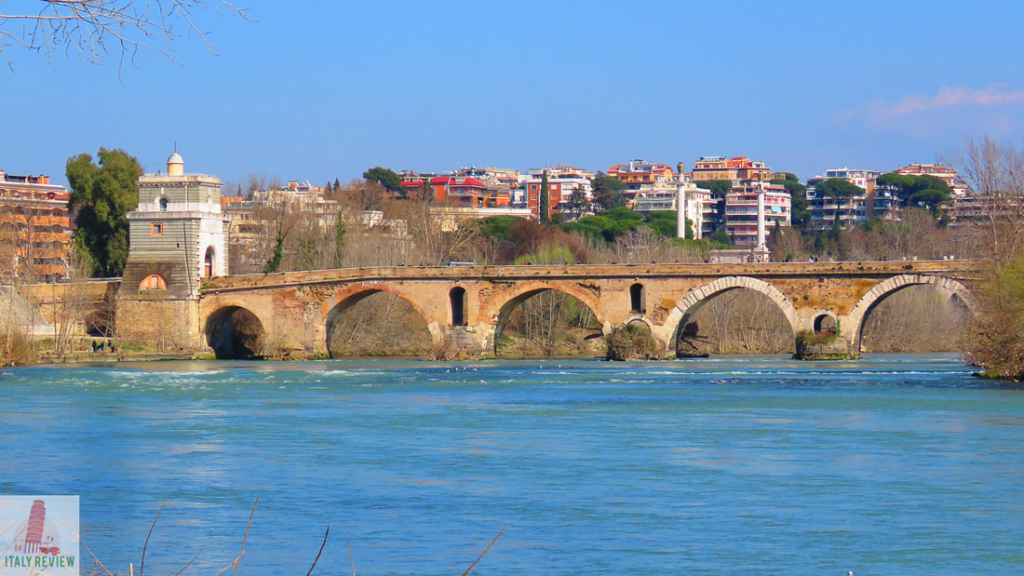
But many scholars cast doubt on this story and offer a far more logical and human account of Constantine. No one has ever found a Roman shield with a ☧ on it. Historians doubt the story because the pagan (non-Christian) accounts, written as early as 312, of the battle praise Constantine’s military strategy and never mention the vision. The Arch of Constantine, erected in Rome in 315 to celebrate the victory at the Milvian Bridge, has only images of Constantine’s favorite gods, Sol Invictus and Apollo, and nothing related to Christ. The Christian historian Eusebius of Syria, who first wrote of the miracle in 337, wrote an earlier version of the battle sometime between 312 and 324 that never mentioned the miracle.
Constantine’s Political Motives
Constantine’s father, Constantius I (Chlorus), was part of a Tetrarchy, or four-emperor control of the vast Roman Empire; he was the emperor of the north, precisely England. He died in York (UK) in 305 CE, and his men declared his son, Constantine, as the Great or sole emperor of the Roman Empire.
The other shared emperors were Maxentius (Emperor of Italy and North Africa), Galerius (Eastern Empire), Licinius (northeast Empire), and Diocletian. Constantine fought these other emperors, starting with Maxentius, for eighteen years (until 324), when he became the sole emperor.
What we know for sure is that before defeating Licinius in 324, he had signed the Edict of Milan agreement with him, legalizing Christianity. At that juncture, it was believed that 5-6 million Roman citizens, or roughly 10%, were Christians. So why do this edict if the story of the miracle wasn’t true?
There are several theories for this, including that Constantine, regardless of whether the miracle of the vision was true, was very superstitious and wanted the Christian God’s help, along with his favorite gods, the Sun god, Sol Invictus, and Apollo.
Constantine also wanted a unified empire, under one emperor, him. Just like Donald Trump used the evangelicals to gain the presidency in 2016, while having no personal Christian convictions, many historians think that this was also Constantine’s motive. By legalizing the 10 million Christian Roman citizens, he would assure their political support, while not harming the support of the pagans. Also, some think he wanted to transition from the polytheistic Roman religious system to a monotheistic religion, such as Christianity, to help the empire become a monarchy. Just as the eighteenth Egyptian dynasty pharaoh, Amenhotep IV (14th century BCE), abandoned the Egyptian polytheistic system for a monotheistic system of worshiping just the sun god, Aten, because he wanted his subjects to be used to honoring just one pharaoh.
How Constantine Changed the Church
I would over romanticize it if I described the church as loving, closed knit group without the trappings of a human organization, then all that changed with Constantine. It is not that simple.
Remember, it seems clear that Constantine was not baptized as a Christian until his deathbed and kept an altar to Sol Invictus throughout his reign. However, his mother, Helena, seemed to have a much greater interest in Christianity, having traveled to Jerusalem to collect Christian relics. There are some traditions in the Eastern church that Helena converted to Christianity and raised Constantine as a Christian, but there is little historical support for that claim.
With this said, Constantine had a great influence on the early church, in a parallel way that Donald Trump has had a great influence on the evangelical church, such as the rise (again) of “Christian”-based bigotry and Christian nationalism.
The first major act of Constantine was to hold the first major church-wide council, the First Council of Nicaea. There, he hoped the churches would reach an agreement on the Arian controversy. While the Arians are not considered Gnostic, they did have the same problem as the Gnostics with Christology. That Jesus couldn’t be a dirty human and God; he must be subordinate to God Almighty, a created being. The council ended with a creed to declare Jesus fully God.
Most historians and theologians believe that Constantine had a major impact on the direction of the Christian church, taking it from persecuted, dispersed, and body-centered groups into a powerful and unified organization, for better or worse. Constantine had the first church buildings built and infused a great deal of state money into the church’s political structure. Constantine is believed by most church historians to be not a writer of church doctrine, but the enforcer of such.
This sidebar into the life of Constantine has the main point of demonstrating the unified and powerful soapbox from which Christian culture would be dictated. After the first three centuries, with the influence of splinter groups such as the Gnostics, the church’s flavor was influenced by a new way of thinking, Neoplatonism. After the time of Constantine, the church was empowered and more homogeneous. Therefore, the church’s Neoplatonist ideas became more uniform until Thomas Aquinas arrived in 1225.
Neoplatonism, meaning new-Platonic, was a dualistic way to see reality. Plato focused on this way of looking at reality, creating a dualistic model. This is best illustrated in his famous story, An Allegory of a Cave, in his writing, The Republic. But in his model, while he saw the material as part of the lower level of reality, he saw human reason, love, and mathematics as part of the upper level of reality. Christian Neoplatonism saw the material world, including human reason and concepts like beauty, with little value, and only the spiritual as the upper, more perfect and meaningful level of reality. Much like an earlier version of what we see today.

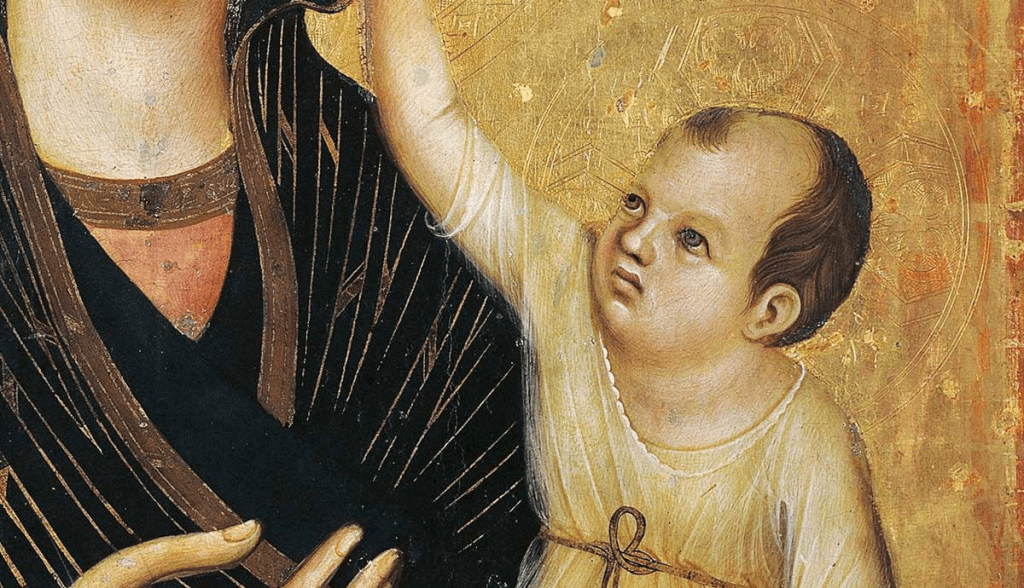
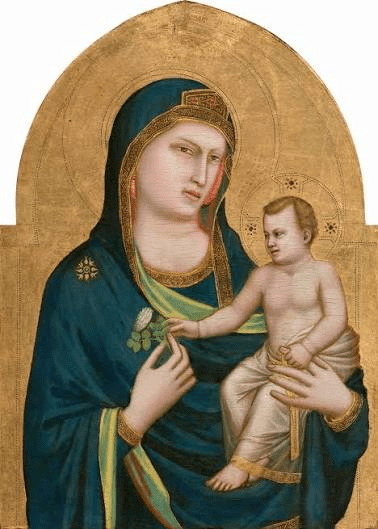
Dr. Francis Schaeffer called this period when “grace ate up nature.” He uses art as a surface marker of what is happening to the culture philosophically. During this Neoplatonic age, there is no art except for Christian topics, angels, God, Jesus, and Mary. Not landscapes. And even this spiritual art was not realistic, painting the baby Jesus as an adult man. Even real babies were seen as most inferior of the inferior.
This thought is not finished, but this is getting long, and I will continue next time with the so-called “Dark Ages.”
I will say, that I could go down a rabbit hole and focus on how Constatine could have changed the church for the worst, beyond making it more powerful to impose neoplatoism upon the masses, but that is a topic for another time.
Respectfully,
Mike


Leave a Reply