I had a brief conversation with a Christian the other night, and it went something like this, my paraphrase and enhancement for clarity:
Other: “I see all these younger people leaving the church, and now they have nothing- no meaning or morals.”
Me: “I think we need to decouple the belief and relationship with God from religion, including the organized church.”
Other: (with a look of “Huh?”). “But as I said, they wouldn’t have a basis for morals or meaning in their lives if they left religion.”
Me: “Of course they would. They would have God and the historical Jesus, which gives morals and meaning.”
Other: “I don’t get it. You said they would give up the church.”
Me: “Giving up the organized church isn’t congruent with giving up a belief in personal God and the historical Jesus.”
Other: “I’m confused.”
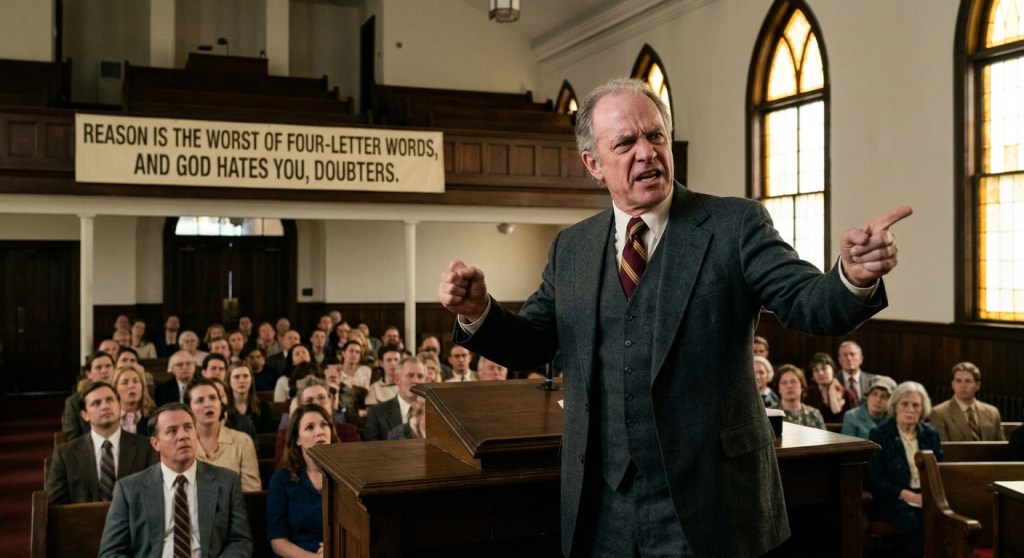
Here is the problem. The organized church, by choice, doesn’t allow meaningful hard questions or debate. It is in all religions’ favor to squish skepticism and critical thinking because most religions require belief in things with no evidence. Modern, post-Kierkegaardian Christian faith is defined as believing in things irrationally, without evidence. I will say this bold statement again: the purpose of all organized religions is not to seek truth, because factual truth may not align with their own dogmas and ideas. The core theme of all religions is conformity to those dogmas. Study the history of the Christian church, both Catholic and Protestant, and this motive will be clear.
I am becoming more convinced as I age, as it relates to Christianity, that while there is a large swath of good people for whom nothing but traditional church, including its flagship, the Sunday morning worship service, is essential for their own relationship with God, there is also a large swath of good people for whom traditional church would make such a relationship with God impossible. My heart is with the outcast, rational seekers.
To prove my point, the church I’m loosely associated with is far more gracious and has more thoughtful people than any other church I’ve been involved with. However, while this church is an outlier in some ways, it still doesn’t nurture serious objective questions. For example, a few years ago I tried to get more involved by being on the adult ministry committee. For the coming year, I suggested twelve provocative Sunday school classes, and all were rejected with prejudice except one on suffering. However, I was still in the midst of my own severe suffering at the time and didn’t feel I could lead it without weeping through the whole program.
Of the eleven suggestions I made, one was on doubt and why we believe in God in the first place, and one was titled, “Did Jesus die for the Sins of Homo Naledi?” which would open up hard questions about human evolution, anthropocentrism, and redemption.
Our church has had a Sunday school on doubt (I believe), but it was from a postmodernist perspective, treating doubt as a subjective spiritual problem with a subjective spiritual solution. Real doubt, the kind of doubt that causes many people to leave Christianity for good, is an objective problem of epistemology, or how we find truth. It involves evidence and rational thought, not just finding a good feeling… but I digress.
So at this point, and going forward, I have given up on creating space within our traditional churches for that group of outcast, rational seekers. It is hopeless. I tried it for over twenty years with the conservative churches and have many deep personal wounds to show for it, and no benefit except maybe for a few individuals that I helped.
I’ve tried for a decade with the church I’m associated with now. I admit, due to my own intense battle with cancer, my efforts here have been meager at best. Yet it is clear my ideas aren’t welcome in this progressive church either. Was it my imagination, or did I hear a sigh of “good riddance” when I stepped down from the Adult Ministries committee? I’ve collected several new wounds at this church too, because I invited people to come to this blog seven years ago to follow my cancer, and they stuck around to read my provocative conversation about the questions forbidden in the traditional church. Then they attack.
To be clear, most people from my present church have been gracious, and while they may see me as some weirdo for the things I write or say, they don’t see me as the devil, which unfortunately a few do. But this is why I’ve given up hope of trying to create space within the traditional churches for the honest, thoughtful seekers: the few who make no effort to understand what I’m writing, but in a spirit of competitive piety, attack with vicious words, as arrows to the inner chamber of one’s heart. Because of these few, despite the majority’s graciousness, the traditional church is not a safe place for people who seriously want to ask the hard questions and seek and wrestle with the questions God loves, and I’m impotent to change that.
Going forward, I want to create personal space outside the organized church for good people who seriously want to consider the honest, hard questions about God. Because of the few competitive piety players even in the best churches, I would discourage honest seekers from getting involved in any church, because it is not safe for them there, and they will either be hurt, or their spark of curiosity will be quenched by conformity.
If this were thirty years ago, when I began to believe in God again, I would not go back to the church. The church has but one calling: to encourage toward love and good deeds. The greatest discouragements in my life, besides the wrath of cancer, have been the words from the lips and keyboards of church people.
To be clear, I have nothing but admiration for church people, even in my previous conservative churches and my present one. No, they are not the enemy. I even adore those men who have attacked me here because, while they may have this one flaw of competitive piety, the rest of their character is admirable.
I haven’t played the game of competitive piety since leaving evangelicalism in 1990. I don’t look down on those who don’t agree with or think like me. I’ve said many times: I measure people by the way they love, especially the marginalized. So, while I’m personally frustrated that my like-minded people aren’t given the space to grow and thrive within the organized church. I support the majority who, like the person in the conversation at the beginning, cannot imagine a relationship with God outside of traditional Christianity. There’s nothing wrong with that.
I will continue my limited involvement with my local church, while trying to stay safe there. As long as I can say encouraging words to people, I will continue that involvement. While I can share in their acts of love toward each other and the broader community, I will continue to go. But I regret that a more intimate relationship there is impossible, for as soon as I say something like, human reason is God-given, I am the weirdo, if not the devil.
I’m going to get away from this introspection and return to other topics. In this political season, I am appalled by those politicians who are aligned with Christianity; they seem to lie the most. I want to explore truth again. I may also return to those hard questions of human evolution and the problem of suffering.
With Respect, Mike


Leave a Reply