Something remarkable is happening in science. It is sad that, when the church felt threatened by the Enlightenment in the eighteenth century, it responded by making Christian belief irrational and science the enemy of God. This contrasts with Augustine and Aquinas, who assumed that human reason was the handiwork of God because humans are. They also made the study of nature (science) equivalent to the study of scripture, and perhaps even superior in one respect. Like all written narratives, scriptures are subjective, stories that have traversed languages and epochs. Nature is present, observable, and objective. So when the two conflict, it is usually more expedient to reinterpret the written scriptures than the blatantly observable parts of the cosmos. The Christian notion of a six-thousand-year-old Earth is the prime example.
My original career pursuit, once I knew being an astronaut was beyond my reach, was being a science educator. I only switched to medicine when the man who “discipled” me told me that I needed to change. It was practical advice wrapped in a superstition. He, an unemployed teacher, knew teaching jobs in the 1970s were hard to find, and like all a leader’s words in that Christian group, his were assumed to come directly from God.
When I fully entered that discipleship group in the following years, they reflected the broader Christian culture—especially the conservative brands—that any use of reason, looking at evidence, the pursuit of learning (the Bible excluded), and especially an interest in the sciences were antithetical to Christian belief.
It was when I left Christianity in 1990 that I was set free to study not just science but history and many other topics. It was a journey, and like any good journey, it was torturous at times. But in the end, science opened the door to a creator much, much bigger and more mysterious than the one I had known through religion for the previous forty years.
When I was first introduced to the discipleship group, at eighteen, we were taught, and it was mostly true, that most scientists were atheists. They were mostly atheists because the church gave them no choice once they had challenged Christian traditions (such as the age of the Earth). The fastest way to get someone to leave your faith is by demonizing them if they challenge your traditions… this I know from experience.
On a bright note, I want to emphasize that something is happening at the cutting edge of science. I listen to many lectures on quantum mechanics, cosmology, and the search for the Theory of Everything (in physics), and this change is clear. The brightest minds, from biochemistry to quantum mechanics and particle physics, as they now observe the fantastical mysteries in nature, are leaving the door open for a God behind it all. A much bigger and more mysterious God than the religious version. Now, to a religious person, this change may sound trivial, but really… it’s Titanic. It is a giant step to move from assuming the universe is strictly material by default to acknowledging that there may indeed be a God behind it all.
We are living in the late postmodern age. Maybe the earliest days of postmodernism brought some benefit with its deconstruction of societal norms. However, like all great philosophical movements, it has gone to seed and become destructive. Unfortunately, the Christian church hitched its wagon to this movement, like it does to all faddish movements, and is headed over the cliff with its postmodernist secular brothers and sisters. The political version became completely dysfunctional, where the politician who lies the most wins. Hopefully, this week showed that our society is growing tired of the hateful lies.
But the church is in a similar position, especially the conservative brands. There is no place in American society where you are more likely to hear lies about reality and science than within the walls of a church on Sunday morning. I spent fifteen years in the conservative church fighting constant conspiracy theories: a Christian supplement that some of the members were selling that cured cancer, Bill and Hillary Clinton running a pedophile ring, and black helicopters rounding up Christians and executing them in secret.
But this is what is to be expected when a religion rejects God-given human reason and champions an irrational faith that considers looking at evidence a sin.
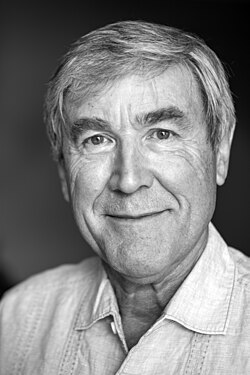
Dr. Paul Davies, an Oxford graduate, physicist, thinker, and writer, has a short lecture at the bottom of this post. I encourage you to listen to the whole thing, while I have it queued at the point where he talks about the finely tuned cosmos for human life, and while he doesn’t favor the answer of divine creation, he lists it as a plausible option. This is what is different from just ten years ago.
Because our politics and churches have given up on truth, science is the last bastion of such factual truth. And if there really is a God, that God would exist in the realm of factual truth, not in magical thinking, superstition, and trickery; I would not be surprised if, someday, science becomes the primary advocacy group for knowing God rather than religion. Sounds bizarre, doesn’t it?
Respectfully, Mike


Leave a Reply