I am going to walk into this territory gently, as I know from experience that it is dangerous. Let me be clear, as I deconstruct our most sacred institution, the organized church, with reference to what I discovered the scriptures clearly say, it is not a moral issue. When religious people write or speak about their different views, they always make it a moral issue. I believe X, and you believe Y, therefore I am spiritually superior to you because I have the right doctrines and beliefs, and you don’t. I am not a religious person. My journey is simply for the objective truth, always learning and adapting to new evidence. This is about practical living, not about dogmas and rules.
I believe that Christians have great freedom in choosing how they want to gather, from the informal to the highly ritualized and structured. This is not about intrinsic right or wrong, good or evil, but what is best, practically.
Human traditions are amoral. Many times, they are helpful, making important things routine. Eating three meals a day is a human tradition, but it takes the guesswork out of remembering to eat and not to overeat. As Paul warned, the problem is being taken captive by tradition, where you are compelled to follow it, even if it becomes counterproductive. The film I mentioned, “The Lottery,” was a great example of this.
We are living in an age in Western Civilization where Christianity is in a sharp decline. I will admit that since the pandemic, polls have shown a flattening or slight uptick in Christian church attendance. I have reasons to believe, too complicated to discuss here, that this improvement is only temporary or misrepresented. We are living in a post-Christian culture, as more people are not associated with the institutional Christian church than are, and even those who attend Christian churches no longer believe in the basic Christian ideals, such as Jesus being the messiah or even existing in history, and a pantheistic rather than personal concept of God. I’ve even heard these ideas among good people at my own church.
When I left Christianity and then returned, I wanted to study scripture to see what it really says, factually, and not what I was being told it said. As I examined the blueprint for Christian living, I was shocked by how simple it was. Love God and others as yourself, full stop. As far as Christians meeting, Paul recommends meeting for encouragement, full stop. There is no scriptural basis for the Churches we have, and that’s okay. As I said, God has given us great freedom in how we live and practice.
However, these traditions are so ingrained in the Christian culture that they will fight tooth and nail to protect them. When I suggested to our Church board in the early 1990s that I create an extension of the local organized church with a meeting in a bar on Saturday nights, not only did the head elder, Bob, disagree with me, but he vehemently opposed me, and made it personal: “Mike, you are not a man of God, you are working for the devil.”
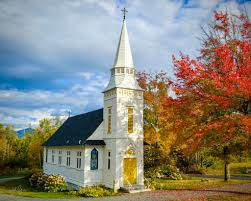
This is when traditions have taken us captive, when we cannot think outside the box.
Going forward, I want to use two different terms for clarity. I will use the term “Crowd” to represent the word ekklesia, the original Greek word in the New Testament that our English Bibles translate to “Church.” I will use the word “Church” to represent the modern (and historical) institutional church, which is a building and a hierarchical enterprise centered on a Sunday-morning worship service with certain rituals of practice.
When I realized that there was little New Testament mandate for the Church, I began to ask questions about church organization. I was met by defense from Catholics, Orthodox, and all brands of Protestantism, who, while they had to milk the scriptures to find tangential support for their institutions (such as the mention of elders, which in New Testament times were simply older, wiser people), the main support was “providence.” This term, as used by Christians, means the way things are is the way God intended, because he controls everything. Yet, each of the aforementioned Christian entities would claim God’s unique providence for their specific brand of practice (Catholic, Orthodox, and various branches of Protestantism).
However, as I studied church history over several years, I was overwhelmed by the atrocities and brutal injustices practiced by all brands of Christian organizations over the years. Things that had been whitewashed in my evangelical world… except they would mention only Catholic atrocities, but not their own. It was during this experience that I came to recognize the organized Church as a human institution, not designed and managed by a perfect God, or by His providence, but by fallen, whimsical humans.
With that said, with nothing about the Church written in stone or via providence, the only remaining question is whether this organization, traditions, and practices have become obsolete for the majority of our culture? They vote with their feet, and they are leaving. Could the form of the Crowd change to better accommodate our greater culture? I’m not talking about adding drums to the worship songs, but a total rebooting of the practice of the Crowd.
While I recognize that many Christian people raised in the Church could not imagine it any other way than a building, an organization with an administration, a paid pastor, pews, hymns, Sunday morning Sunday school, and preaching, and that there will always be such churches for them. But couldn’t even the organized church create alternative ways to meet for that smaller bandwidth of people for whom church is obsolete or doesn’t work? Not just small groups that are expected to also be part of the traditional churches on Sunday morning?
Think about these things, and I will be back.
With Respect, Mike


Leave a Reply