Again, for the sake of space, I am not just copying and posting from my work in progress, my book, but summaries from chapters. This is part I; I will complete this thought next time in part II.
In cosmology, there is a phenomenon called gravitational lensing. It is where there is a large concentration of gravitational force, such as from a supermassive black hole or a galaxy cluster, that distorts the very fabric of space-time around it to the point that light coming from behind it is bent. When that light is bent, just as when light travels through the glass of a lens, it distorts the source of that light, magnifying it in some cases or making the object emitting that light appear where it is not.
When cancer intrudes into your life, it is like inviting a category five hurricane… into your living room. Your whole world becomes cyclonic, everything turned upside down. The heavy weight of that powerful storm bends and distorts the fabric of reality. As I write about my cancer experience, I intend to write with the utmost candor and honesty about the events. But I must recognize that my memory of that reality may have been skewed by the weight of the storm, what one could call “tragedy lensing.”
There are at least two things that came with cancer that I did not expect. The first was that I, as a medical provider, believed that we in Western medicine had all the tools we needed to mitigate suffering. We do not. In my early days with myeloma, my suffering was worse than I thought a mere mortal like me could survive. It would take a book focused on my suffering to explain, but I will just mention three aspects: the unstoppable diarrhea for over three years, the pain in my gut, and, worst of all—atypical for myeloma—a neuromotor disorder. The latter caused every muscle in my body to twitch nonstop, day and night, for almost four years, making sleep or rest of any kind unthinkable, leaving me on the brink of insanity. What I didn’t have, but most myeloma patients do, was bone pain, which, so I’ve heard, is also unbearable and untreatable. Narcotics become like water to them, no help even if they sucked the sap directly from a poppy plant.
The second surprise was that, as formidable as the physical battle against the disease was, it would be eclipsed by the psychological fight. Whether it was the mental exhaustion from the material conflict, or the complete loss of significance, the ending result was always, as expressed best by the Shakespearean voice through Hamlet:
“To be, or not to be, that is the question:
Whether ’tis nobler in the mind to suffer
The slings and arrows of outrageous fortune,
Or to take arms against a sea of troubles
And by opposing end them. To die—to sleep,
No more; and by a sleep to say we end
The heart-ache and the thousand natural shocks
That flesh is heir to: ’tis a consummation
Devoutly to be wish’d. To die, to sleep;
To sleep, perchance to dream—ay, there’s the rub:
For in that sleep of death what dreams may come… ”
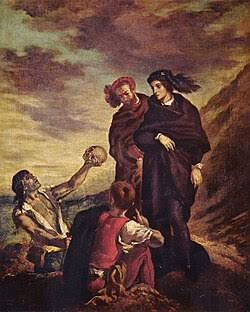
If cancer patients were honest, and I’ve found the religious to be the least so, we would admit that we had times when we wanted to quit. That may mean ending our lives actively, or passively, by letting the cancer have its way. I know of several religious people who, with their polite smiles, secretly chose the passive approach by claiming that God told them that chemo was a sin because, in reality, they feared that their suicide was. I know that at my lowest moments, I considered both the passive and active approaches to that eternal sleep. There was no lesser of evils in that space, only the worst of such.
Mike
 J. Michael Jones
Leave a comment