Let me start by saying that if you don’t know me, I am not a historian by training. I am an armchair historian, just like I am an armchair philosopher, an armchair writer, and, considering how much multiple myeloma has taken from me, some days I feel like an “armchair human being.” So, if you are an authority in any of these areas and you notice that I’ve erred, please let me know. I am a seeker of truth and hate it when I am misinformed or have misunderstood something I’ve read.
Furthermore, I’ve been told that I have a reputation for being too sensitive to criticism. But factual correction is not my problem. I tend to be oversensitive when people take me out for coffee, scream at me in church, or send me handwritten letters, explaining to me that I’m not a real Christian, that I am a God-hater, a horrible human being, or that they hope my cancer kills me as punishment for things I’ve written here. Yep, those things tend to get under my skin.
Now, where was I?
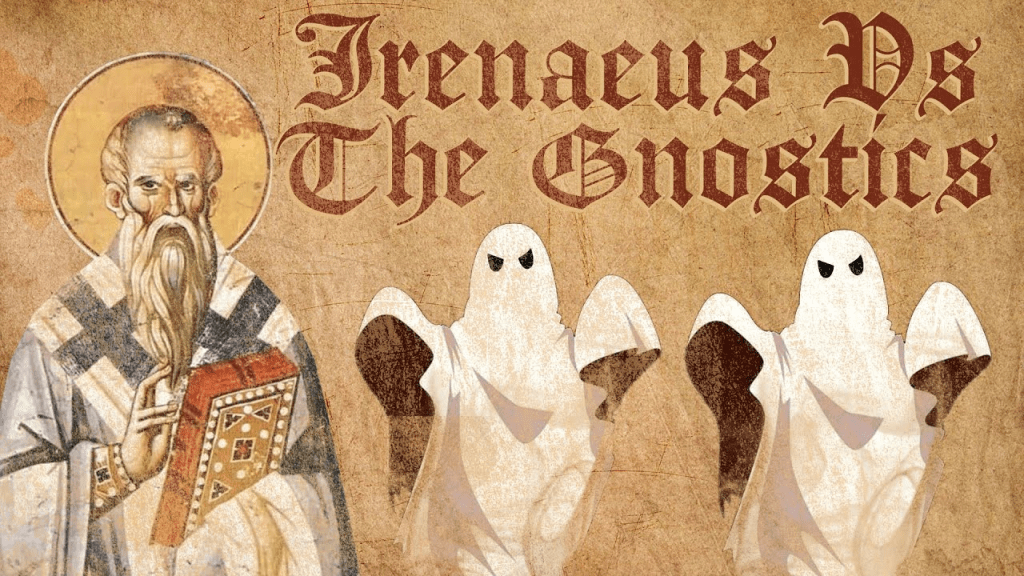
I want to turn my focus on the Christian Gnostics, a heretical group that competed aggressively with the early church. I just read a historian’s perspective, and he agrees with me that the Gnostics were likely influenced by an amalgam of Platonic and Essene ideas, depending on whether they were from a Roman or Jewish background. The Gnostics were profoundly dualistic, believing that God didn’t create this wonderful world and call it good, but an evil god, called the Demiurge, created it as a trap for people. As their name suggests, “Gnostics,” which means “people with knowledge,” believed that knowledge comes secretly within one’s heart directly from God, not through observation or learning. Therefore, since it is from God, you couldn’t challenge anything they said… right?
The second-century church leader, Irenaeus, made it a personal campaign to fight the Gnostics. While their population probably never exceeded 15%, Irenaeus described them as mushrooms sprouting up throughout the Christian world. However, there were many other Christian cults during the first half-millennium that had roots in Gnosticism, including Marcionism, Montanism, Docetism, Ebionites, Manichaeism, and Arianism. What these cults had in common was the metaphysical idea of dualism, with the material world being inferior, including our reason, to an invisible spiritual world. The thorn in the side of the church from these cults is in the area of Christology. If this world is dirty, then Jesus could not be both God and a man who lived in this nasty world. So, they either decided that Jesus was God, but was not a material man, or he was a man, and not part of God.
I must mention that the greatest influencer (I hate to use that term) of the early church was Augustine. A smart man, but he was a Manichean for a decade before converting to orthodox Christianity. When I read his writings, I see the echo of the Manichean dualism. In his book The City of God, Augustine refers to Plato several times as one of the greatest teachers and as a de facto Christian because of his enlightenment. But not adhering to Plato’s original dualism, which touted that truth is found by examining the evidence and processing through human reason and that human reason was the pinnacle of reality. Augustine and others instead developed a new philosophy, Neoplatonism (new Platonism), loosely based on Plato, that made human reason as the lowest point in the hierarchy of goodness, replacing it at the top with emanation, an internal, subjective and somewhat mystical process of receiving the radiance of the creator and his knowledge… so, very similar to the Gnostics when things are said and done. Neoplatonism had a profound influence on the Medieval church.
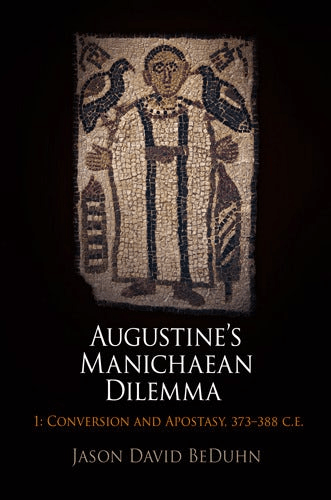
Augustine’s writings and teachings ushered in an age of ascetic living and living in a subjective understanding of reality. I will mention that, in some forms of the modern obsession with spirituality, the ascetics of the pre-Middle Ages have become quite popular once more.
At this juncture of the story, many reading this, and we are all from this modern period, will say, “Okay, so what if we believe that reason is inferior to the direct voice of God, and that idea came from non-Christian sources… I like it anyhow, and I admire the mystic monks of the pre-medieval and medieval ages.” When I finish this historical journey, I will circle back and discuss directly why I believe God is rational, created a rational cosmos, and gave us reason, while imperfect, as the sole process for finding factual truth. Living consistently with factual truth allows us to live more productively and happily, and to be better able to live in justice and love. All injustice and hate begin with a lie. There is no better liar than the one within us, who lies to ourselves. The heart, seat of emotions, indeed, is the greatest deceiver in the universe. When we believe our own lies, we live less fully than we could have.
Respectfully,
Mike


Leave a comment