Definitions
I must start this posting with a definition of terms. All words have connotations set deeply in our culture, memory, and emotions. But those connotations can be a distraction when we use the same word in a fresh way or to correct a misunderstanding.
The word “science” means many different things to different people. To the evangelicals that I was with, it meant an evil, anti-Christian process, likely from the devil. To the progressive, the word science sits a little better, but with still an anti-God bias. So, from this point I will replace the common word, “science,” with a better term, from my perspective, and that is “Curious About Creation.” I will use the initials “C.A.C.” To me, that states exactly what science really is. Being C.A.C should be a default position for anyone claiming to love the creator… but unfortunately it is not, which I find strange. The only way to explain this disconnect is the influnce of dualism. It is also a self-decption to say your are curious about creation, but then when that honest curiosity finds things that you hate about creation, that then you decide to become incurious.
I will add another replacement term for “faith,” and that is “reason2” (squared). I will explain that in a future post.

Lastly, I will replace “spiritual” or “spirit” with “unseen.” As I have mentioned before, going back to even archaic humans, hundreds of thousands of years ago, air was seen as magic. It was invisible, yet had the power to move your hair, a tree top, or a sail on a boat. It was considered intangible yet with force. Eventually, it became associated with gods, God, or supernatural beings. The Hebrew of the Old Testament, as well as the Greek and Aramaic of the New Testament, uses the word “air” or “breath” that is translated into English as “spirit” or “spiritual.”
In the historical journey, I left the last time with Augustine. To remind you once again, I do not write as a religious person, making everything black or white, or good or bad, with me coming up as superior. This is a philosophical conversation, where you have the freedom to be pragmatic and honest. So, while I think Augustine made a mistake in how he brought Manichaeism’s dualism into his Christian thinking, I still have a lot of respect for the man. He was a true thinker, and I have no question that he was a Christian and loved God.
To grossly oversimplify history, Augustine set the stage for the following seven hundred years. Yes, of course, there were other great thinkers and saints during those years. Unfortunately, many great women fell into obscurity because of the patriarchal society.
I think my writing will be better served—oh, and yes, thank you to the six hundred readers who are sticking with this journey—if I focus on explaining the problem with dualism, rather than introducing additional philosophers and theologians, such as Anicius Manlius Severinus Boethius, John Scotus Eriugena, and Anselm of Canterbury the father of Catholic Scholasticism, who—correctly—opposed neo platonic dualism.
So, how does a metaphysical Dualism, with a spiritual realm being the focus, at the expense of the material affect how we live?
I think parables serve the same purpose as breaking unhelpful connotations with new terms. But telling the same story in a new framework exposes the truth of wrong thinking, so I will try to frame the influence of dualism in the following story.
Imagine that the octopuses were even more intelligent than they really are. They built great civilizations on the sea floors with beautiful cities out of coral, shells, and stones.
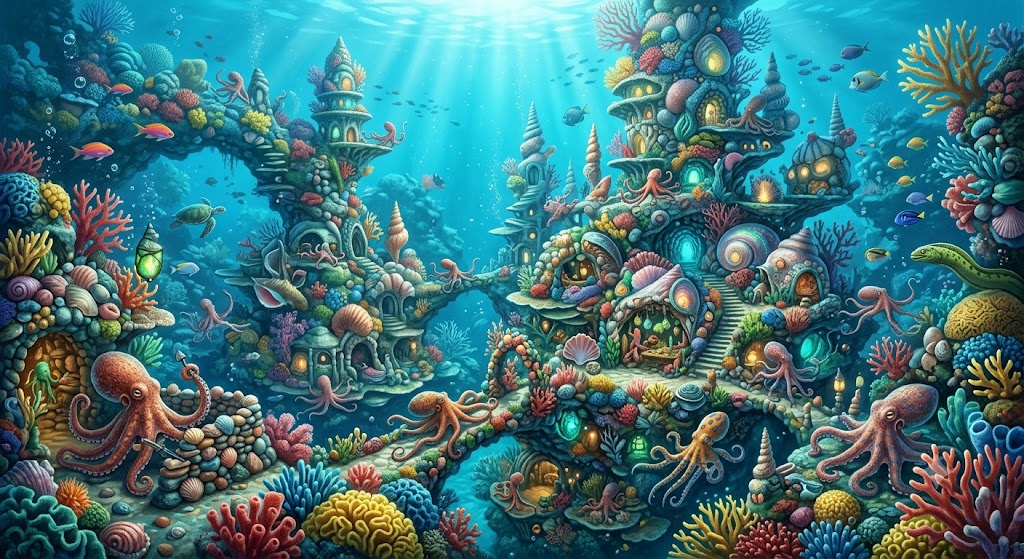
The octopuses were thriving until one day a Giant Pacific octopus, Cyrus, showed up, claiming to represent their god, Poseidon. He taught them that the material world was not one creation, but two. The water in which they lived was deemed by Poseidon (who created the water world) as nasty, inferior, and having no value in the grand scheme of things. In the end, Poseidon was going to flush all the water into the great sewer, where it belonged. That the good octopuses should instead love the upper story, the air, that only it had value in Poseidon’s eyes.
After the great octopus civilization accepted this view of water and air, they stopped building; the buildings went to ruin, except for towers built on the seafloor that allowed the octopuses to climb to the surface and lie in the sacred air. However, the truth was that the octopuses were not created for the air, and in it, their gills collapsed, and they could not breathe oxygen.
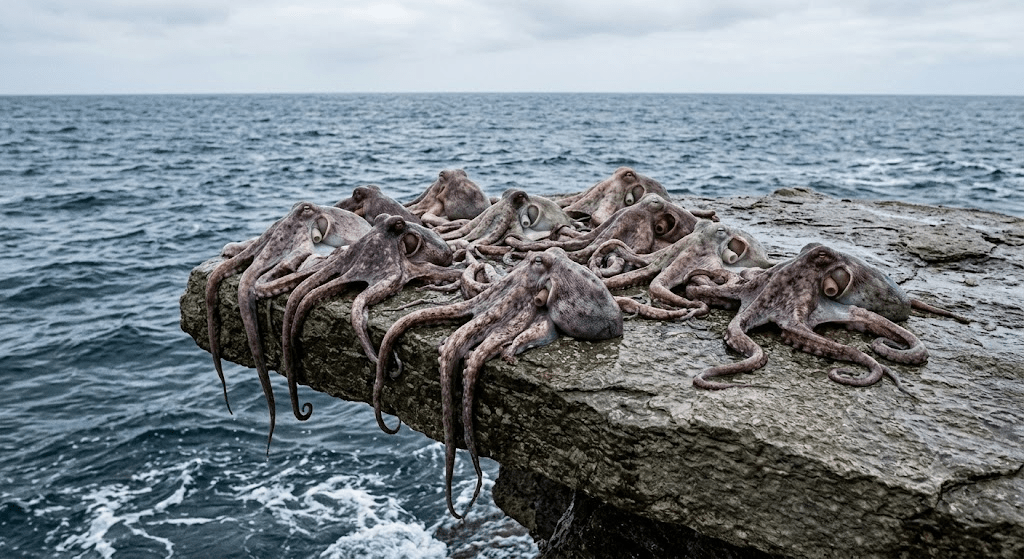
Christian Neoplatonic dualism teaches that only the unseen has value. That this natural world that God has created is nasty and curiosity about it is a complete waste of time. Therefore, every church you could visit would now be on the same page: that the wonderful reason that God has given us is “against God,” and God only lives in the unseen world above. That your love for God MUST be expressed in irrationalism and the rejection of reason. However, the truth is that God is profoundly rational and gave humans reason, though imperfect, as the only tool for discovering factual truth.
But my historical story will show how the church corrected its great error of rejecting material creation, only to return to it four generations later. Today, the worst it has ever been.
Respectfully,
Mike


Leave a Reply