I know I’m a little paranoid, but I am always cognizant that most people aren’t interested in history or philosophy. I keep wanting to make this relevant. Here I will introduce you to a conversation about how the world is breaking out in forest fires, killing people, making life miserable for a million or more, and destroying billions of dollars in property damages.
An evangelical preacher says from his pulpit today, “The headlines are full of war and destructive fires, destroying the world. As God said, he would destroy the world with fire, and my friends, I know for certain we are living in the last days. As God said in 2 Peter3:10, ‘But the Day of the Lord will come as a thief in the night, in which the heavens shall pass away with a great noise, and the elements shall melt with fervent heat. The earth also and the works that are therein shall be burned up.’”
This present statement is a clear example of this philosophical principle, about a dualistic viewpoint, where the unseen is paramount at the expense of the seen. In this case, the destruction around us is only seen through the lens of an unseen element, which leads to acting helplessly in the seen or material world. Naivety = impotence.
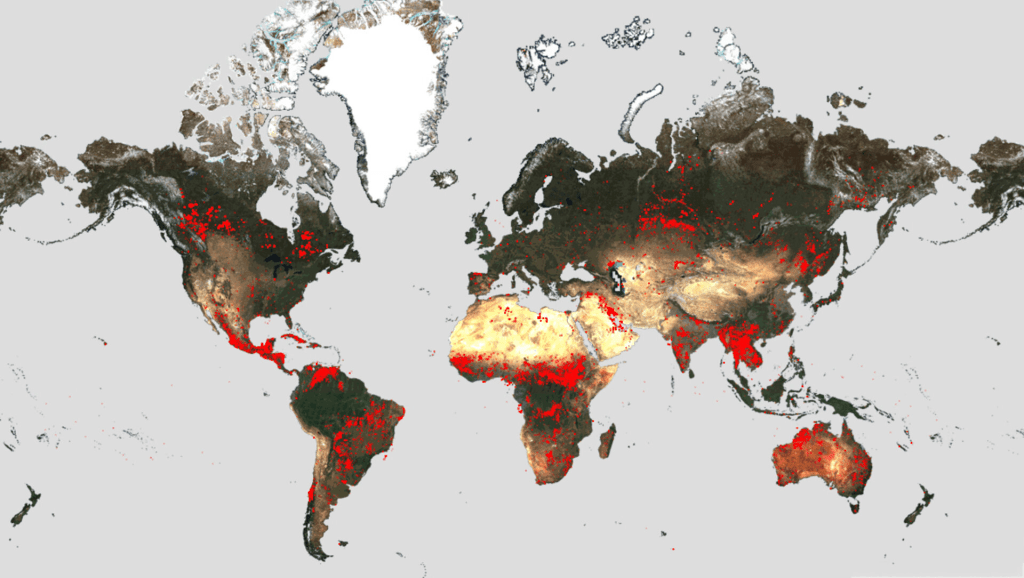
But look at this non-dualistically. You ask why the world is burning, allowing answers from both sides of this dualistic divide, or better, never having the divide to start with. They would find answers in the material that are logical, with overwhelming support from climate data, that the world is warming up artificially, from the influx of CO2 and methane into the atmosphere. You can also look at this voice of Peter from the non-seen dualist and critically examine the roots of that verse within a material context and what that verse really means.
But the good news is that once we understand the real cause of why the world is burning and why this will get much worse, it gives us the opportunity to do something about it to reduce the suffering and have a better quality of life. If we are helpless, it is a helplessness by choice, by continuing to find meaning in the unseen rather than the seen.
Now back to the crucial turning point of the Renaissance.
Stay safe,
Mike


Leave a Reply