In the twelfth century, an Aristotelian scholar and philosopher, Ibn Rushd (AKA Averroes), rose to prominence in Moorish Spain. His writings were translated into Latin and widely disseminated in Christian Europe over the next two centuries. The basis for European thinking had been Platonic Dualism, remanufactured as Neoplatonism. Then Aristotelian ideas, a unified reality, and rationality as the way to find truth began to replace Neoplatonism among the northern European Catholic scholars, which became the Scholastic Movement. The Scholastic Movement had an impact on the Italian Dominican friar, priest, theologian, and philosopher Thomas Aquinas.
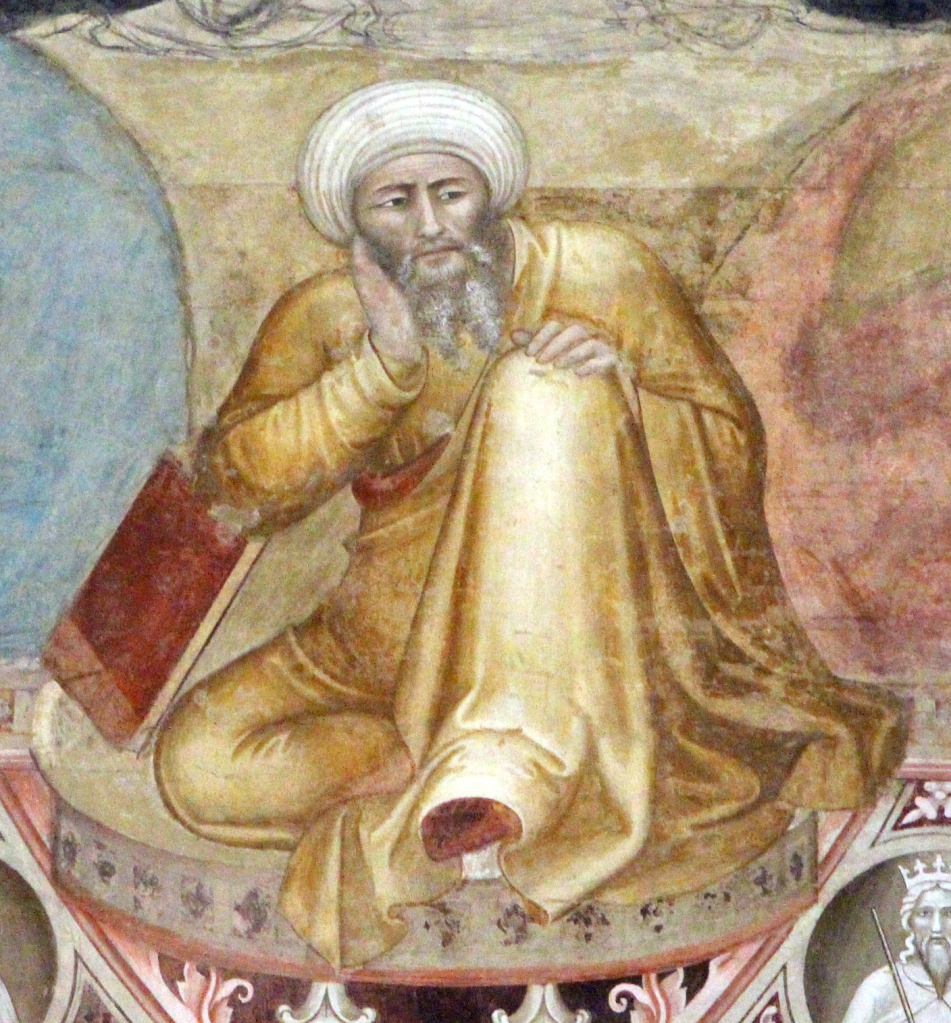
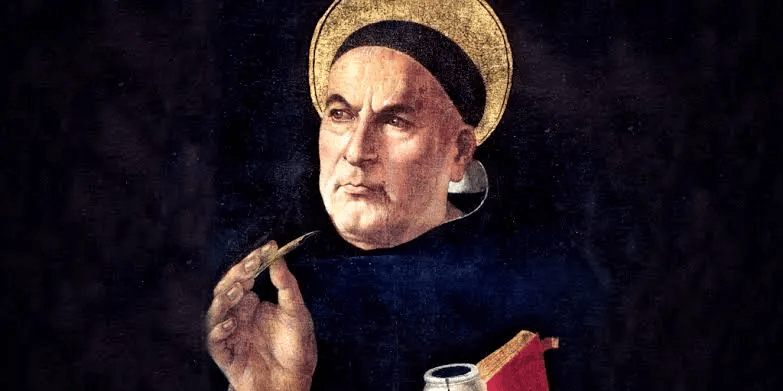
Aquinas was a prolific writer and introduced Aristotelian views into Catholic theology. The key points were that Nature, God’s creation, was equivalent to Scripture for knowing God. That reason, not of the lowly flesh to deal with the lowly material world, was God’s gift to humans to find truth about reality and God.
Medicis of Florence
I introduced the Medicis in a previous post. They were an extremely powerful family, more so than Jeff Bezos and Elon Musk combined. While it is hard to compare their wealth over time, the Medicis were a whole family dynasty, and if they were not bigger fish than the Musk-Bezos combo, they were certainly in a much, much smaller pond. They knew that the culture of Italy (mostly focused on Tuscany) was on the wrong course. Anything that did not center on the unseen Christian factors and the overpowering church was insignificant. Look at the art prior to the Medicis; ALL subjects were Biblical content. Beauty only had relevance to Biblical ideas, or cathedrals’ architecture, the unseen, not for beauty itself.
Cosimo de’ Medici, the godfather and eldest of the Medici family, in 1439 sponsored the move of a new church council to Florence from Basel, because there was a new outbreak of the Bubonic Plague in Switzerland. The council met for fourteen years with the main purpose of reunification of the Eastern Orthodox and Roman Catholic churches. The Eastern Orthodox Church was under increasing pressure from the Islamic Ottomans, and they needed the power of the Western church to survive.
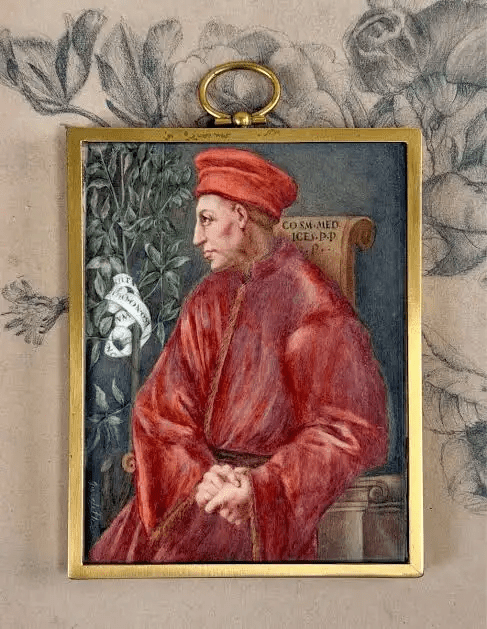
Cosimo, having studied Aquinas and the Scholastics, was teetering on introducing Aristotelian philosophy to Tuscan society. However, Gemistos Plethon, a Greek philosopher and theologian, was part of the Greek Orthodox delegation. Cosimo became enthralled with him and, rather than sitting in on official meetings, Cosimo began having discussions with Plethon about the future of Tuscan and Italian society. Should they follow Aristotle as Aquinas and the northern European Catholic Church did? This discussion became the “Platonic Academy” of Florence. This discussion group continued even after the church council ended.
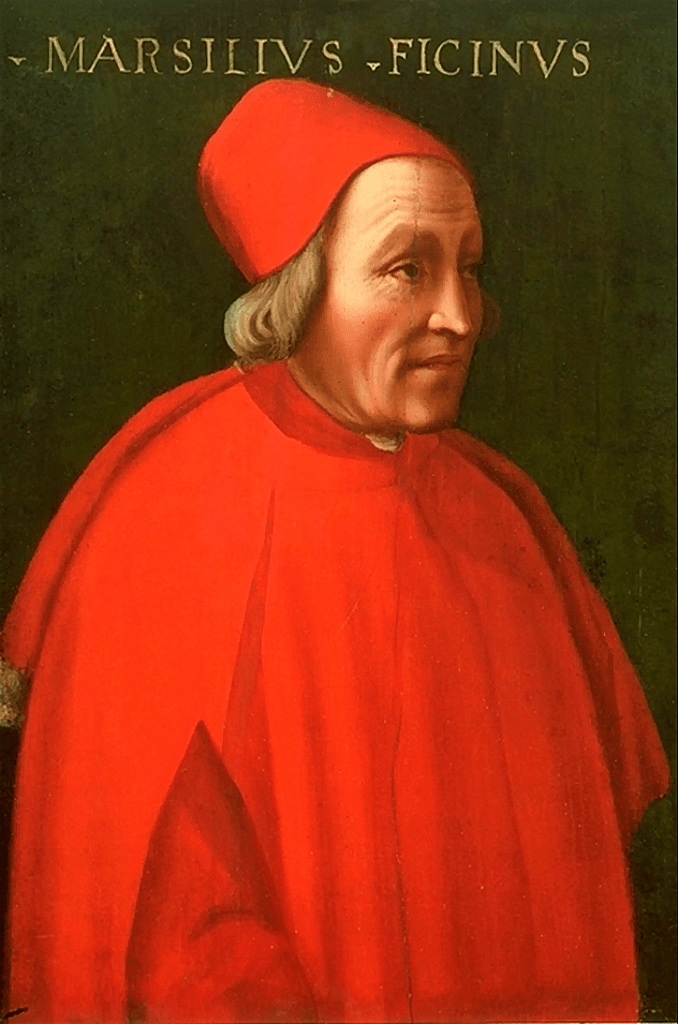
Another key player in the discussion group was the Italian theologian, Marsilio Ficino. In the end, from the ideas of Plethon and with Ficino’s guidance, they reached the conclusion that Neoplatonism wasn’t the problem, but how the dualism was divided up. The church had divided it between the seen and unseen (material and spiritual in a hierarchical order). The new idea, the conclusion of this decade-long discussion, was that the highest echelon of this Platonic dualism should reflect Plato’s original intent, with beauty (not just of God, but in the material as well), math, reason, curiosity, and the ideals being of the highest echelon, not just church matters and the unseen. This was the birth of humanism.
Now, humanism has a bad name in especially the conservative churches. However, this new, or what I would call, Neo-Neoplatonism of Florence was very similar to Aquinas’s ideas, but his was based on Aristotle’s view of a unified reality. Both elevated human reason as a gift of God, the highest calling of mankind. But humanism, being human experience-focused, both diverged and mixed with the Aristotelians in future generations.
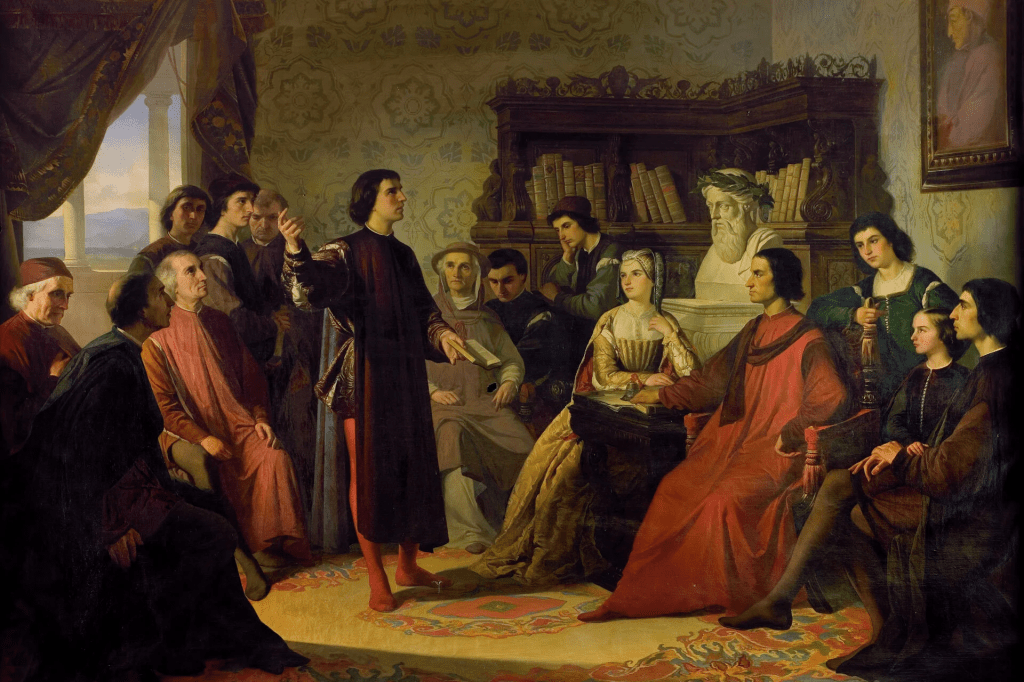
But with this simple change in the orientation of philosophy, art and science exploded in the following centuries. The Medicis, following their new philosophical convictions, began to sponsor such artists as Michaelangelo, Leonardo da Vinci, Sandro Botticelli, Raphael, and Donatello.
In closing
I will add one more tidbit before I end this post. Every time I say that human reason, looking at evidence and trying to reach an honest conclusion, is a very important part of my Christianity, then, without exception, Christians share their stereotype (I was about to use the word “bigotry,” but I refrained) that therefore, their spirituality is better than mine because mine is “of the flesh” and theirs is richer and more filled with the experience of God. I loathe the spiritual competition that comes with religion.
Let me just say, Aquinas, my hero (but with mild disagreements), despite being a prolific scholar and thinker, a great believer in reason as God’s gift, wrote that an experience that he had late in life, on December 6, 1273, to be exact, during a Mass in Naples, he received a profound (you could call it mystical) revelation that made all the things he had written before seem like just straw.
I will testify that my experiences with God, since I have become a Christian rationalist, profoundly outstrip those pretend visions and experiences I had as an evangelical. These are profoundly mysterious, but not irrational mystical. It is not just an unprovoked emotion, but a glorious emotion based on seeing God through art, math, and the mind-blowing reality of the cosmos, God’s creation.
Respectfully,
Mike


Leave a Reply