Review
Our culture is in crisis. No, this is not the first time nor will it be the last… I hope. If it is the last, it will mean that this particular crisis is terminal. The current problems are at least as bad as those that caused the failure of other empires, such as the Roman. The manifest of this crisis is the great divisions within our national culture shaking the very foundations upon which it was built.
For the Christian in particular, we are now living in a post-Christian society for the first time since the fourth century, and that decline is accelerating. There was a slight increase in “church attendance” for Gen Z men in 2025-2026, which (too complicated to explain here) I think is a fluke, and any hope built around that narrow increase is ill-advised. I also think the decline is much greater than questions in polls about church attendance can disclose, as many people like the traditional church society who no longer believe the bare essentials of Christianity, such as that there is a personal creator and Jesus of Galilee was the creator’s unique archetypal. Or they believe in a Jesus they invent that bears no resemblance to the historical accounts of the person.
I am convinced that the cornerstone of this failure is the loss of our pursuit of factual truths and critical thinking. People, especially Christians, are more gullible, more likely to believe things that are factually untrue than their ancestors just fifty years ago. Donald Trump, the master deciever, has drawn them like bugs to a porch light. Additionally, we are on the cusp of the AI revolution, which will be the most disruptive scientific innovation in history. Best-selling author and historian Yuval Noah Harari thinks we are ill-prepared for this coming storm, where factual truth will be even more difficult to find and to hold on to, which, if we are not careful, will lead to world wars, starvation, pandemics, and the total collapse of societies. All wars begin with a lie.

History is the best tool for finding the cause and errors of any type of thinking, including the thinking of this postmodernist age. That’s why I value Dr. Harari opinions because he is a professor of history.
I am aware that many great barriers stand between the reader and my writing. For one, I am a nobody. My voice has no respect even within my own church or sphere of influence. I simply don’t have the gifts to make a meaningful impact. Yet, I take heart that I’m not the only voice saying these things, and I think there are some teetering at the backdoor of the church (like me) or who have left that I can influence. It is for them I write.
Another barrier is the Christian concept of providence. In order for the Christian God to be big enough, so they think, most Christians believe that God must be totally manipulative of even the tiniest details of life and history. Therefore, they assume the way the church is, the way that Christians think, is part of that sovereign plan. It is a default and somewhat soothing way to think, taking away our responsibility to think correctly. It is also a common human egocentric flaw to consider their own culture as the “only right way to think.”
I realize that another great barrier to my message resonating is the “Catch-22” circumstances: me lecturing about the factual truths of history to people who no longer believe in factual truths. Also soothing to them. Yet, having incurable cancer and not knowing if I will be on this earth in three months (nor does anybody), I am compelled to write and speak… even to my last breath. It is like watching a slow-motion train wreck of which I can have little influence to stop, yet, for the sake of my grandkids, I must try. We could be living so much better than we do.
A Word on Faith
When I finish the historical journey, I will end with Kierkegaardian faith. Then I will discuss faith at length. However, here I want to insert a couple of thoughts so that no one gets the wrong idea, as I write about reason.
There are three main schools of Christian faith. One is this dualistic approach that human reason is unfit for anything, and therefore our Christian faith is supernatural and irrational (the Faith of Kierkegaard). God draws us. The second, what I might call, an apologetic faith, which asserts that we can reason ourselves all the way to a Christian faith, with certainty. The third is various mixtures of the two.
I will be clear: I find the “spiritual” approach wanting, simply because it ignores the great truth that subjectively, we can’t know anything with confidence because of our emotional confirmation bias. We are all delusional at times. Likewise, I find the apologetic approach wanting because we cannot know anything with confidence, because our intellectual ability to reason, while I think it is very good, is not perfect. That leaves the mixture, but there are different pedigrees along this spectrum, and that’s what I will discuss in more detail at the end.
The Scientific Revolution and Enlightenment
These two periods overlapped, with the Scientific Revolution covering dates from the sixteenth to the eighteenth centuries and the Enlightenment from the eighteenth to the early nineteenth centuries. The groundwork for these developments was laid by the Catholic Scholastics and Thomas Aquinas in particular. They were students of Aristotle who believed that the material world was real and had value. Aquinas saw that world as good because God said it was very good. He elevated nature to be equal with inspired scriptures. He restored human reason as a gift of God, not the dirty exercise of the flesh. These two changes to Medieval thinking made a radical difference.
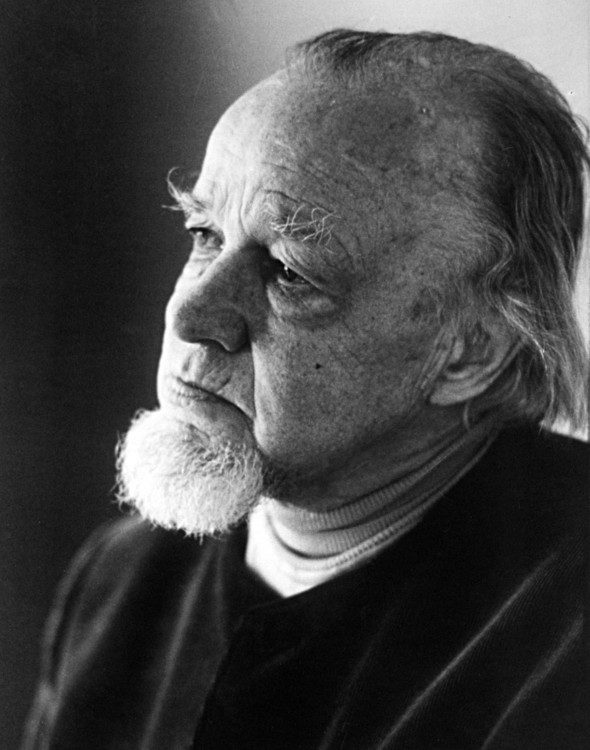
My favorite twentieth-century philosopher/theologian, Francis Schaeffer, made a mistake at this juncture. He wrote in his excellent book, Escape from Reason, that Aquinas introduced Aristotelian logic, which the Medicis accepted, leaving the dualism of Plato. That is not true, although it almost happened. North of the Alps, the Scholastics did make this change; however, the Medicis of Florence carefully considered making Aristotle their new patron philosopher, but in the end, under the influence of the Greek philosopher Gemistos Plethon (remember, he is the one who came to the Church Council of Florence), they re-engineered the Neoplatonic thinking of the time, by rearranging the things of the upper story, or higher echelon from the church’s concept of the “sacred” or unseen, to the ideals (ideals not just ideas) of Plato. Plato’s higher echelon of reality was reason, beauty, perfect math, and perfect forms.
The Dark Ages
I must revisit this idea of the “Dark Ages” to juxtapose it with what happened in these three movements: the Renaissance, the Scientific Revolution, and the Enlightenment. Yes, I realize that some historians believe that this name, “Dark Ages,” is an unfair misnomer, and likely it is. After I was challenged on this a year or so ago, I went back and restudied this period. While the “Dark Ages” may be an over-statement, there are distinct contrasts between the years from the fifth to the fifteenth centuries and what came next, after this philosophical reshuffling. Maybe the “Incurious Age” might be better.
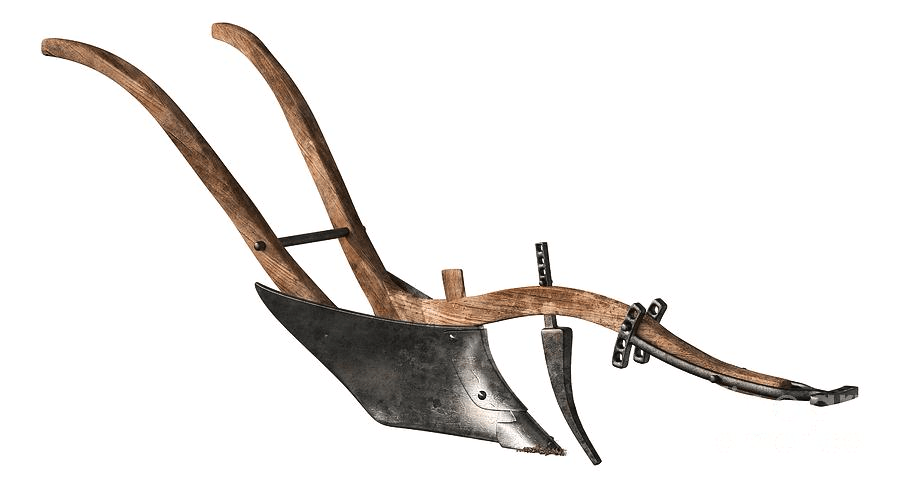
During these thousand years, I could find only subtle developments such as the invention of the heavy plow and modifications to windmills, waterwheels, and ship design. Remember, in modernity, we went from the invention of the airplane to landing on the moon in just sixty years. Yes, art continued during this thousand years, but I could not find any art except of the “sacred” type such as stained windows, religious tapestries, cathedral architecture, and Biblical-themed paintings. Dark Ages deniers have argued to me that Geoffrey Chaucer was a good example of creativity during the Medieval period; however, he died in 1400, very late in this Medieval period, just thirty years before Cosimo Medici started his Platonic Academy, which gave birth to the Renaissance.
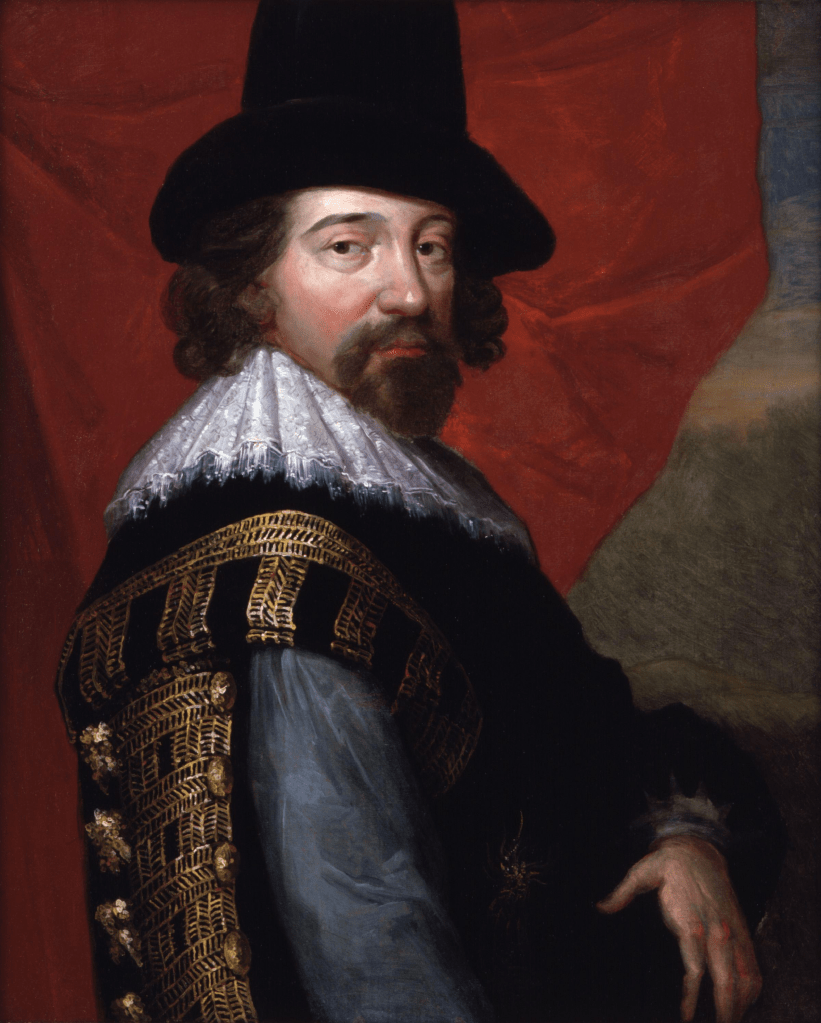
I will end this here, but next time I will focus on how the thinking of the scientific revolution changed the world, focusing on Francis Bacon.
Have a great weekend,
Respectfully, Mike


Leave a Reply