History is never so simple that one person or one event changes it forever. But history does change, and when it does, it becomes like a slow-moving tsunami, rolling ashore and seeking the lowest channel it can occupy. The quirky Danish preacher, Kierkegaard, just happened to be that channel. In Kierkegaard’s days, still before the invention of vaccines, almost half of children died before reaching their twenties. Kierkegaard himself lost five of his six siblings. If he had died as a child, I believe the movement toward irrationality would have found another channel.
I used to say that history moves like a pendulum, back and forth between one extreme and another. Then I watched a lecture where a group of historians was discussing something, and one of them said, almost in a shout, “HISTORY DOES NOT MOVE AS A PENDULUM! I’m so tired of hearing that.” So, I’ve tried to blunt my claim that it does. In the same way I try not to paint the “Dark Ages” so dark, as I know there is debate about that.
But human nature does have a cyclic characteristic. We humans like to take a good idea and then take it too far, only to be rescued by someone of the opposite view who takes it back the other way. You see that in politics. The Democrats get in power and then, in their confidence, take their ideas further and further to the liberal extreme. Then the Republicans get elected, but rather than bringing it back to moderation, they run to the extreme right, as you see in our present government. You are seeing now Social Democrats rising up in America in the climate of the extreme fascist-tending right.
But when you look broadly at Western Civilization, at least I see a pattern. The church became dualistic, focusing on the unseen at the expense of the seen. The Renaissance turned to focus on the seen at the expense of the unseen. At the apogee of that movement was Hegel: a Christian, yet he believed only in the seen, the rational world.
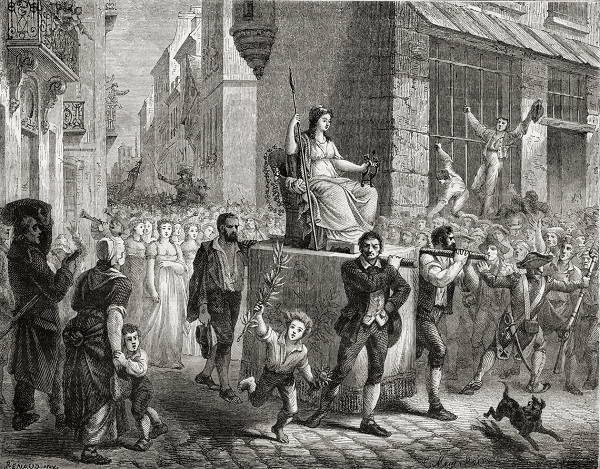
With the disillusionment in science and reason, the wake of the French Revolution, when they crowned Reason as the new goddess of France, it did not work out as they had hoped (as the book and show Les Misérables illustrate); then there were the American Civil War, World Wars I and II, and Vietnam. Then the hope in science and rationality to save us dwindled. It was a lost tribe searching for a hero. At that juncture (early twentieth century), they found their hero in Søren Kierkegaard.
A hundred years earlier (the first half of the nineteenth century), Kierkegaard wrote to directly counter Hegel’s rationalism. He argued that Christianity is built on faith, not reason, and concluded that faith is irrational and subjective. Kierkegaard’s subjective faith now dominates Christendom, every nook and cranny, every sermon, small group, and Sunday school. Any other interpretation of faith is absolutelly taboo… I know from experience.
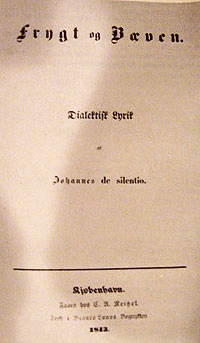
In his book, Fear and Trembling, Kierkegaard first argued that Christian Faith is irrational, using the story of Abraham’s sacrifice of Isaac as his example. I will end this three-month series with one more post, where I will look at Kierkegaard’s argument in Fear and Trembling. This next post will be the most important post I have done in my twenty years of blogging. Stay tuned.
Mike


Leave a Reply