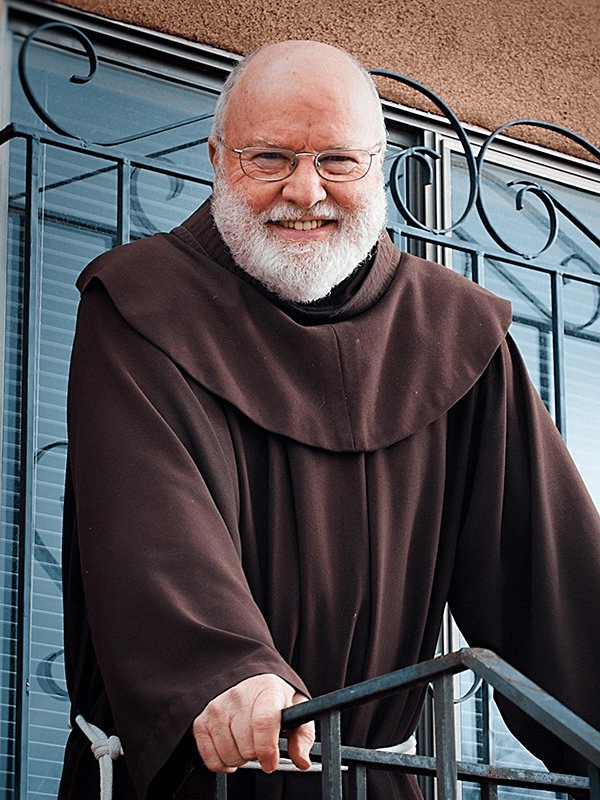
Above is Richard Rohr, a postmodernist; there is no truth; you create your own reality; the new Pied Piper of the progressive church.
I want to do one more post in this series, then put it to rest. Again, to be clear, I am not attacking the traditional church. I adore those people who love it just the way it is. God bless them, and may they have more of what they love. I have nothing but adoration for my own church, and as I’ve said many times, it is the best church I’ve ever attended. My issue is making the traditional church a requirement for everyone who wants to experience God. So, I suggest a non-religious, rational pathway to God for those who need it.
I can say I was profoundly religious for at least twenty years of my life. I even had an office within my church because I was there so much. I preached, I taught Sunday school, and led small groups. I attended every church meeting, often sitting in the front. Yet now, as the central part of my approach to the Creator is secular and objective, it is profoundly better. No, not everyone is like me, but many are, including those who are being forced out of Christianity forever.
I want to address some arguments I’ve heard for the traditional church as the only path to God.
The Sacraments. While I think the Catholic Church lists seven sacraments, it shares only two with the Protestant church, so I’ll address only those: baptism and communion. Baptism has a long tradition, even predating Christianity, as a rite of passage from one way of life to another. A symbol of cleansing. It can be a religionized ritual, as in a church, or a deeply personal experience, two people standing in a creek or pond. However, when it is religionized, as in some churches, as essential for a relationship with God, or otherwise one will burn for all eternity in Hell, that is a shame.
When Jesus was eating a meal with his disciples, he picked up a piece of bread (the central part of their meal) and his cup of wine (the typical drink of their meals) and said, ” When you consume these, think of me giving my body and blood for you,” I do not believe it was intended to be a religious ritual. If you want to experience it as a religious ritual, that’s fine, but I think it is better for me when I eat or drink anything that it reminds me of Jesus’ sacrifice.
Meetings. The verse that most people use to support going to church is “And let us consider how we may spur one another on toward love and good deeds, not giving up meeting together, as some are in the habit of doing, but encouraging one another—and all the more as you see the Day approaching.” (Hebrews 10:25, NIV). The real purpose of Christians getting together is not for formal meetings as a ritual, but, as the verse says, to encourage one another, especially toward love. I’d say if the church really practiced this, it wouldn’t be hemorrhaging people like it is.
It is extremely rare for someone to enter a church and be encouraged. One man at my church, Nick, often says something encouraging to me, but I can’t recall anyone else. Because I’ve been personally attacked so many times at churches, including my present one, I enter a church in fear. My fear isn’t because I’ve done something wrong, but because the status quo of so many religious people is competitive piety. When I write or say controversial things, they rarely try to understand what I am saying (Val’s efforts to understand what I meant by “rational Christianity” are an exception); instead, they use it as proof they are better than me. When they attack me, it is always them telling me I’m not a real Christian, or at least that my spirituality is not as good as theirs. No, I have never attacked anyone like this, at least not since I left evangelicalism, where such attacks were the MO. I do, however, deconstruct Christian thinking at a broad level, not a personal attack on someone.
During my first three years of cancer, when my suffering was beyond belief, I realized how much I longed for encouragement, and there was none… anywhere. I know I, too, failed in this. Now, my objective is to tell at least one person something encouraging each time I’m at church. Sometimes I write e-mails to encourage the pastor, because I know her job can be thankless. Yet I could still do so much better.
But encouragement is really simple. Here is an example. “Hey, Jim, I noticed that you signed up to do the dinner at the brick again. That’s hard work, and I’m impressed by how selfless you are, how hard you work for people who need that meal. Now that’s loving to me.” Why is that so damn hard? Why is it so much easier for people to say, “Mike, I read your blog and my stomach turned. I see no evidence that you are a real Christian. Shameful.”
I hope that someday I can enter a church without fearing that someone will say something profoundly discouraging to me. It is hard to imagine entering a church and being encouraged.
Training in Righteousness. Churches, especially my old conservative churches, put a great emphasis on preaching and Sunday school as places where we are trained on how to be righteous. The myth was that if you missed Sunday school or preaching, you strayed from the straight and narrow path in following God. Really? Every conservative church I was associated with, or the people I know who are associated with evangelical churches, who were obsessive-compulsive about following good doctrines and dogmas, every single one has fallen head over heels in love with Donald Trump and follows him like rats following the Pied Piper of Hamelin. I am not a political person. I’ve voted for more Republicans than Democrats. I thought that Biden had some flaws. I think that Hunter Biden made mistakes. I don’t trust Hillary Clinton, although I once attended a meeting she led, and I can say she is smart. However, here is the factual assessment of Donald Trump: he is a pathological liar, a serial adulterer, a rapist, a thief, and there is at least one FBI testimony from a woman that says he raped her when she was 13, so he is likely a pedophile too. Even Jeffrey Epstein said Trump has no morals. He is one of the most immoral people that America has ever produced. So, all that good teaching in the conservative evangelical churches was a complete waste of time.

The progressive churches are not as bad as the conservative ones in this matter, yet they have adopted the secular philosophy of postmodernism, which stands as an affront to historical Christianity. Postmodernism claims there is no truth and that we create our own truth internally. I tried to join the adult education group a few years ago, and I offered twelve possible Sunday school classes, and they rejected all but one, leaving me feeling like I didn’t belong. One of the classes I proposed was trying to establish the least possible basis of Christianity: God exists, and Jesus lived in history and was his Messiah. Even that class was rejected as too divisive, as one leader said, “I know good Christians who don’t believe that Jesus even lived in history.”
So the idea that the organized church gives us good teaching and guidance is a myth. Buddy, we have to study and find the truth for ourselves.
I will mention one more thing: I brought someone to my church this summer who was raised in the evangelical church, yet hasn’t been to church in twenty years. Her impression? The Sunday morning worship service that so many Christians love, she thought was bizarre and had weird rituals like a cult where the congregation repeated words they were told to say. It is a cultural thing, and when you are a fish, you can’t see the water. Church seems wonderful to you, but is senseless to many good people who are outside our culture.
In closing, I beg the traditionalists to show grace to those who want to pursue God and ask hard questions, such as, “How do we know there is a God?” Like me, they don’t like the Sunday morning worship program. Respect them, as I know I respect you.
Mike


Leave a Reply