I was first introduced to Søren Kierkegaard by Francis Schaeffer circa. 1975. Dr. Schaeffer (Christian Theologian and Philosopher) described Kierkegaard as introducing the irrational, blind leap of faith into Christianity. He was rightly concerned about where this would lead. Me too. Francis Schaeffer would turn in his grave to see where postmodernism has taken us. Our country is coming apart. Democracy may not survive. A large swath of the Christian church has been duped into Trumpism, the literal antithesis of the teachings of the historical Jesus. Now, it is no longer just the business swindler but the politician, the preacher, the theologian, and the philosopher who lie the best… wins. Before now, the liar was limited by the walls of evidence… now those walls have been taken down. Truth is subjective without any external reference to evidence. We no longer share any universal truths, beyond what we create inside our heads.
I’ve said before that I am an armchair philosopher. This is especially evident in what I have known about Søren Kierkegaard up to this point. Before three weeks ago, I had never read any of his books, only books about him. Now, I’ve finished three of his books and a new one about him. I know so much more.
What I’ve Learned So Far
Yes, Kierkegaard is my nemesis, while he is the patron saint of the progressive Christian and the silent mentor to the conservative Christian. I will write more about his ideas later, when I finish reading all of his books. But what I have learned about him as a person has been remarkable. The most remarkable thing is how similar our experiences have been.
Kierkegaard was a voice crying in the church’s wilderness, speaking against the influence of the Hegelian Rational-Romantic period, a period I admire. Hegel was to Kierkegaard as Kierkegaard is to me. In a way, Kierkegaard and I (but I’m an invisible nobody) are like bookends. Kierkegaard ushered in irrationality into Christianity. I am hoping to end the epoch of irrationality. Kierkegaard felt like no one was listening to him as I do to me. However, Kierkegaard was discovered posthumously. I doubt if anyone will read anything I’ve written after I am gone.
But like me, Kierkegaard felt attacked by the Christian status quo. So much so that he published most of his books under a pseudonym, which I’ve considered. A religious newspaper in Copenhagen even attacked his looks. Apparently, he had scoliosis. From his personal letters, his heart was broken by the attacks. Eventually, he created his own newsletter to fight back against his critics, the equivalent of a blog in the 1840s. The war in print got nasty at times. But he was so despised by the Christian community that when his inheritance ran out, he felt like the only job he could get with a seminary degree was as a pastor, but no church wanted him.
Kierkegaard died with his last pennies covering his hospital bills and a humble burial. He had spent this large inheritance on the substance of living and on publishing his books and newsletters.
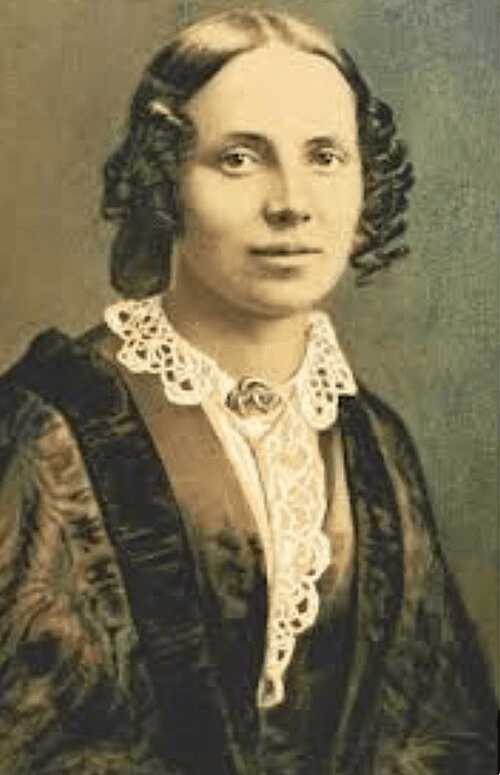
I respect Kierkegaard and feel a kinship with him, although we stand on opposite sides of an issue. Yet I know he was sincere and has given many people a more enjoyable experience of the Christian faith. But I do think he was wrong, philosophically, not morally. As I listen to his arguments over and over and over again, I disagree with his idea that faith must be absurd. I will write about that later. But I have no question he was a good man, and I grieve that he died too young, some say with a broken heart, and never allowed himself to fully love his fiancée, Regine Olsen. He died alone by his choice, so as not to burden her with his personal hardships and melancholy. Yet, they each loved the other until their ends. I hope they have met in Heaven.
Mike


Leave a Reply